
Shock Moment As Jonathan Replies Youths Begging Him To Run For President
 Follow us on Google News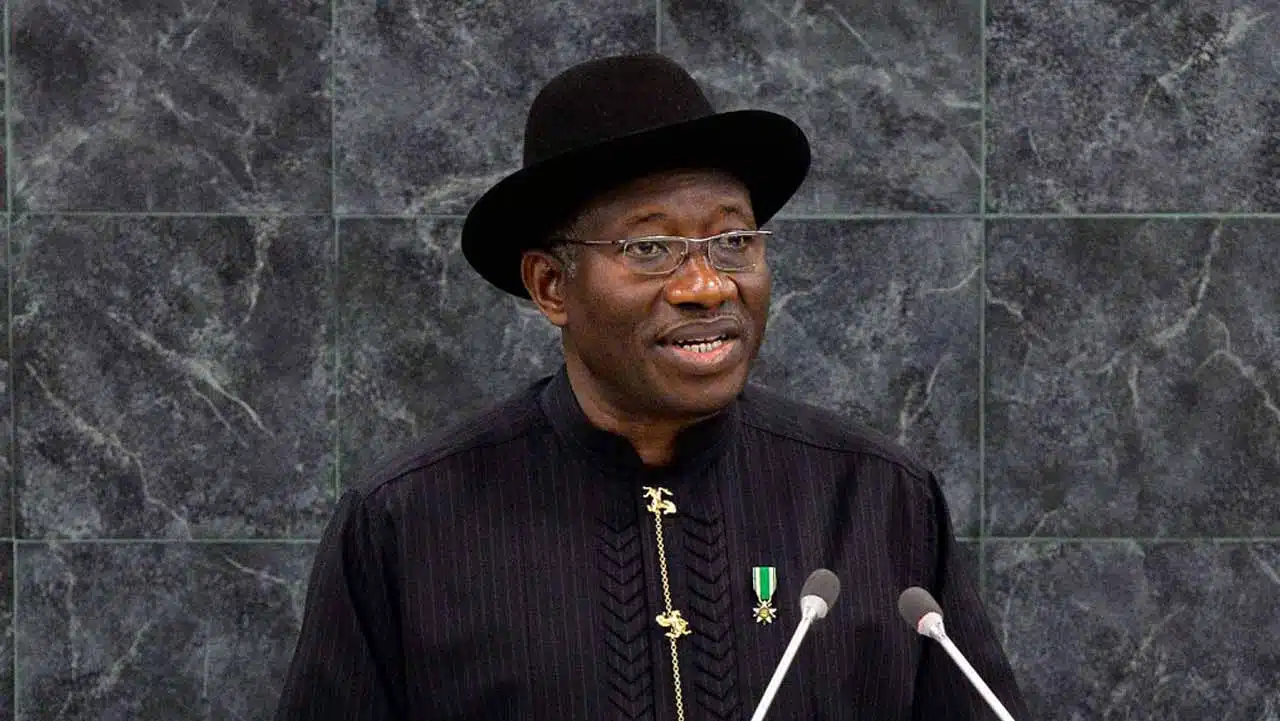
Former President of Nigeria, Goodluck Jonathan, has urged young Nigerians to take part actively in the electoral process, stressing the importance of voter participation in shaping the country’s future.
He made the remarks on Thursday when a large group of youths visited his residence to encourage him to contest the 2027 presidential election.
Addressing the gathering, Jonathan noted that while many young people were calling for his return to politics, a significant number of them did not possess Permanent Voter Cards (PVCs), which are required for voting.
He called on the Independent National Electoral Commission (INEC) to address growing voter apathy, expressing concern that many Nigerians are becoming disengaged from elections.
Jonathan emphasized that young citizens must not only demand leadership changes but also actively participate in the democratic process.
He remarked that voter turnout remains a serious challenge, adding that political engagement must start with registration and voting readiness.
In a pointed observation, he told the youths that a large percentage of them were not yet registered voters despite their enthusiasm for his candidacy.
Meanwhile, a Federal High Court in Abuja is set to hear a suit on Friday seeking to bar Jonathan from contesting the 2027 presidential election.
The case was filed by lawyer Johnmary Jideobi, who is asking the court to declare Jonathan constitutionally ineligible for another presidential run.
Justice Peter Lifu had earlier directed that all parties be properly served before proceedings continue, as responses from the defendants were still pending.
The suit, marked FHC/ABJ/CS/2102/2025, lists Jonathan as the first defendant, with INEC and the Attorney-General of the Federation joined as co-defendants.
The plaintiff is asking the court to interpret sections of the 1999 Constitution to determine whether Jonathan can legally seek the presidency again.
He argues that Jonathan, having completed the remaining tenure of the late President Umaru Musa Yar’Adua and later served a full elected term, has already reached the constitutional limit for presidential office.
According to the affidavit supporting the case, allowing Jonathan to contest again would amount to a potential third oath of office if he wins, which the plaintiff claims would violate the Constitution.
The suit, the plaintiff says, was filed in the public interest to uphold constitutional provisions and protect the integrity of Nigeria’s democratic system.






Comments
0 comments