
Latest
Stop The Outrage!” – Akpabio Slams Critics Over Electoral Act Controversy

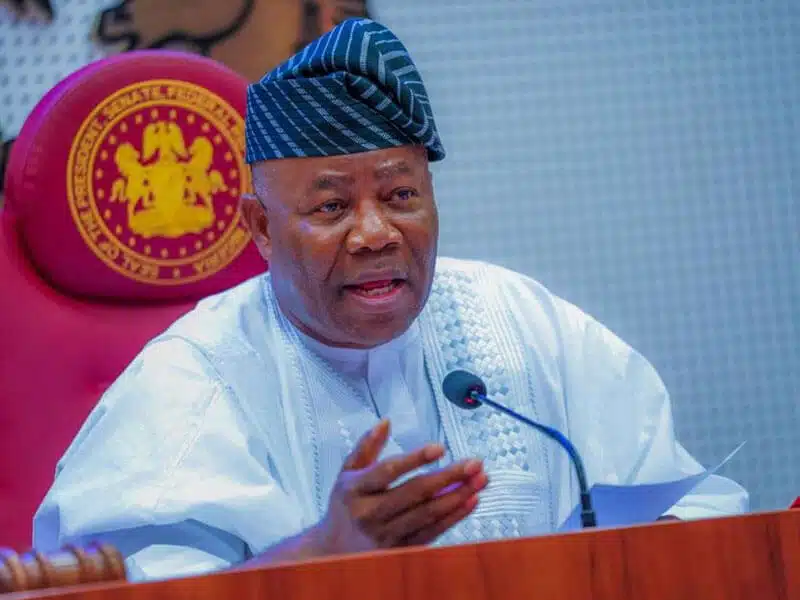
Senate President Godswill Akpabio has criticised Nigerians faulting the Senate over the ongoing amendment of the Electoral Act, insisting that the legislative process has not been concluded.....KINDLY READ THE FULL STORY HERE▶
Speaking at the public presentation of “The Burden of Legislators in Nigeria,” a book authored by Senator Effiong Bob, at the NAF Centre in Abuja on Saturday, Akpabio said the Senate would not bow to pressure or intimidation but would deliver an Electoral Act that strengthens Nigeria’s democracy.
He explained that the uproar surrounding Section 60(3) of the Electoral Act was premature, noting that the amendment process was still underway and far from finalised.
According to him, the Senate has yet to approve the votes and proceedings, stressing that harmonisation remains ongoing and changes can still be made.
“We have not passed the votes and proceedings. There is still harmonisation, yet people are already on television panels attacking the Senate over an issue that is not concluded,” Akpabio said.
He added that once the votes and proceedings are presented, any senator retains the right to propose amendments before final approval.
“We can amend anything before the votes and proceedings are approved. Why condemn the Senate over a process that is still incomplete?” he asked.
Akpabio maintained that the Senate would continue to act in Nigeria’s best interest rather than bow to the demands of pressure groups.
“We will not be intimidated. We will do what is right for Nigeria, not what suits one NGO. Retreats are not lawmaking,” he stated.
Clarifying the Senate’s position on the controversial removal of the phrase “real-time” from the bill, Akpabio said the intention was to allow the Independent National Electoral Commission (INEC) the flexibility to determine the most suitable mode of result transmission.
He warned that making real-time transmission mandatory could jeopardise elections in areas with poor network coverage or power supply.
“If real-time transmission is enforced and systems fail, it could lead to a catastrophe. There would be no results in states or communities without network or electricity,” he said.
Akpabio further noted that the process remains open to further input through the conference committee and final approval of votes and proceedings, stressing that technology should enhance, not threaten, democratic processes.


I’ll Never Reveal My Salary” — Nancy Isime Sparks Debate On Money And Relationships

EFCC Drags Ex-Kaduna Government Official Back To Court Over ₦16m Fraud Case

INEC Seals June 20 Bye-Election Results With Certificate Of Return Presentation

Fresh Bulldozer Alert: Wike Orders Immediate Demolition Of Abuja Properties

Fresh Storm In Borno Politics As Opposition Questions ₦4bn Ghost” Rail Allocation

Family Speaks: How General Abubakar Died, Reveals Wife Still In Bandits’ Captivity

Sh*cking Police Shake-Up As Oyigbo DPO Is Removed Over ₦500,000 Bribery Allegation

Dollar To Naira Sh*ck: Fresh Exchange Rate Revealed For June 21, 2026

Etinosa Reacts To Viral Concerns About Her Neck Size, Says She Is Healthy
