
Politics
Tinubu Government Provides Update On Recent Petrol Price Increases

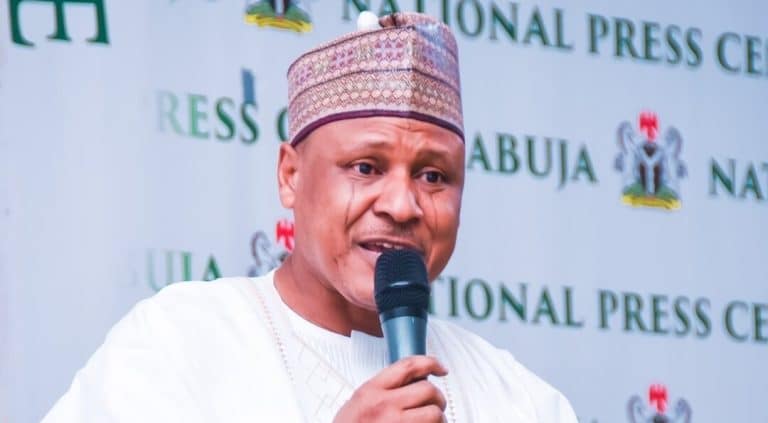
Tinubu Government Provides Update On Recent Petrol Price IncreasesThe government led by President Bola Tinubu has distanced itself from the recent petrol price hikes, stating that the Nigerian National Petroleum Company Limited (NNPCL) made the decision independently based on current market conditions. This adjustment has led to pump prices soaring to as high as ₦1,075 per litre in certain areas.
As of Wednesday, the NNPCL increased fuel prices in Abuja from ₦897 to ₦1,030 per litre, while prices in Lagos rose from ₦855 to ₦998. Other regions experienced similar increases, with the North-East seeing prices reach ₦1,070, and the South-West averaging ₦1,025. In the South-East and South-South regions, prices jumped to ₦1,045 and ₦1,075, respectively.
The surge in fuel prices has triggered widespread outrage among Nigerians, leading to calls for President Bola Tinubu to intervene and reverse the increases. However, in an interview with Daily Trust, Minister of Information and National Orientation, Mohammed Idris, clarified that the government should not be held accountable for the price hikes.
Idris explained that the NNPCL’s decision was influenced by multiple factors affecting the energy sector, including ongoing volatility in the global market, particularly due to crises in the Middle East. He emphasized that the NNPCL is no longer able to absorb the financial losses associated with previous pricing structures.
“The differential you’re seeing is due to various factors,” Idris said. “One of them is the crisis in the Middle East, which has led to market volatility. Therefore, petroleum product prices are rising in line with trends seen among global operators. Furthermore, as a limited liability company, NNPC cannot continue to sustain these losses for Nigeria.”
Idris urged Nigerians to recognize the complexities faced by the NNPCL and the government, assuring that prices would eventually stabilize in the long run. He also highlighted that savings from the removal of subsidies would be reinvested into critical sectors such as healthcare, education, infrastructure, and security. Additionally, he mentioned that the government’s initial investments in Compressed Natural Gas (CNG) would help mitigate the impact of rising fuel prices as more operators enter the market.
For more information on this article and other related posts from Bushradiogist, please join our WhatsApp channel by clicking this link https://whatsapp.com/channel/0029VaUumOODTkK7AZL1Fw3o. For advertisement inquiries only, kindly send a message to 090 1907 0863 on WhatsApp.


Fake Agency Scandal: ICPC Recommends Punishment for 13 Officials — See Full List

Businessman Lands In Trouble As NDLEA Secures Conviction Over Raphnol Export

2027 Power Moves: Dickson Meets Peter Obi, Kwankwaso As Fresh Details Emerge

Inside Tinubu’s Meeting With Uzodimma, Zulum, Other Governors As Fresh Details Emerge

2027: APC Chieftain Raises Alarm Over Presidential Campaign Council List — “Party Was Not Carried Along

2027: Full List Of Presidential Candidates, Parties That Signed Peace Accord

Jonathan Raises Alarm Over Govs’ Interference In Off-Cycle Elections: ‘This Must Be Stopped

WHY OKPEBHOLO KNOWS WHAT HE IS SAYING ABOUT TINUBU’S 2.5 MILLION VOTES

APC Crisis? Ojudu Blasts Tinubu Campaign Council List, Raises Fresh Concerns
