
Where Are The Benefits?’ – Falana Questions FG Over Subsidy Savings
 Follow us on Google News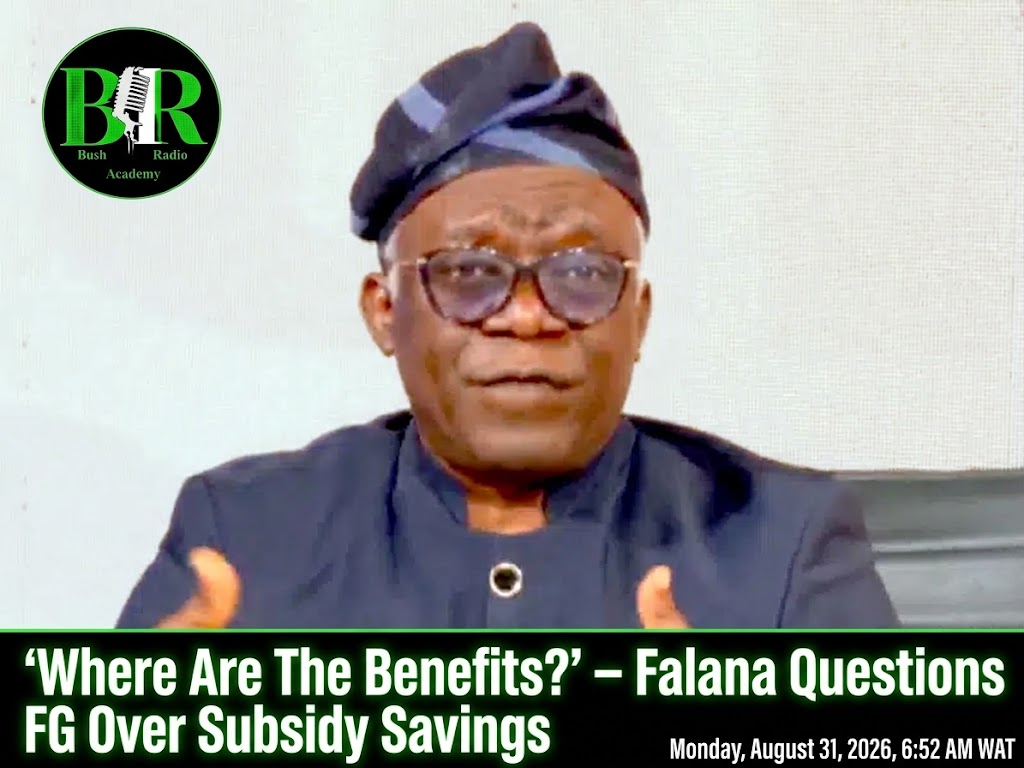
Human rights lawyer and Senior Advocate of Nigeria (SAN), Femi Falana, has challenged the Federal Government to explain how Nigerians are benefiting from the funds saved following the removal of the petrol subsidy.
Falana questioned how the additional revenue available to the Federal Government, state governments and local councils is being utilised, insisting that Nigerians deserve to see tangible improvements in their living conditions.
President Bola Tinubu announced the removal of the petrol subsidy shortly after assuming office in May 2023. The policy triggered a sharp increase in the price of petrol and has remained a subject of intense public debate.
The Federal Government has consistently defended the decision, arguing that subsidy payments were not provided for when Tinubu assumed office and that its removal would free up funds for development across the country.
However, critics have maintained that Nigerians are yet to fully benefit from the additional revenue generated since the subsidy was removed.
Speaking during an interview on Channels Television’s Sunday Politics, Falana questioned how the funds accruing to the three tiers of government are being spent.
The human rights lawyer said Nigerians were yet to feel the expected benefits of the subsidy removal, warning that citizens could not be asked to continue waiting while their economic hardship persisted.
Using a road project in Ekiti State as an example, Falana said a local government reportedly received about ₦5.4 billion between January and May, yet residents were still appealing to the Federal Government to intervene over a bad road.
He said:
“I was just reading some news about a particular road in Ekiti State, the road that leads to Afe Babalola University. And everybody there is asking the Abuja people to come and fix the road, whereas between January and May this year, that local government has taken about N5.4 billion.
“So you can’t fix a road with less than 500 million naira? And in any case, state governments were fixing roads, and they would then go to Abuja to ask for a refund. So, we must begin to ask questions of the local government, the state government, and the Federal Government.
“If you say we are making more money, we don’t want to go back to the era of the fuel subsidy scam. Where are the benefits? It’s a fallacy being told to wait and wait and wait. People are dying.”
Falana further argued that the government previously allocated about $10 billion annually for fuel importation, money which he said should have translated into significant savings following the removal of the subsidy.
According to him, however, a substantial portion of the funds is now being used to service government debt.
“Now, the money earmarked for fuel importation by the government, $10 billion per annum, ought to have been saved, but the bulk of this money goes for servicing of debt. That’s where the problem lies,” he said.
Falana stressed that the increased revenue accruing to the Federal, state and local governments should come with greater accountability.
He urged Nigerians to demand explanations from their leaders on how the additional funds are being spent.
“Yes, state governments are getting more money. The Federal Government is getting more money. Local governments are getting more money on paper. It is the duty of the Nigerian people now to demand accountability,” he added.







Comments
0 comments