
Latest
15 Years Of Struggle: Obasanjo Reflects On Nigeria’s Battle Against Terrorism And Criminals

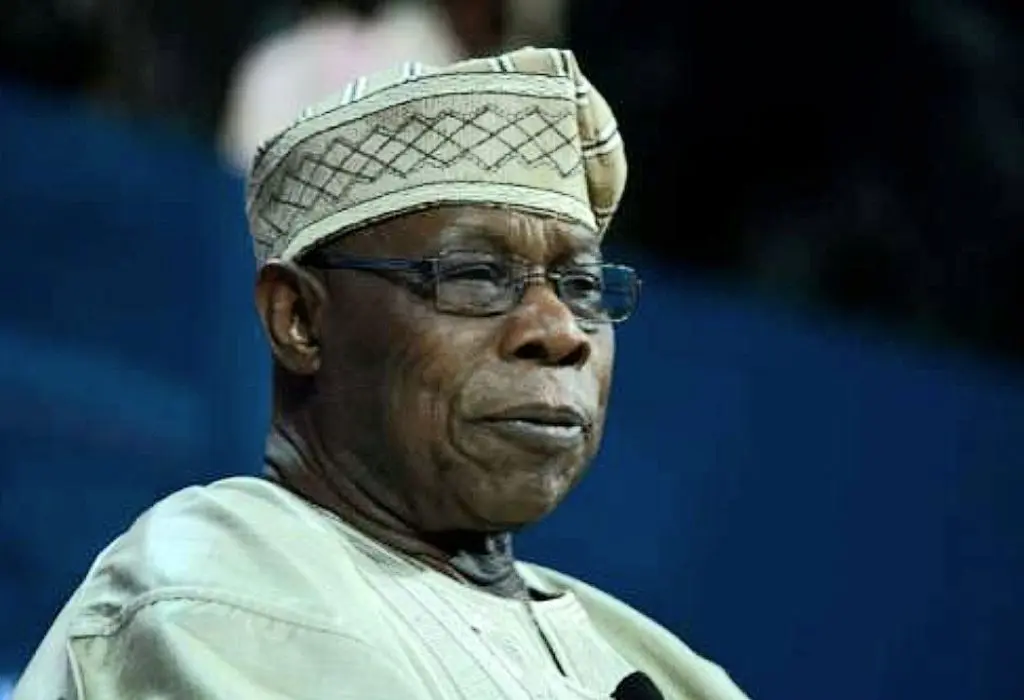
Former President Olusegun Obasanjo has expressed serious concern over Nigeria’s ongoing 15-year battle against the Boko Haram insurgency, noting that it has lasted far longer than the country’s 30-month civil war. He warned that the fight cannot be won without major reforms in military training, intelligence gathering, and technological capabilities.....KINDLY READ THE FULL STORY HERE▶
Obasanjo made these remarks on Sunday during a virtual session of the Toyin Falola Interviews, where he appeared alongside Bishop Matthew Hassan Kukah and former CBN Deputy Governor Dr. Kingsley Moghalu.
“The Civil War lasted 30 months. This fight against insurgency and criminals has lasted almost 15 years. That should worry anybody,” he said.
He argued that Nigeria’s military remains structured for conventional warfare, which is ill-suited for the guerrilla-style conflicts now confronting the country.
“Training is key. The military is prepared for conventional war; you plan and confront the enemy. But the people we face now are elusive or embedded within communities,” he explained.
Obasanjo suggested that Nigeria might need specialized foreign training or send personnel abroad to learn modern counter-insurgency techniques, citing Colombia as an example.
“There is no shame in that. It is a specialized form of training,” he added.
Reflecting on a failed peace initiative in 2011, Obasanjo recalled visiting Maiduguri to understand the insurgency. Boko Haram leaders reportedly expressed willingness to negotiate and even proposed a temporary ceasefire.
“I reported that they were ready to talk, agreeing to a 21-day ceasefire, but the government never reached out,” he said.
The former president also criticized the defense procurement system, arguing that expecting the military to purchase its own equipment undermines operational efficiency.
“Expecting the military to buy equipment themselves is not feasible. The whole process is an industry,” he said.
Obasanjo highlighted the dangers of internal sabotage and poor intelligence, noting that operational leaks have historically compromised missions. He emphasized that throwing money at security challenges without addressing underlying social grievances is ineffective, citing his Niger Delta experience: a militant turned to violence after failing to find employment despite a degree in chemical engineering.
“That was why we started quarterly stakeholder meetings. Sharing money alone does not solve problems,” he said.
He stressed that security should be treated as a national priority, urging Nigeria to seek global support if necessary.
“The government should see security as a national issue. If incapable, we must ask the global community for help,” he stated.
On political coordination, Obasanjo noted that the president has discretion to convene the Council of State or consult experts, Nigerian or foreign.
Turning to regional issues, he discussed Congo’s longstanding instability, emphasizing that the problems are largely internal and cannot be blamed solely on Rwanda. He traced tensions back to the 1960s and the 1994 Rwandan genocide, highlighting unresolved citizenship and historical disputes.
“The problems of Congo in 1960 are still largely the problems of Congo today,” he said, referencing his UN envoy role to Eastern Congo and the Great Lakes Region.
Obasanjo outlined Congo’s structural challenges: its vast landmass, two time zones, borders with nine countries, and a unitary system unsuited for its size. He also noted the strong geopolitical interests in Congo’s strategic minerals, with the US, China, France, and UAE heavily involved.
Despite these external interests, he insisted ultimate responsibility rests with Congolese leadership:
“Congo can only solve its problems if its leaders are realistic and take ownership. No external power can rescue it,” he said.
Obasanjo recounted private discussions with the leaders of Rwanda and Congo, where both emphasized that while outsiders can assist, the real solutions must come from within. He also criticized the lack of a proper national military capable of defending the country and its people, arguing that past governments focused on personal presidential security rather than national defense.


History in Edo: Okpebholo Nominates Enugu-born Martin Oli as Commissioner

Momoh Receives National Youth Group, Reaffirms Commitment to Youth Empowerment and Regional Development

Why Rivers Lawmakers Refused To Act on Fubara’s Request Immediately

CBN Orders Immediate Freeze On Accounts Linked To Terror Financing Suspects

Rufai Sparks Debate With Explosive Reaction To Police Statement On Suspected Bandits
Momoh Receives National Youth Group, Reaffirms Commitment to Youth Empowerment and Regional Development

Sh*cking Police Shake-Up As Oyigbo DPO Is Removed Over ₦500,000 Bribery Allegation

Dollar To Naira Sh*ck: Fresh Exchange Rate Revealed For June 21, 2026

OSHIOMHOLE’S ENDURING INFLUENCE: WHY EDO NORTH REMAINS CRUCIAL TO TINUBU’S 2027 CALCULATIONS
