
Politics
Lagos Markets Suffer Fire Outbreaks Due To Lax Regulation Enforcement

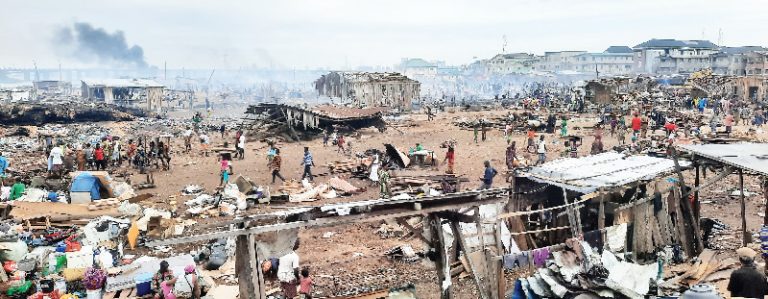
Lagos Markets Suffer Fire Outbreaks Due To Lax Regulation Enforcement....KINDLY READ THE FULL STORY HERE▶
In Lagos, Nigeria’s bustling commercial hub, markets are vital to daily trade, providing sustenance and livelihoods for thousands of vendors. However, behind this vibrant economic facade lies a persistent threat: fires that have devastated many traders and continue to pose a significant danger. JOHNSON IDOWU explores the ongoing fire incidents in Lagos markets and how neglect in regulatory enforcement and safety awareness has created a precarious situation…….CONTINUE READING
Markets in Lagos, from the expansive Balogun Market to the busy Ladipo Market, as well as The Arena Market in Oshodi, Ilepo food market, and Computer Village in Ikeja, are at the heart of Nigeria’s economic activity. Daily, buyers and sellers engage in a thriving exchange, keeping the wheels of commerce turning.
Yet, this economic vitality is overshadowed by a systemic failure to uphold safety standards. For decades, Lagos markets have experienced frequent fires, causing immense hardship for traders who lose their livelihoods in mere moments. These preventable incidents stem from unsafe practices, regulatory lapses, and a lack of awareness regarding fire prevention protocols.
The roots of the fire problem are multifaceted: poor electrical wiring, overcrowded market spaces, illegal structures, insufficient fire extinguishers, and a dearth of effective fire safety campaigns. Despite being Nigeria’s commercial capital, many of its bustling markets remain vulnerable to catastrophic fires due to these issues.
According to data from the Lagos State Fire and Rescue Services, 1,011 fire incidents were recorded in Lagos State from January to August 2024. This alarming figure has become a significant concern for state authorities, who grapple with strategies to mitigate fire outbreaks in the markets.
### Traders’ Lament
On January 22, 2024, a devastating fire consumed the Mandilas building on Broad Street, displacing at least 6,700 traders and destroying around 450 shops, 30 offices, two hotels, and five restaurants within the 14-story structure. Ibrahim Farinloye, the Lagos State Coordinator of the National Emergency Management Agency, attributed the fire to careless welding during generator installation.
Traders shared their devastating experiences with our reporter, expressing the overwhelming loss. Sewa, a clothing vendor, stated, “I can’t even quantify the loss. I am devastated. Do you know how many goods have been lost to this fire?” Another trader, Badmus, reported losing goods worth an estimated N200 million, including crucial business documents.
At Balogun Market, the aftermath of previous fire outbreaks remains palpable. A recent incident destroyed a five-story building on Gbajumo Street, with losses running into millions of naira. Eyewitness accounts highlighted the challenges faced by firefighters, including equipment shortages and an absence of accessible water sources.
Sarah Ogundele, a shoe vendor, articulated the emotional toll, saying, “When you lose everything to a fire, it’s like starting life all over again. Some people never recover.” Trader Iya Bimpe echoed similar sentiments, noting significant losses, with some traders losing goods worth N10 million to N40 million.
The Ladipo Plank Market also witnessed devastating fires, with a November 1, 2023, incident destroying approximately 300 shops. Trader Rasheed lamented the uncertainty of how the fire started, while others reported losses of newly restocked goods.
The destruction from market fires extends beyond immediate losses; it has profound economic and social ramifications. Many traders rely on loans to stock their stalls, and when fires occur, they are often left with insurmountable debt.
### Safety Violations and Regulatory Failures
The causes of these market fires are numerous and frequently preventable. Electrical faults from unsafe wiring and unauthorized connections are primary culprits, often leading to short circuits that ignite fires. Additionally, the construction of illegal stalls obstructs access for emergency responders, exacerbating the problem.
A fire at Idumota market in March 2024 was worsened by a lack of water supply for firefighting efforts. Farinloye noted that fire vehicles had to make multiple trips to source water, highlighting the critical need for improved infrastructure to support emergency responses.
Magaret Adeseye, Director of the Lagos State Fire and Rescue Services, emphasized the challenges faced in combating market fires, including overcrowding and inadequate adherence to fire safety regulations. “Accessing the scene of fire incidents is always a challenge due to congestion in Lagos markets,” she stated in a recent interview.
The persistent neglect of regulatory enforcement and fire safety awareness has created a precarious environment for traders in Lagos markets. Addressing these issues is imperative to safeguard livelihoods and prevent future tragedies.


The Extrajudicial Execution Of Mene Ogidi In Effurun, Delta State — The Law, The Liability, And The Legacy We Must Choose

Rooney Opens Up On Form Slump, Compares Himself To Mohamed Salah And Virgil Van Dijk

Debate Challenge Issued: Ex-Presidential Candidate Ndu Seeks Face-Off With Bola Ahmed Tinubu, Atiku Abubakar, Peter Obi

Explosive Claim: Dumebi Kachikwu Blasts ADC Factions, Calls Mark And Bala “Two Thieves

Breaking: People’s Democratic Party Endorses Natasha Akpoti-Uduaghan For 2027 Senate Race

Breaking: Complete List Of Charges Filed Against Timipre Sylva And Alleged Coup Network Exposed

Political Tension Rises As Tonye Cole Grabs APC Ticket Form For Rivers Clash

Delta State Tragedy: Police Reveal New Details On Officer’s Role In Fatal Incident

Lagos 2027 Shake-Up: Obasa Backs Hamzat As Tinubu, GAC Reach Crucial Decision
