
Politics
This Moment Too Will Come To An End

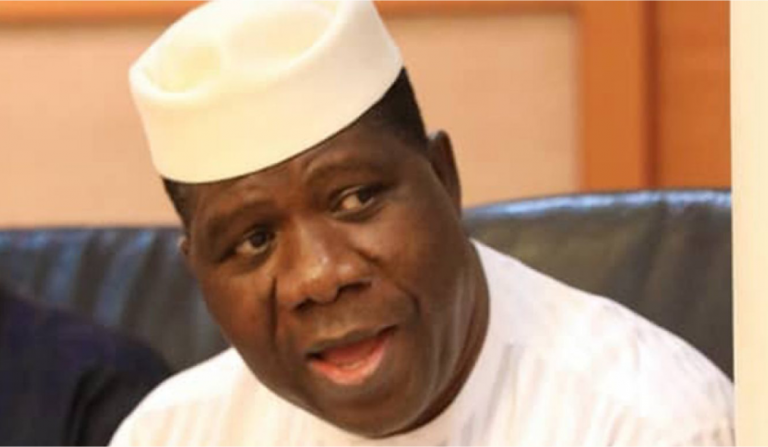
This Moment Too Will Come To An End....KINDLY READ THE FULL STORY HERE▶
I would like to extend a warm welcome to all my colleagues as we return from our annual recess, a time when we traditionally pause plenary sessions for focused field engagements. This period has been invaluable for extensive consultations in preparation for the tasks that lie ahead. It has also allowed for meaningful interaction with critical stakeholders nationwide, gathering feedback from our constituents, identifying public interest issues, and presenting this information for consideration in the 2025 fiscal year…….CONTINUE READING
During our recess, many significant events unfolded. From nationwide protests to the re-emergence of long queues at filling stations, alongside persistent instability in the foreign exchange market and devastating floods exacerbating humanitarian crises in various states, these issues have underscored the complexity of our socio-economic challenges. They highlight the urgent need for multi-faceted solutions and the essential task of transforming Nigeria into a federation we can all take pride in.
At the National Assembly, we recognize the public’s concerns and the right to demand accountability, especially during national crises. We understand that governments at all levels must listen to public grievances and develop strategies to address them. However, are these challenges unique to Nigeria? Is our nation the only one facing difficulties in the current global climate?
Indeed, countries—both developed and developing—are experiencing turbulent economic and political times. For example, Ghana and Kenya in East Africa, Argentina and Venezuela in South America, Japan and Pakistan in the Pacific, and Iran and Saudi Arabia in the Middle East, among others, are grappling with significant crises that their governments are working diligently to address.
These nations, like Nigeria, are methodically responding to their challenges, not just to meet public expectations but to foster environments conducive to genuine growth and sustainable development. This observation is not meant to excuse governmental shortcomings but to illustrate that we are in an era of global turbulence, which began with the COVID-19 outbreak in 2020, escalated with the Russia-Ukraine conflict in 2022, and has been further complicated by renewed hostilities between Israel and Palestine in 2023.
Each of these geopolitical dynamics has severe implications for import-dependent economies like Nigeria, impacting their internal stability. The Russia-Ukraine conflict, for instance, disrupted grain imports to Africa, leading to chronic food inflation across the continent, as many countries sourced significant portions of their grain and wheat from these nations. Nigeria faced similar challenges, compounded by internal instability that had already diminished its food production capacity.
In June 2024, food inflation reached a staggering 40.87% before decreasing to 39.53% in July and further to 37.52% in August. This decline indicates that the concerted efforts of all government arms are beginning to yield positive results. This phase, too, shall pass.
The geopolitical landscape has also contributed to rising crude oil prices globally. As a major oil producer, Nigeria should ideally benefit from this trend, but a lack of significant investment in midstream petroleum infrastructure has made us vulnerable to geopolitical conflicts. We find ourselves at a crossroads, facing either a return to a burdensome subsidy regime or grappling with rising fuel prices that strain the living standards of our citizens. We are now gradually navigating this difficult terrain that was previously hindered by our hesitance to act decisively.
This is the undeniable geopolitical context in which Nigeria finds itself, even before the inauguration of the 10th National Assembly. These challenges have intensified during the first year of our four-year term, presenting grim realities we cannot ignore. As public servants, we have embraced the responsibility to tackle these national issues from the ground up.
Fellow citizens, we have been proactive in responding to these challenges through innovative parliamentary initiatives. We firmly believe that these initiatives will significantly enhance the lives of over 133 million Nigerians classified as multidimensionally poor by the World Bank Group. Our commitment to this vital national mission remains unwavering.
However, we need the trust of Nigerians in the power they have entrusted to us. This is not the time for political games regarding issues of national significance, especially with the 2027 elections on the horizon. We must remember that 2025 precedes 2026, and 2026 comes before 2027. What the people demand from us is a demonstration of patriotism, not the pursuit of narrow political agendas that do not improve the lives of our citizens, whether in the North or South. We must seize this moment of national challenge; it is an opportunity for collective, decisive, and rational action.
How has the National Assembly been addressing these national challenges? This important question deserves a thorough answer, but I will highlight a few key areas where we are making progress, both independently and collaboratively. First, we have established a clear understanding with all federal agencies under our oversight that we will not impose additional taxes on citizens who are already multidimensionally poor. Our commitment to this promise reflects our dedication to serving the people, not opposing them.
This principle led us to introduce a windfall tax under the 2023 Finance Act, which imposes a one-year tax on the foreign exchange profits earned by commercial banks during the 2023 fiscal year. This approach is not unique to Nigeria; other nations facing economic turbulence have implemented similar measures. For instance, in 2022, the UK parliament introduced a 25% energy profits levy on oil multinationals, later increasing it to 35% in 2023 as the country faced economic challenges. At least 25 EU member states also introduced similar levies, with rates varying significantly across countries, aimed at addressing their fiscal concerns. If these nations can take such measures, why can’t we do the same in the national interest? This is a progressive tax aimed at redistributing wealth to fund essential programs.
In accordance with our mandate under Section 59 of the 1999 Constitution, we have also reviewed critical sections of the 2024 Appropriation Act to address issues that could lead to funding gaps and exacerbate our socio-economic challenges. This review has empowered the parliament to direct the executive to significantly increase social support for the poorest citizens, especially in light of the ongoing food inflation.
Additionally, we engaged meaningfully with the leadership of the Nigeria Labour Congress and Trade Union Congress during national labor disputes. This engagement was intended to assure labor leaders of our unwavering support and to encourage them not to disrupt the economy while we work together to strengthen it. Even if they did not fully trust our resolve, we proved them wrong by honoring our agreements with the executive and expediting the enactment of the 2024 National Minimum Wage Act.
We are committed to driving these initiatives forward, reflecting our dedication to our constituents and our passion for alleviating the severe fiscal challenges facing our nation. Our critical interventions are intended to benefit all citizens, regardless of their socio-economic status. We remain focused on implementing more innovative legislative measures that will positively impact our economy and political landscape.
As we resume parliamentary sessions, the National Assembly will address ongoing challenges in the petroleum industry, which is currently underperforming due to issues such as crude oil theft, frequent maintenance of public refineries, the importation of substandard petroleum products, and fuel supply disruptions. Before our recess, the President of the Senate, Senator Godswill Akpabio, established an ad-hoc committee to investigate these matters. The Senate later expanded the committee’s scope to examine various allegations of economic sabotage in the petroleum sector.
Contrary to some media reports, the Senate did not suspend its investigation into alleged economic sabotage; it merely postponed its public hearings to address procedural issues. Today, both chambers of the National Assembly will resolve these matters and possibly form a joint committee to continue the investigation from where the ad-hoc committee left off. We are committed to uncovering the roots of economic sabotage in the petroleum industry and developing institutional mechanisms to enhance its efficiency and functionality.
We anticipate receiving a new Medium Term Expenditure Framework (MTEF) from the executive. The MTEF is an essential component of our budgeting process, focusing on multi-year public expenditure planning and setting future budget requirements. The consideration of the MTEF is a top priority on our legislative agenda, as it must be ready before the 2025 appropriation bill is presented to the National Assembly.
We are also dedicated to reviewing the 1999 Constitution. In the Senate, the Constitution Review Committee, chaired by Deputy President of the Senate Senator Barau Jibrin, will hold retreats and strategy sessions in the coming weeks, solicit memoranda, and conduct zonal meetings to discuss sections of our foundational law that require amendment. Given the expertise of the committee members, this process promises to adopt a truly federative approach to redefining and reinventing public governance in our country.
We have several legislative initiatives to consider in the coming weeks, each aimed at fostering an efficient and functional political system that serves all, not just a select few. We appeal for greater cooperation and understanding to act in the best interest of all Nigerians. We must collectively embrace the idea that nation-building is not an individualistic or unilateral endeavor; it requires a united effort to build one resilient, cohesive, and indivisible nation. We must transcend parochialism and sectionalism to reposition Nigeria for a global role, for this challenging time too shall ultimately pass.
—
Feel free to modify any part further if needed!



Sh*ck In Abia! Alex Otti Mourns US-Based Doctor Who Died At Free Medical Outreach

Breaking: Wike-Aligned PDP Bloc Makes Bold 2027 Presidential Declaration

Controversy Erupts In Lagos After Police, Developer Are Exonerated In Owode Onirin Case

Tension In Ibadan! Elders Move To Defuse Clash Between Olubadan And Makinde

Last-Minute Reprieve! Airline Operators Of Nigeria Suspends Planned Flight Shutdown

Abba Kabir Yusuf Declares: ‘I Am APC Leader In Kano, Ganduje Can’t Give Me Orders

Here’s What Happened” — Ex-Army Chief Buratai Speaks On Borno Airstrike Tragedy

Succession Buzz: Olusi Reveals Who May Replace Sanwo-Olu In 2027

Amaechi Sparks Debate: Atiku’s Electoral Strength May Be Confined To The North
