
Latest
Tinubu Is No Paul Biya: The History El-Rufai Forgot

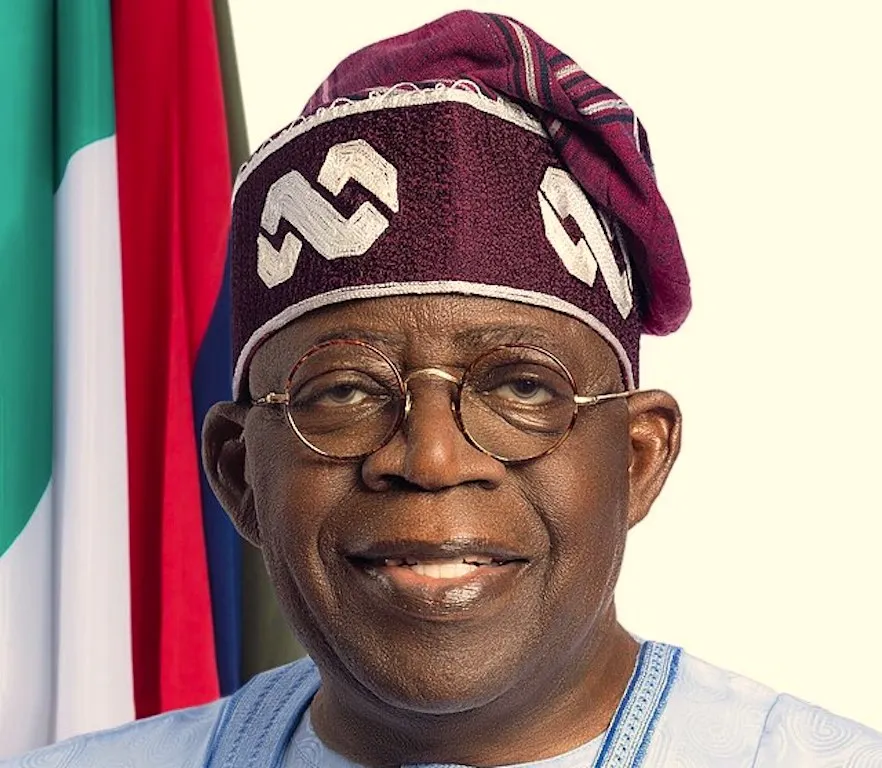
Tinubu Is No Paul Biya: The History El-Rufai Forgot....KINDLY READ THE FULL STORY HERE▶
My attention was recently drawn to a statement credited to the former governor of Kaduna State, Mallam Nasir El-Rufai, that Nigeria’s President, Bola Ahmed Tinubu, will become “Nigeria’s Paul Biya” if not voted out. He made this statement during a meeting with former Vice President Atiku Abubakar in September 2025 but came to public knowledge again recently on online platforms. El-Rufai also alleged that President Tinubu might attempt to remain in power indefinitely, similar to Paul Biya, who has ruled Cameroon since 1982. El-Rufai warned that unless Nigerians unite against the current administration by the 2027 elections, Tinubu could become a “president for life.”
Even though the Presidency has dismissed these claims as “baseless and absurd,” to me, it’s frankly quite a disappointing statement from a purported elder statesman and former governor for eight years. However, to set the record straight, let’s travel back in time.
The story of Tinubu’s democratic credentials begins in the dark days of the 1990s, when he stood as a central figure in the National Democratic Coalition (NADECO), alongside democratic icons like Wole Soyinka, Balarabe Musa, Arthur Nwankwo, Bolaji Akinyemi to mention but few risking his life and wealth to dismantle the despotic regime of Sani Abacha for a return to civilian rule. While Tinubu was braving the perils of self-exile to sustain the pro-democracy movement from abroad, it is notable that Nasir El-Rufai was largely absent from the activist trenches; instead, El-Rufai was romancing the military dictatorships of Abacha and Abdulsalami, getting juicy building and consultancy contracts during the construction of Abuja with his consulting firm, El-Rufai and Partners. According to a well-known activist, Senator Shehu Sani, El-Rufai never participated in the frontline struggle for democracy against the military dictatorship, particularly the June 12 movement. El-Rufai was even an economic adviser to the military leader, General Abdulsalami.
This history defines Tinubu as a leader whose very foundation is built on the struggle for freedom, making recent comparisons to “sit-tight” leaders like Paul Biya, who has reigned for over 40 years is not only historically absurd but a direct insult to a man who spent his life fighting such systems and to the peace-loving people of Nigeria who are the direct beneficiaries.
As Nigeria’s President since 2023, Tinubu has consistently leaned into his federalist roots, most notably through his relentless push for Local Government (LG) autonomy—a landmark shift that ensures federal allocations bypass the “imperial” control of state governors to reach the grassroots directly. His commitment to the rule of law and institutional decentralization is further evidenced by a 62% increase in FAAC allocations to subnational governments, effectively empowering states and LGAs with record resources for local development. President Tinubu has historically been a profound advocate of true federalism and a long-time proponent of restructuring Nigeria to devolve power and enhance fiscal federalism, allowing states greater autonomy over their resources.
Critics like El-Rufai, who claim these moves are “centralizing,” are often viewed by observers as merely trying to shift the narrative away from their own significant legal challenges. Indeed, El-Rufai currently faces a massive N423 billion corruption probe by the Kaduna State House of Assembly and remains in ICPC custody as of today, facing separate allegations of money laundering and cybercrime.
Conversely, President Tinubu has taken a gradualist approach to restructuring, utilizing his political capital to initiate bold and people-oriented reforms such as the removal of the petroleum subsidy and the unification of the foreign exchange rate, and more recently, the push for state police.
Going by the current political realities in the Nigeria political ecosystem, there is no denying the fact that El-Rufai’s recent bickering is certainly politically motivated 9 months to the presidential election. ADC, where El-Rufai is a key player, functions more like a political transit hub for defectors rather than a party with a distinct ideology, relying on recycled leaders from the PDP, LP and some frustrated as well as disgruntled APC Stewart
This has led many to view it as a marriage of convenience for 2027 ambitions. The party also lacks a robust grassroots structure, making it heavily dependent on the individual influence of its “heavyweight” members rather than a stable voter base. In fact, the ADC couldn’t win a council election in the FCT or any recent by-election in the country.
Beyond all the political noise, it is evident that the “Renewed Hope” agenda is delivering tangible dividends across critical sectors. In education, the Nigerian Education Loan Fund (NELFUND) has become a massive equalizer, disbursing over N99.5 billion to support more than 510,000 students in 228 institutions, ensuring that financial barriers no longer prevent any Nigerian from pursuing a higher education. Infrastructure is seeing a similar revolution, with legacy projects springing up, such as the 700 km Lagos-Calabar Coastal Highway and the 1,068 km Sokoto-Badagry Superhighway, which are designed to integrate Nigeria’s trade zones for the long term. In agriculture, the administration has moved toward large-scale mechanization, procuring over 10,000 tractors from global partners like Brazil and Belarus to boost food security. From the 3 Million Technical Talent (3MTT) program for youth to the creation of the Ministry of Livestock Development to end age-old conflicts,
Tinubu is demonstrating the steady hand of a statesman focused on structural fixes. While the initial reforms were seemingly painful, the results—including a record trade surplus of $13.17 billion, a lower inflation rate of 15.10%, food inflation of 8.89%, increased foreign reserves of $50 billion, and a significantly reduced debt-service-to-revenue ratio—suggest a country that is finally turning the corner toward sustainable economic growth and prosperity.
It’s fascinating to observe how the timing of these critiques aligns with the legal pressures facing the critics themselves. When a public figure is grappling with a N423 billion corruption probe by their own state’s assembly, as is the case with El-Rufai, it becomes difficult to view their “moral” outbursts as anything other than a strategic distraction. This is nothing but a classic political maneuver: creating a loud narrative shift to drown out the quiet, methodical progress of a silent achiever who has not only earned the admiration and support of Nigerians but has also demonstrated through his leadership that he most definitely deserves an additional four-year term come 2027.
[16/03, 7:43 am] George Agb: Dr George Agbakahi is an.APC chieftain and South East Leader of Tinubu Support Organization


Obanikoro Reveals Why He Branded Fashola A ‘Toy Governor’ Under Tinubu

I Thought I Would Lose My Mind’ — Biola Fowoshere Reveals Heartbreaking Ordeal After Marriage Crash

Fresh Shake-Up: Tinubu Unveils New Appointments, Three Oyo Indigenes Emerge

Peter Obi Reveals Why He Chose Kwankwaso As His 2027 Running Mate

Why Mahatma Gandhi’s Famous View On Believers Still Sparks Heated Debate

Mystery Deepens: New Details Surface In Mary Habila Death Investigation

Edo Governor Makes Major Shake-Up, Approves 20 Fresh Appointments

Oshiomhole Breaks Ranks, Opposes Fasina’s Confirmation Over Sexual Harassment Allegations

The Truth Must Be Told!’ – Full Text Of Umahi’s Explosive Remarks On Mary Habila’s Controversial Death
