
Latest
Supreme Court Slams “Blatant Abuse Of Court Process” In Explosive Nestoil Ruling

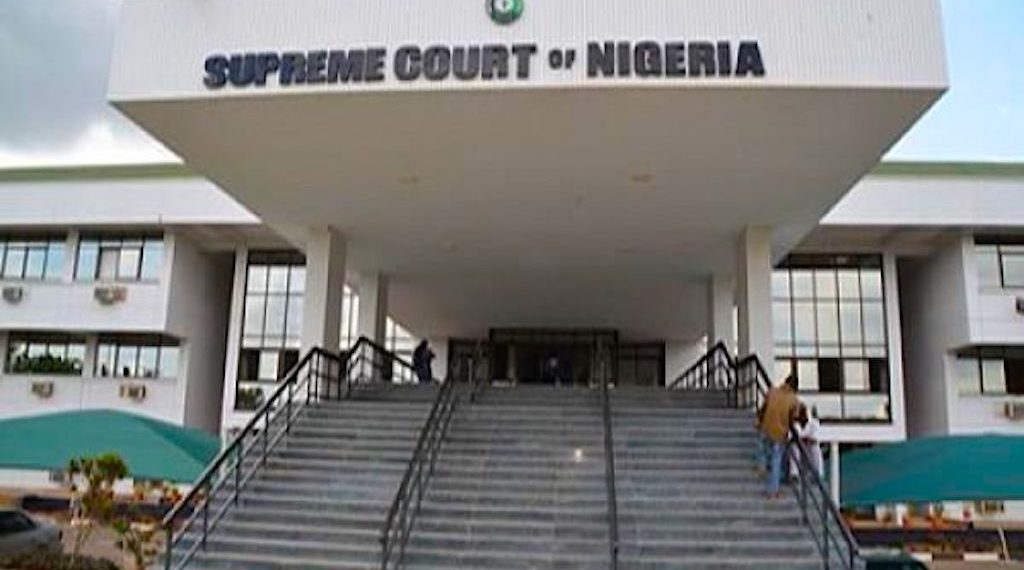
The recent Supreme Court ruling in the Nestoil dispute has sparked extensive discussions within Nigeria’s legal and business communities. Beyond settling a procedural disagreement over legal representation, the judgment has clarified the limits of receivership powers while reinforcing the constitutional right to fair hearing.....KINDLY READ THE FULL STORY HERE▶
Central to the case was a key issue: whether a court-appointed receiver, acting on behalf of creditors to recover debts, can control or dictate the legal representation of a debtor company involved in litigation initiated against it. The Supreme Court answered firmly in the negative.
In a strongly worded judgment delivered on April 10, 2026, Justice Emmanuel Akomaye Agim made the court’s position clear, rejecting any attempt to undermine a litigant’s freedom to choose its legal representation.
The court described the application in question as “a scandalous and despicable engagement in the gross abuse of the process of court,” signalling that such procedural conduct would not be tolerated.
The language used is notable not only for its severity but also for its legal significance, as such strong expressions are typically reserved for actions perceived to threaten the integrity of the judicial system itself.
Here, the court elevated the issue beyond a procedural irregularity, treating it as an affront to the administration of justice.
Although forceful in tone, the judgment reflects a broader commitment to fairness in adversarial proceedings. By rejecting any attempt by a receiver to impose counsel on a company in a dispute involving creditor interests, the court reaffirmed the principle that no party should effectively control both sides of a legal contest.
The decision also sends a strong warning that any manipulation of court procedures that undermines independent legal representation will attract firm judicial sanction.
Additionally, the ruling brings renewed scrutiny to the scope of receivership powers. The court drew a clear distinction between control of assets and control of corporate governance, stressing that while a receiver may manage specific company assets, that authority does not extend to stripping a company of its legal identity or displacing its directors entirely—especially where the validity of the receivership itself is being challenged.
Practically, the ruling confirms that companies under receivership still retain enough legal autonomy to defend themselves in court, a clarification that carries significant weight in Nigeria’s insolvency framework.
The Supreme Court also criticised the Court of Appeal for its handling of the matter, stating that it wrongly granted the application that disqualified the companies’ legal counsel.
According to the apex court, the lower court “abdicated its judicial responsibility and enabled a blatant abuse of the process of court” by doing so.
This rebuke highlights the responsibility of appellate courts to guard against procedural tactics that compromise fairness in litigation.
In the lead judgment, Justice Mohammed Baba Idris further clarified that where disputes arise over the legality or extent of a receivership, a company retains the authority to act through its directors to protect its interests.
This ensures that directors are not rendered completely powerless upon the appointment of a receiver, particularly in contested legal proceedings.
Reactions to the ruling have been mixed. Some legal practitioners argue that the Supreme Court merely reaffirmed existing legal principles, especially those relating to fair hearing and the right to counsel. Others, however, view the decision as a landmark clarification of receivership limits within Nigerian law.
Beyond the immediate parties—Nestoil Limited and Neconde Energy Limited—the judgment is expected to influence future insolvency practice by strengthening debtor companies’ right to choose legal representation, defining the boundaries of receivership authority, and reinforcing judicial intolerance for abuse of court processes.
Ultimately, the decision does not necessarily introduce new legal doctrine but reinforces established principles with greater clarity and authority, further strengthening the integrity of Nigeria’s adversarial justice system.


Adamawa Residents Escape Death As Troops Foil Boko Haram Attack

APC Power Bloc Throws Weight Behind Oyebanji Ahead Of Ekiti 2026 Polls

Inside Peter Obi’s Meeting With Ex-President Jonathan As Photo Goes Viral

Peter Obi Comment Sparks Backlash As Yesufu, Odinkalu Slam Shehu Sani

Supreme Court Slams “Blatant Abuse Of Court Process” In Explosive Nestoil Ruling

Breaking: Federal Government Of Nigeria Bans Cement Importation, Releases Full List Of Restricted Goods

Breaking: Complete List Of Charges Filed Against Timipre Sylva And Alleged Coup Network Exposed

Supreme Court Shocks Kano Emirate Case, Adjourns Hearing Till 2027

Bold Warning From PDP Chieftain As Bode George Advises Tinubu To Avoid Sycophants
