
Aju Mbaise Controversy: Woman Alleges Millipede Was Found After Two Family Members Died in UK
 Follow us on Google News
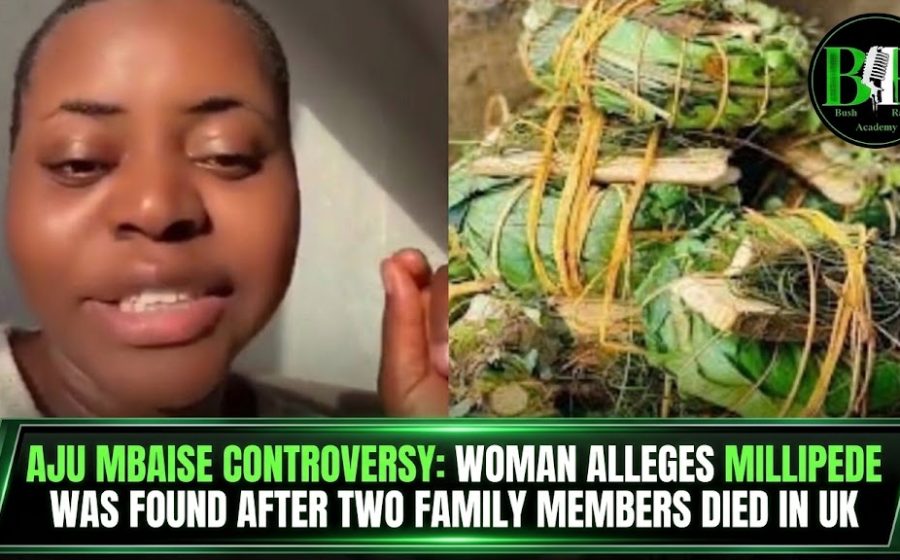
A woman has raised concerns over the preparation of Aju Mbaise, a traditional herb commonly used by some women during postpartum recovery, after alleging that a new mother and her mother died in the United Kingdom following the consumption of a meal containing the herb.
According to Bush Radio Academy, the woman recounted that the incident allegedly occurred when the older woman travelled from Nigeria to the UK to support her daughter after childbirth as part of the traditional Omugwo practice, in which family members assist new mothers during their recovery.
The narrator claimed that the new mother had recently been discharged from the hospital when her mother prepared a traditional meal containing Aju Mbaise for her. Shortly after eating, the younger woman reportedly began experiencing severe stomach discomfort, prompting the family to call an ambulance to take her to the hospital.
The woman further alleged that the new mother’s husband suspected that his mother-in-law might have deliberately poisoned his wife and confronted her over the meal. According to the account, he insisted that the older woman eat the same preparation to demonstrate that it was safe.
The narrator claimed that the older woman complied but later developed similar stomach pains. Both women were reportedly taken to the hospital, where they allegedly died.
The woman also claimed that the family subsequently examined the food and discovered a millipede among the Aju Mbaise. She suggested that the discovery might have been connected to the reported deaths.
However, the account has not been independently verified, and no hospital, police agency or UK health authority was identified as confirming the incident. There is also no medical or toxicological evidence in the account establishing that the herb, the alleged millipede or any other factor caused the reported deaths.
Following the claims, the narrator urged people who use Aju Mbaise during postpartum care to exercise caution when sourcing and preparing the herb. She advised users to inspect dried herbs and bundles carefully before cooking them to check for possible contamination.
She also noted that consuming Aju Mbaise is not compulsory for women recovering after childbirth, emphasising that other options are available for postpartum care.
The allegations have drawn attention to the importance of food hygiene and the careful handling of traditional herbs. Until the circumstances are confirmed by credible authorities, however, the reported deaths and their alleged connection to Aju Mbaise should be treated as unverified claims rather than established facts.







Comments
0 comments