
Latest
Archbishop Kawas Fires Back Over Tinubu Support, Reveals What Peter Obi Never Gave Him

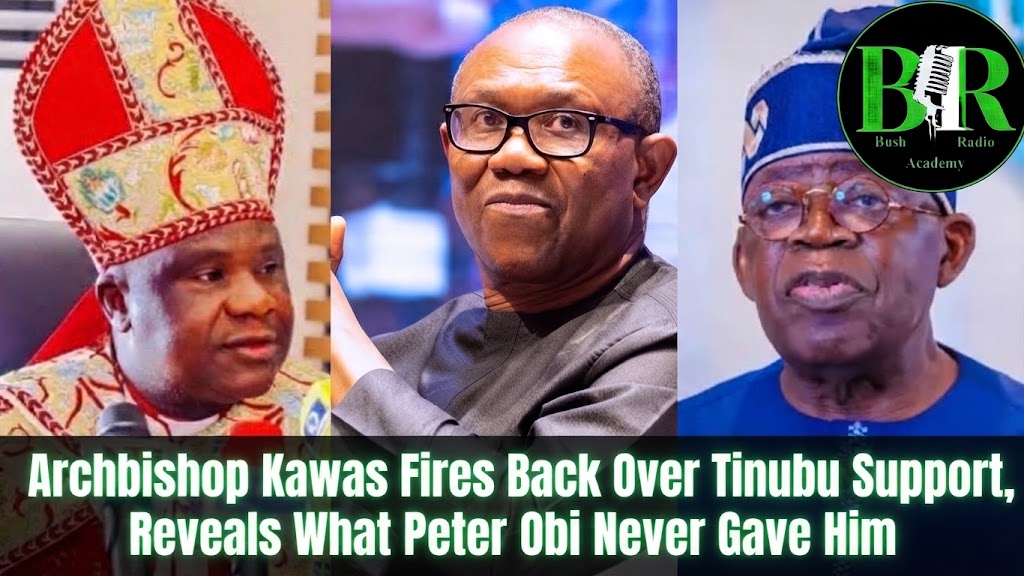
President General of the Charismatic Bishops Conference of Nigeria, Archbishop Leonard Bouwe Kawas, has defended his decision to endorse President Bola Tinubu for the 2027 presidential election, rejecting criticism that his political choice makes him a “fake bishop.”
According to Bush Radio Academy, Kawas addressed the controversy during an interview on Arise TV, where he recalled his support for Peter Obi during the 2023 presidential election.
The cleric explained that his support for Obi at the time was voluntary and that he did not receive any financial assistance from the former Anambra State governor or demand anything in return.
Kawas said he personally financed the transportation of six clergymen who travelled to support Obi’s campaign through prayers and other activities during the 2023 election.
According to him, Obi never questioned how he travelled to the campaign, where he stayed or what arrangements he made to participate in the political activities.
He argued that nobody described him as a fake bishop during the period because of his support for Obi, questioning why his credibility was now being challenged after he decided to endorse Tinubu.
Kawas said his latest political position was based on what he believes God has directed him to do, rather than any financial inducement or personal benefit.
The Archbishop maintained that his endorsement of Tinubu should not be interpreted as evidence that he was financially motivated, insisting that his political decisions are guided by his convictions.
His comments followed criticism from some Nigerians who questioned his decision to support Tinubu and labelled him a “fake bishop” because of the endorsement.
Kawas, however, stood by his position and maintained that religious leaders, like other citizens, have the right to make political choices and publicly support candidates they believe in.
The controversy has further renewed discussions about the involvement of religious leaders in Nigerian politics, particularly their influence in shaping public opinion and endorsing political candidates ahead of the 2027 presidential election.


Mbappé And Bellingham Fire Real Madrid To 4-1 Rout As Rayo Vallecano Are Crushed

Lady Sends Strong Message To Men: If You Want Traditional Wife Duties, Provide

Fear Grips Abuja As Man Claims He Was Robbed At Popular Millennium Park

Archbishop Kawas Fires Back Over Tinubu Support, Reveals What Peter Obi Never Gave Him

Datti Makes Bold Revelation About Peter Obi, Says I Could Have Helped Him Out in Benue

THE 18,439-VOTE MISSION WHY WADADA COULD BE TINUBU’S NASARAWA GAME CHANGER

Fake Miracle Exposed! Nollywood Actor Reveals How He Was Paid To Stage One

KWARA IS NOT RIVERS—BUT INJUSTICE HAS NO STATE OF ORIGIN

Marriage Advice Sparks Debate As Lady Reveals Lie Women Should Tell Men
