Connect with us

Latest

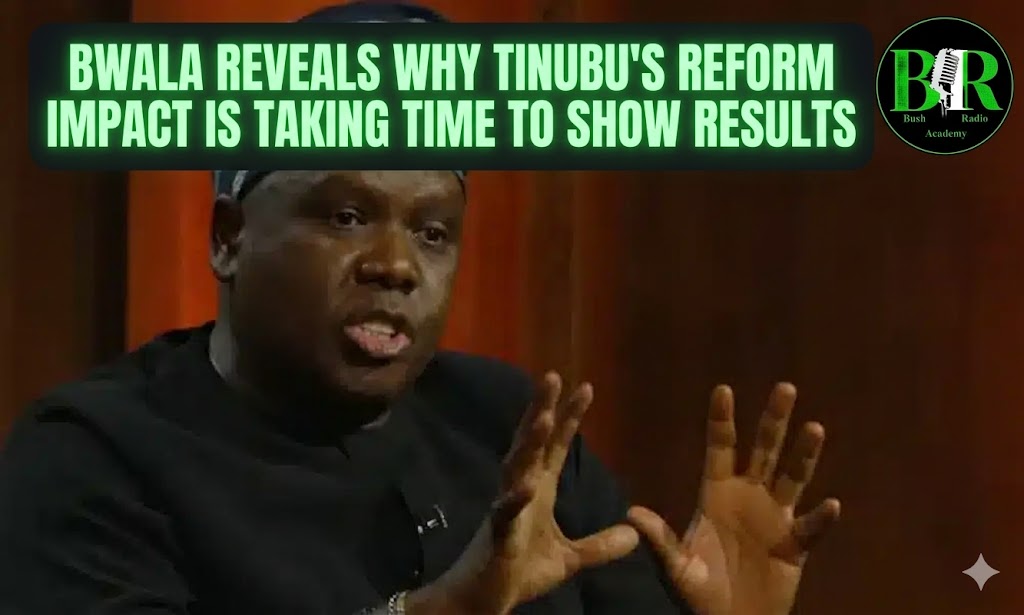
Bwala Reveals Why Tinubu’s Reform Impact Is Taking Time To Show Results

Published

on

The Special Adviser to President Bola Tinubu on Media and Policy Communication, Daniel Bwala, has explained that the gradual impact of the administration’s economic reforms is largely due to Nigeria’s large population and significant infrastructure challenges.....KINDLY READ THE FULL STORY HERE▶

Bwala noted that although government revenue has increased, the available resources are still insufficient to serve over 230 million citizens and address long-standing infrastructural deficits.

He made this known on Tuesday during an interview on Arise News.

According to him, the size of Nigeria’s population means citizens may not immediately feel the full benefits of the ongoing reforms.

Bwala stated: “The answer is simply population and resources. The population is over 230 million. The resources we have, however, even with the increased revenue, are not enough to match the population and the deficit in terms of infrastructure. So, growth will inevitably be slow, but it will be slow, steady, and consistent.”

States Receiving Higher Allocations

He added that one visible effect of the reforms is the increase in allocations to state governments, which he said has improved governance and development projects at subnational levels.

“When you talk about the increased revenue, the effect of that increased revenue is the higher allocation to states, which has resulted in state administration improvements and has also impacted the people,” he said.

Bwala, however, declined to compare states, stressing that his role is to speak on federal government policies and their overall impact.

He listed initiatives such as the Nigerian Education Loan Fund, the Compressed Natural Gas (CNG) transport programme, and healthcare interventions as examples of policies aimed at supporting low-income Nigerians.

According to him, the student loan scheme is enabling children from poor households to access higher education opportunities they might otherwise have missed.

He also pointed to interventions such as CNG adoption, dialysis subsidies, and support for Caesarean section procedures as targeted efforts to ease the burden on vulnerable citizens.

Bwala maintained that government policies are primarily designed with the poor in mind.

On poverty reduction, he said policy outcomes should be judged using data rather than perception alone, acknowledging that macroeconomic improvements often take time to reflect in household welfare.

He further admitted that while economic indicators may improve, citizens may still feel financial strain in the short term.

Despite this, he insisted that population pressure, limited resources, and infrastructure gaps remain key reasons why poverty reduction is progressing gradually under the reforms.

Advertisement
Click to comment

Leave a Reply

Your email address will not be published. Required fields are marked *