
Court Rules On Chimamanda Adichie’s Son’s Cremation, Clears Way For Coroner’s Inquest
 Follow us on Google News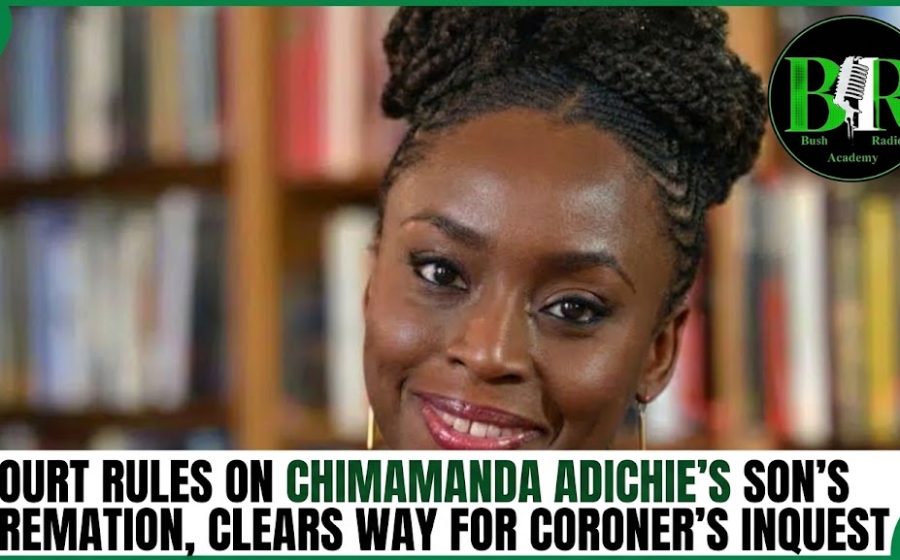
A Lagos State High Court sitting in Ikoyi has ruled that the cremation of Nkanu Esege, son of renowned Nigerian author Chimamanda Ngozi Adichie, cannot prevent a coroner’s inquest into the circumstances surrounding his death.
Justice Aishat Opesanwo delivered the ruling on Monday at the court’s sitting in Osborne Foreshore, Ikoyi, while striking out an application filed by Eurapharma Care Services Nigeria Limited, operators of Euracare Multi-Specialist Hospital.
The hospital had asked the court to stop the inquest, arguing that the cremation of Nkanu’s body made a post-mortem examination impossible. It also challenged the coroner’s decision to receive statements and other evidence from medical personnel and individuals connected to the facilities where he received treatment before his death.
However, Justice Opesanwo rejected the hospital’s arguments, maintaining that Section 15 of the Lagos State Coroners System Law, 2007, requires an inquest when the circumstances surrounding a death meet the conditions specified by the legislation.
The judge explained that conducting an inquest under such circumstances was a legal obligation rather than a matter of discretion.
She stated that once a death falls within any of the nine situations specified by the law and occurs within the relevant coroner’s district, the coroner is required to conduct an inquiry.
Justice Opesanwo further held that Euracare had failed to establish that the legal conditions empowering the coroner to conduct the investigation were absent.
According to the judge, the hospital’s argument placed undue emphasis on the location of the deceased’s body at the time of the inquest rather than the circumstances that initially gave the coroner jurisdiction to investigate the death.
She clarified that the law does not require a deceased person’s body to remain within the coroner’s district on the date the inquest is conducted.
The court also rejected the argument that cremation would necessarily render the investigation speculative or undermine its findings, allowing the coroner’s inquiry to proceed.
Nkanu Esege died on January 7, 2026, following medical procedures. His death prompted an investigation into the circumstances surrounding his final treatment and demise.
According to Bush Radio Academy, the ruling represents a significant development in the ongoing legal proceedings, as the court has made clear that the cremation of the deceased does not, in itself, prevent a coroner from fulfilling the statutory responsibility of investigating the circumstances of a death.







Comments
0 comments