
Latest
Drama In Oil Sector: Dangote Wants Imports Stopped, Marketers React

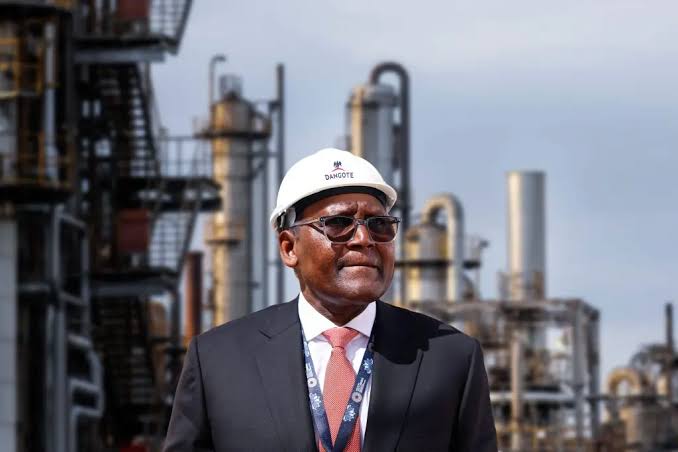
President of the Dangote Group, Aliko Dangote, has called on President Bola Tinubu to extend the ‘Nigeria First’ policy to include refined petroleum products—a proposal that drew sharp criticism from oil marketers and industry stakeholders on Sunday.....KINDLY READ THE FULL STORY HERE▶
Speaking at the Global Commodity Insights Conference on West African Refined Fuel Markets in Abuja, Dangote advocated for a ban on the importation of petrol, diesel, and other refined products. He argued that continued importation is undermining local refining capacity and threatening major investments in the sector.
The ‘Nigeria First’ policy, launched in May 2024, mandates that government ministries and agencies prioritize locally available goods and services. Foreign procurement is only allowed with a valid waiver from the Bureau of Public Procurement.
Leveraging this policy, Dangote urged the government to protect local refiners, including his newly launched $20 billion Dangote Refinery, from the influx of cheaper imported fuel, some of which he said are substandard and even toxic by international standards.
“To make matters worse, we are now witnessing increased dumping of low-quality petroleum products—often toxic—into Nigeria. Some of these blends are banned in Europe and North America,” Dangote stated.
He further alleged that importers are bringing in fuel subsidized in Russia, which distorts pricing and forces local producers to operate at a loss.
“Russian price caps are enabling the dumping of discounted petroleum products into African markets, undercutting our local production based on full crude prices,” he said. “In Nigeria, petrol and diesel prices are now as low as 60 cents—cheaper than Saudi Arabia—because of this unfair competition. We need protective policies, just like the U.S., Canada, and the EU have implemented.”
Addressing concerns of monopoly, Dangote clarified that his call was not to dominate the sector but to support local investment. He criticized wealthy Nigerians who invest abroad while sidelining local opportunities.
“Too many with the means to build the country are content criticizing from abroad instead of contributing to local development,” he said.
To demonstrate the refinery’s capacity, Dangote revealed that Nigeria has already become a net exporter of petroleum products. He said the refinery exported roughly 1.35 billion litres of petrol (1 million tonnes) between June and July 2025.
Marketers Push Back
Oil marketers, however, rejected Dangote’s appeal. Speaking to The Punch, Chinedu Ukadike, National Publicity Secretary of the Independent Petroleum Marketers Association of Nigeria (IPMAN), warned that banning imports would harm the sector.
“We do not support this call. Such a move could trigger monopoly and worsen inflation,” Ukadike said. “Even the NMDPRA has confirmed that Dangote cannot meet the country’s full demand. Imports should continue while we also buy locally.”
He disagreed with the claim that imports threaten local refiners, arguing instead that competition will drive efficiency.
Similarly, Billy Gillis-Harry, President of the Petroleum Products Retail Outlet Owners Association of Nigeria (PETROAN), said fuel importation is vital in a free-market economy.
“No single company should dominate the downstream sector,” he said. “We support banning imports of locally available goods like garri or toothpicks—but not fuel. Energy supply should remain diverse.”



Tension Builds At Emirates: UEFA Warning And Jorginho Criticism Rock Arteta’s Side

Transfer Twist: Maduka Okoye Accepts Exit As Frank Onyeka Closes In On Permanent Coventry Move

Sh*ck Twist: Bala Mohammed’s Alleged APC Defection Plan Falls Apart

₦34.44 Trillion Mystery: Peter Obi Reacts To World Bank Report, Calls For Urgent Probe

Controversy Erupts As Fani-Kayode Mocks ADC With Scathing Remark

Abba Kabir Yusuf Declares: ‘I Am APC Leader In Kano, Ganduje Can’t Give Me Orders

Here’s What Happened” — Ex-Army Chief Buratai Speaks On Borno Airstrike Tragedy

Succession Buzz: Olusi Reveals Who May Replace Sanwo-Olu In 2027

Amaechi Sparks Debate: Atiku’s Electoral Strength May Be Confined To The North
