
Latest
Fuel Panic Looms As Dangote Refinery Halts Petrol Loading, FG Races For Crude Supply

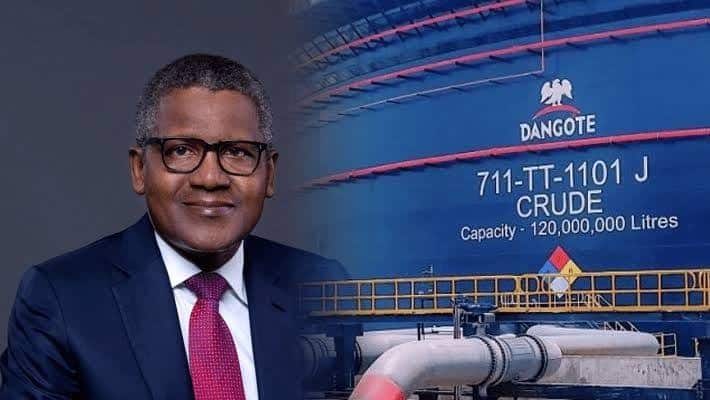
The Nigerian National Petroleum Company Limited (NNPCL), acting on behalf of the Federal Government, has begun efforts to secure crude oil supply for the Dangote Petroleum Refinery through third-party international traders in order to maintain domestic refining operations.....KINDLY READ THE FULL STORY HERE▶
Industry sources told The PUNCH that the national oil company is tapping into its global trading network to source crude for the refinery amid challenges affecting local crude allocations.
However, officials noted that the move may not immediately result in lower petrol prices for Nigerian consumers.
The development comes as Nigerians struggle with rising fuel costs following recent price adjustments by the $20 billion Lekki-based refinery.
Within a week, petrol gantry prices reportedly increased from ₦774 to ₦995 per litre, pushing retail pump prices above ₦1,000 per litre in several states. In some areas, filling stations are already selling petrol for as high as ₦1,200 per litre, further worsening the financial strain on households and businesses.
Oil marketers also disclosed that the refinery recently suspended the loading of Premium Motor Spirit (PMS), raising fears that another price increase could occur.
Analysts in the industry partly attributed the situation to geopolitical tensions in the Middle East involving Iran, the United States, and Israel.
The crisis has driven Brent crude prices above $92 per barrel while also disrupting global energy supply chains. Concerns around the Strait of Hormuz—one of the world’s most critical oil transit routes—have further contributed to the surge in crude prices.
A senior NNPCL official confirmed that the company is sourcing crude via international traders to maintain steady supply to the refinery.
“Leveraging our global crude trading network, we are sourcing third-party crude for the refinery at prices that are competitive with prevailing international market rates,” the official said.
The official added that NNPCL remains committed to supporting local refining operations.
“As the national oil company responsible for protecting Nigeria’s energy security, NNPC Limited remains fully committed to supporting domestic refining, including the Dangote Petroleum Refinery,” he said.
The refinery has also pointed to difficulties in accessing sufficient domestic crude supply.
Under the government’s naira-for-crude policy, the refinery is expected to receive about 13 crude cargoes monthly from NNPCL. However, it currently receives only around five cargoes each month, forcing it to import crude at international market prices.
A source within the refinery explained that the global energy crisis is affecting fuel prices worldwide.
“The current Middle East crisis is impacting global energy markets—crude oil, LNG and other fuels—which ultimately affects refined product prices across the world,” the source noted.
Energy stakeholders believe that improving local crude supply could help stabilise petrol prices.
The National Publicity Secretary of the Crude Oil Refinery Owners Association of Nigeria, Eche Idoko, said full implementation of the naira-for-crude policy could ease price pressures.
According to him, the Dangote refinery requires about 14 crude cargoes monthly from the government under the policy to meet its operational demand.
Idoko added that continued reliance on imported crude could lead to additional costs being transferred to consumers.
Meanwhile, the Chief Executive Officer of Petroleumprice.ng, Jeremiah Olatide, said restrictions on petrol import licences have strengthened the Dangote refinery’s influence in the local market.
He revealed that nearly 90 percent of oil marketers who applied for PMS import permits were reportedly denied approval.
“Imports should account for only about 20 to 25 percent of total supply, while the rest should come from local refining. That balance would boost the economy and improve energy security,” Olatide said.
Recent data from Kpler analytics also indicates a sharp increase in Nigeria’s crude imports from the United States.
US crude exports to Nigeria rose to 41.13 million barrels in 2025, compared with 15.79 million barrels in 2024—representing a 161 percent increase.
The surge highlights the growing reliance of Nigerian refineries on imported crude despite the country being Africa’s largest oil producer.
Amid supply challenges, the Dangote refinery has expanded its network of petroleum marketers to maintain consistent product distribution.
The number of approved distribution partners has grown from 13 companies to more than 30 nationwide, including NIPCO Plc, MRS Oil Nigeria Plc, TotalEnergies Marketing Nigeria Plc and Conoil Plc.
Industry analysts say the expansion aims to strengthen distribution channels while coping with supply constraints and volatile global oil prices.
With petrol currently selling between ₦1,030 and ₦1,100 per litre in major cities, transportation costs and the prices of goods and services have already begun to climb.


Obanikoro Reveals Why He Branded Fashola A ‘Toy Governor’ Under Tinubu

I Thought I Would Lose My Mind’ — Biola Fowoshere Reveals Heartbreaking Ordeal After Marriage Crash

Fresh Shake-Up: Tinubu Unveils New Appointments, Three Oyo Indigenes Emerge

Peter Obi Reveals Why He Chose Kwankwaso As His 2027 Running Mate

Why Mahatma Gandhi’s Famous View On Believers Still Sparks Heated Debate

Mystery Deepens: New Details Surface In Mary Habila Death Investigation

Edo Governor Makes Major Shake-Up, Approves 20 Fresh Appointments

Oshiomhole Breaks Ranks, Opposes Fasina’s Confirmation Over Sexual Harassment Allegations

The Truth Must Be Told!’ – Full Text Of Umahi’s Explosive Remarks On Mary Habila’s Controversial Death
