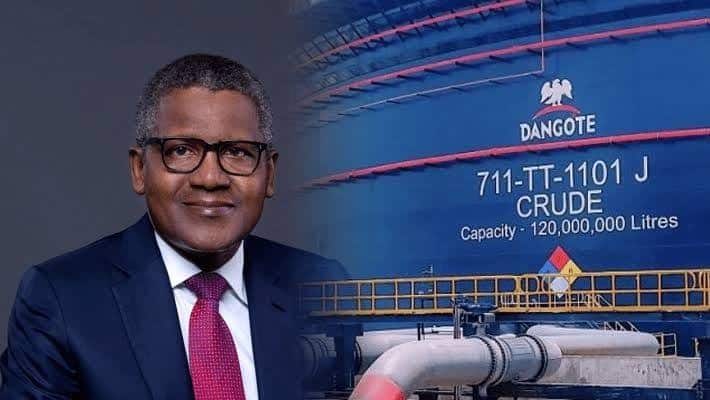
A senior official at the refinery disclosed on Tuesday night that the increase was driven by global crude oil price trends and prevailing market conditions.
Under the revised pricing, petrol increased by ₦75 per litre to ₦1,275—about a 5% rise—while diesel jumped by ₦200 per litre to ₦1,950.
This marks a significant jump from the previous month, when petrol sold for ₦1,200 per litre and diesel for ₦1,750. With diesel now nearing the ₦2,000 mark, there are growing fears that pump prices could climb even higher soon.
Industry analysts believe fuel marketers may pass the added costs on to consumers, which could drive up transportation fares and production costs nationwide.
The refinery attributed the price hike to fluctuations in the global oil market, noting that ongoing geopolitical tensions in the Middle East have pushed crude oil prices upward, directly impacting refined products.
According to the official, the adjustments reflect international pricing realities, with petrol rising modestly while diesel recorded a sharper increase.
The development was also confirmed by Petroleumprice.ng, which reported a 5.02% increase in petrol prices compared to previous rates.
The increase comes despite earlier expectations that operations at the Dangote Refinery—Africa’s largest—would help stabilise local fuel prices. However, experts point out that Nigeria’s fuel market remains closely tied to global crude oil benchmarks.
Recent volatility in the global oil market, largely due to tensions in the Middle East, has continued to influence pricing, as the region plays a major role in global oil supply.
With Nigeria’s downstream petroleum sector fully deregulated, fuel prices are determined by market forces such as international crude prices, exchange rates, logistics, and refinery costs—leaving consumers exposed to global price fluctuations.

 Follow us on Google News