
Latest
Judge Steps In: Mamman’s Lawyer Dragged Into Heated Courtroom Controversy

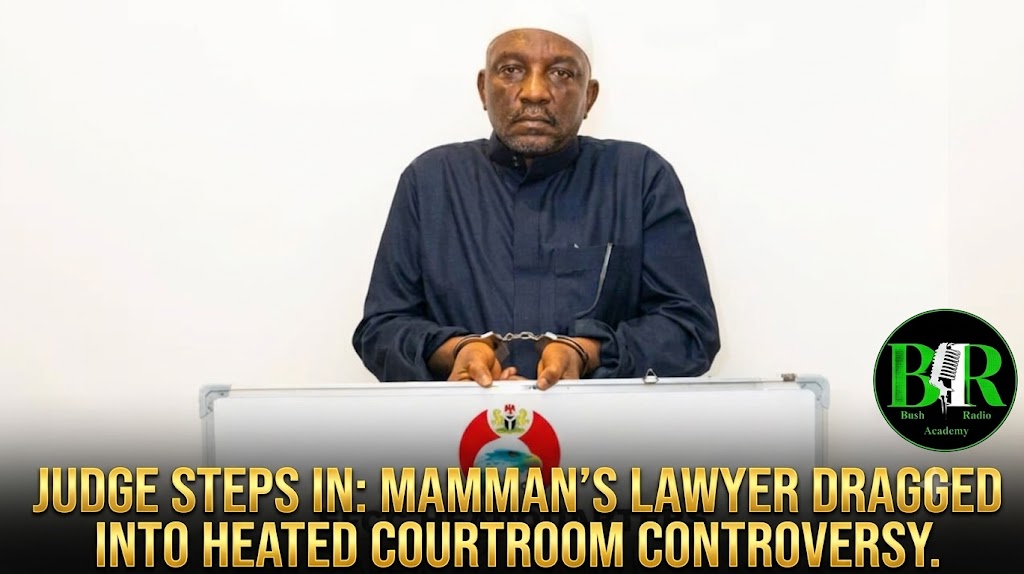
A Federal High Court in Abuja has ordered Mohammed Ahmed, counsel to former Minister of Power, Saleh Mamman, to appear before it over remarks contained in an affidavit he submitted following his client’s conviction.....KINDLY READ THE FULL STORY HERE▶
Justice James Omotosho issued the directive after reviewing an affidavit of facts filed by the lawyer on May 22, in which he allegedly suggested that the judgment against Mamman was influenced by the judge’s anger during court proceedings.
The court instructed Ahmed to appear on June 24, the same date scheduled for hearing an application by the Economic and Financial Crimes Commission (EFCC) seeking the forfeiture of additional properties linked to the former minister.
Mamman was convicted on May 7 on money laundering charges involving public funds and was subsequently sentenced to 75 years in prison on May 13.
He had previously been declared wanted after repeatedly failing to appear in court, including during proceedings where both the judgment and sentencing were delivered.
Following intelligence-led operations, EFCC operatives arrested Mamman on May 19 in Rigasa, Kaduna State. A relative, Shamsudeen Mohammed, was also taken into custody.
The anti-graft agency later arraigned him again on May 26, after which Justice Omotosho ordered his remand at the Kuje Custodial Centre to commence his sentence.
The court had earlier fixed June 8 for hearing an EFCC application seeking the permanent forfeiture of five additional properties allegedly connected to Mamman. The assets include Walijam Apartments on Lobito Crescent, Wuse 2; Bloom Luxury Suites Nigeria Limited in Unguwan Rimi, Kaduna; two mansions on Misratah Street, Wuse 2; and A.U.A. Plaza on Kade Street, Wuse 2, Abuja.
At the June 8 sitting, EFCC counsel and Director of Public Prosecution, Rotimi Oyedepo, informed the court that the properties were allegedly proceeds of criminal activity and should be permanently forfeited to the government.
During proceedings, Justice Omotosho drew attention to the affidavit submitted by Ahmed and sought clarification on its contents. The prosecution team stated that it had not been served with the document, prompting the court to order that it be formally delivered.
The judge further directed Ahmed to personally appear in court to explain the statements made in the affidavit.
However, when the matter resumed on Wednesday, Ahmed was absent. Another member of the defence team, Suleiman Yakubu, informed the court that the lawyer was ill, reportedly suffering from a persistent cough and had travelled to his village for treatment.
Justice Omotosho questioned the explanation, particularly the suggestion that the illness could be tuberculosis.
Prosecuting counsel, Rotimi Oyedepo, expressed concern over the defence team’s conduct, insisting that legal practitioners are expected to maintain proper communication and professionalism during proceedings.
He said the prosecution was ready to proceed with the forfeiture application and criticised what he described as poor coordination from the defence.
In response, Yakubu rejected the criticism, arguing that it was unfair to suggest that the defence team was reacting out of frustration over the outcome of the case.
After considering the submissions, Justice Omotosho granted the defence another opportunity and ordered Ahmed to appear in person.
The case was adjourned to June 24 for hearing of the EFCC’s forfeiture application and for the lawyer’s appearance to address issues arising from the affidavit.


Inside The Green Chamber: Full List Of 37 Constitutional Amendment Bills Put To Vote

Abubakar Momoh Engages CCECC President At Global Infrastructure Forum In China

Dickson Reveals: Obi And Kwankwaso’s Move To NDC Was Carefully Planned, Not Sudden

Tinubu Charges Citizens On Tax Payment, Says Infrastructure Depends On Compliance

Outrage In House Of Reps As Fresh Lawmakers Barred From Key Leadership Positions

Saraki Camp Hit By Major Setback As Kwara PDP Governorship Candidate Defects

Real Recognizes Real: Saliu Mustapha Joins Wike As Tinubu Commissions Landmark Abuja Project(Photos)

Power Speaking To Power: Why Oshiomhole Is Demanding Results, Not Excuses

Political Drama: Kwankwaso Reveals Condition For Forgiving Gov Abba Yusuf
