
Nigerian Lady Avoids Suspected ₦850,000 Transfer Scam After Refusing Strange Refund Request
 Follow us on Google News
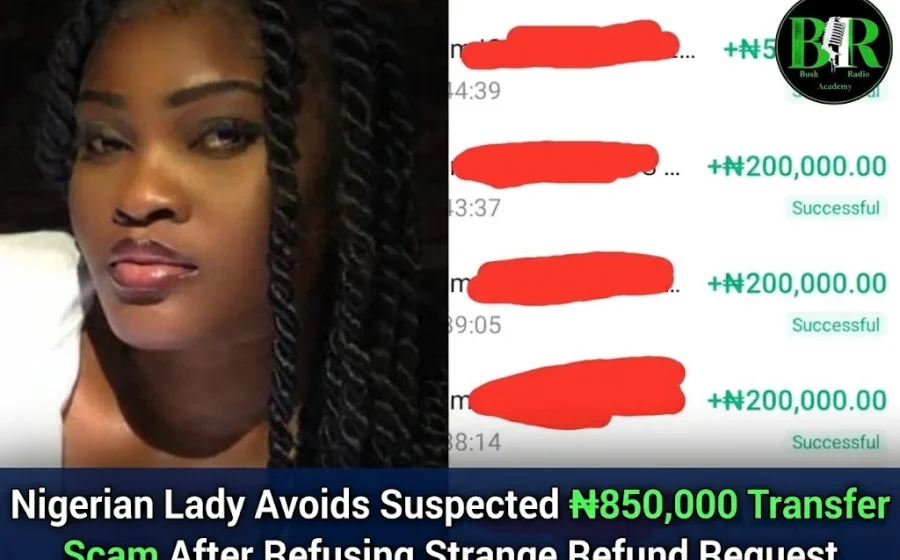
A Nigerian woman has shared how she reportedly avoided a suspected money transfer scam after receiving ₦850,000 in multiple transactions into her OPay account, only for the individual who contacted her to become angry when she returned the funds to the original sending account.
The woman disclosed that the money entered her account through four separate transfers of ₦200,000 each and another transaction of ₦50,000.
According to her account, shortly after the transactions were completed, a woman contacted her, claiming the money had been transferred mistakenly. The caller reportedly requested that she return the funds to a different bank account.
However, the recipient became suspicious of the request and decided not to send the money to the alternative account provided by the caller.
Recounting the incident, she explained that the caller contacted her through the same OPay account shortly after the funds arrived and claimed the transfers were accidental.
She said the individual subsequently asked her to send the money to another account, prompting her to block the caller and return the funds to the original account from which they had been transferred.
The woman further alleged that the caller later reached out using another phone number and questioned why she had returned the money to the original account instead of following her instructions.
According to her, the second caller became aggressive and began shouting at her, forcing her to block the number as well.
The woman expressed appreciation to OPay for its refund feature, which she said helped her return the money without sending it to an unrelated account.
She also warned Nigerians to exercise caution whenever they receive unexpected bank transfers, particularly when someone claiming to be the sender requests that the money be refunded to a different account.
Her experience has renewed attention to the risks associated with suspicious transfer requests and the importance of verifying transactions before returning funds. Financial safety experts generally advise recipients to use official banking channels to resolve mistaken transfers rather than independently sending money to an account supplied by an unknown caller.







Comments
0 comments