
Politics
Nigeria’s Working Class In Despair: NLC Reveals Shocking Poverty Levels

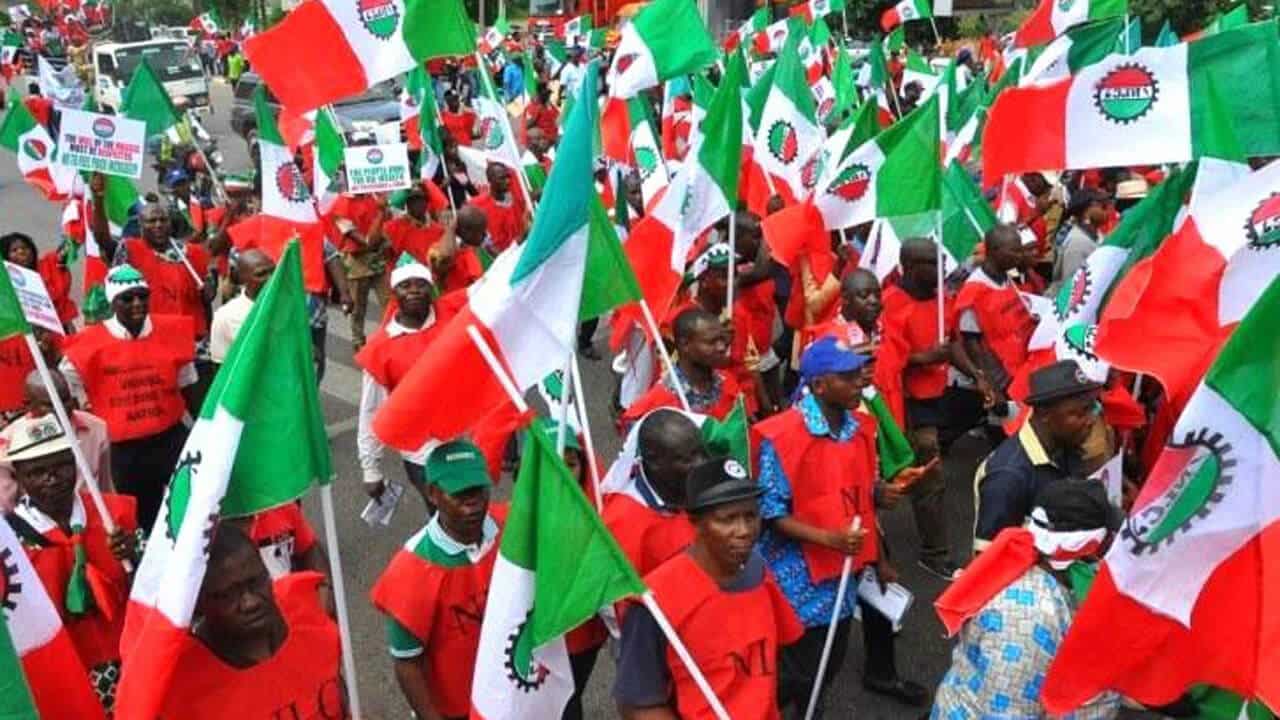
The Nigeria Labour Congress (NLC) has condemned the severe hardship faced by citizens due to government policies and inflation.....KINDLY READ THE FULL STORY HERE▶
Ismail Adejumo, the Public Relations Officer of NLC, Lagos Council, emphasized the urgent need for the government to introduce palliative measures in the new year to alleviate the suffering of citizens.
In an interview with News Central on Thursday, Adejumo responded to the organized labour’s call for the withdrawal of the Tax Reform Bill and a review of the minimum wage. He argued that the current ₦70,000 minimum wage is not a livable amount.
Adejumo pointed out that President Bola Tinubu had promised workers a living wage, which has not yet been fulfilled. He noted that the ₦70,000 minimum wage is insufficient in light of rising inflation, making it impossible for workers to meet basic needs.
“Before the ₦70,000 minimum wage was agreed upon, we considered the country’s inflation and the high cost of living, which have significantly impacted the living standards of Nigerians and workers. That’s why we opted for a three-year review instead of the original five-year period. However, given the current economic conditions, it’s clear that Nigerians, especially the working class, are struggling to survive,” Adejumo explained.
He added that any government measures to ease the impact of rising prices, including the cost of goods and services, must be urgently considered. He recalled how some state governors who had initially opposed the ₦60,000 wage were now offering as much as ₦80,000 or ₦85,000, creating a significant disparity.
“While we understand we can’t have a uniform minimum wage, what we are asking for is a living wage, which the President promised us. Nigerians are living in abject poverty, particularly the working class. This is not a livable wage,” he stressed.
Adejumo reiterated that the labour movement’s primary demand is to address the hardship faced by citizens and workers. He pointed to the recent stampedes during the Christmas season caused by hunger as a dire reflection of the situation.
He also called for the rollout of the President’s promised palliative measures, such as the CNG buses, to reduce transportation costs. Additionally, he stressed the need for food relief to address the widespread hunger that has claimed lives.
“The Minimum Wage Act signed by the President for 2024 is a legal matter and cannot be reviewed until 2027, as the agreement was based on a three-year timeline. However, what we are highlighting is that government policies directly impact citizens’ lives, and workers are particularly vulnerable. Only workers face stagnant wages while other sectors adjust to inflation. The rising cost of goods means what you buy today won’t be the same tomorrow, which is severely affecting working people,” Adejumo concluded.



Ize Iyamu’s Continuous Stakeholder Consultations Reshape Political Dynamics in Edo South

Sh*ckwaves In Opposition Camp As Peter Obi Speaks On Atiku’s Exit Strategy

Political Tension Rises As Osun APC Disowns Viral Video Alleging Ogunbiyi Link

Tension in Ibadan: Makinde, Assembly, And Traditional Throne Dragged Into ₦1bn Inducement Saga

Atiku Abubakar Slams National Broadcasting Commission Advisory, Warns Of Press Freedom Threat

Abba Kabir Yusuf Declares: ‘I Am APC Leader In Kano, Ganduje Can’t Give Me Orders

Here’s What Happened” — Ex-Army Chief Buratai Speaks On Borno Airstrike Tragedy

Succession Buzz: Olusi Reveals Who May Replace Sanwo-Olu In 2027

Amaechi Sparks Debate: Atiku’s Electoral Strength May Be Confined To The North
