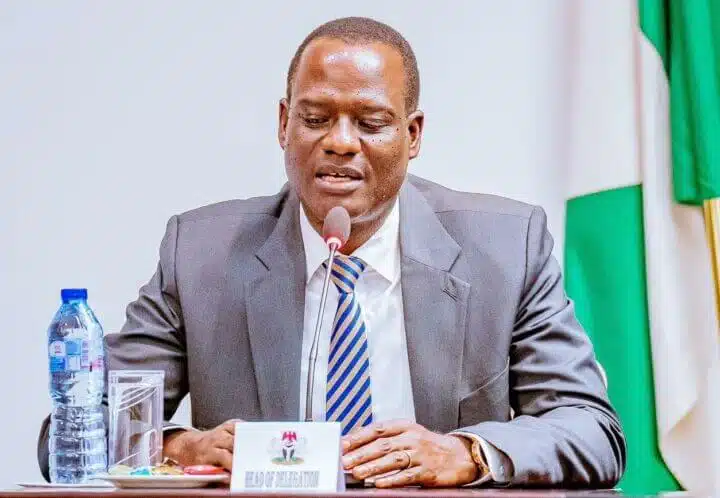
He made this known on Tuesday in Paris, France, during a meeting between President Bola Tinubu and global investors.
Oyedele also stated that the government would not adopt petrol price controls, maintaining that it remains committed to allowing market forces to determine pricing.
According to him, “We will not bring back fuel subsidy because it creates distortions in the economy, and we will not introduce price control because we believe in the market. The current global situation presents opportunities as countries seek to diversify energy sources and invest in emerging markets.”
President Bola Tinubu, who also addressed the investors, said the removal of fuel subsidy has contributed to stabilising Nigeria’s foreign exchange market.
In a statement by his Special Assistant on Social Media, Dada Olusegun, the President described the subsidy system as a heavy burden on the nation’s finances.
Tinubu said, “The subsidy, which was a burden on the entire country, was removed, and since then we have achieved FX stability.”
He added that his administration remains committed to sustaining economic reforms, improving transparency in the oil sector, and strengthening national security.
According to him, the focus is on consistent policy implementation to ensure that reforms deliver tangible benefits to Nigerians.
Tinubu’s removal of fuel subsidy in May 2023 led to significant increases in fuel prices, transportation costs, and food inflation across the country, triggering widespread economic pressure on households.
Inflation rose sharply in the months that followed, with food prices and transport fares increasing significantly, deepening the cost-of-living challenges.
Despite public concerns, Oyedele’s remarks in Paris suggest that the administration has no intention of reversing the subsidy removal policy.
Government Reaffirms Reform Agenda
In a separate statement, presidential aide Bayo Onanuga said the reforms are designed to correct economic distortions and strengthen macroeconomic stability.
He added that the government’s priority is to ensure policy stability, fiscal discipline, and effective implementation of economic reforms.
At the investor meeting, Oyedele also disclosed that Nigeria recorded strong GDP growth in dollar terms in 2025 and reaffirmed the country’s ambition of building a $1 trillion economy by 2030.
He noted that the government plans to begin publishing quarterly financial reports to boost transparency and investor confidence.
The Director General of the Debt Management Office, Patience Oniha, assured investors that Nigeria remains committed to responsible borrowing and sustainable debt management.
The meeting was attended by representatives of major global investment firms, who expressed optimism about Nigeria’s economic direction and praised ongoing reforms.