
Outrage In Abuja: FCT Teachers, Council Workers Storm Streets Over Unpaid Salaries
 Follow us on Google News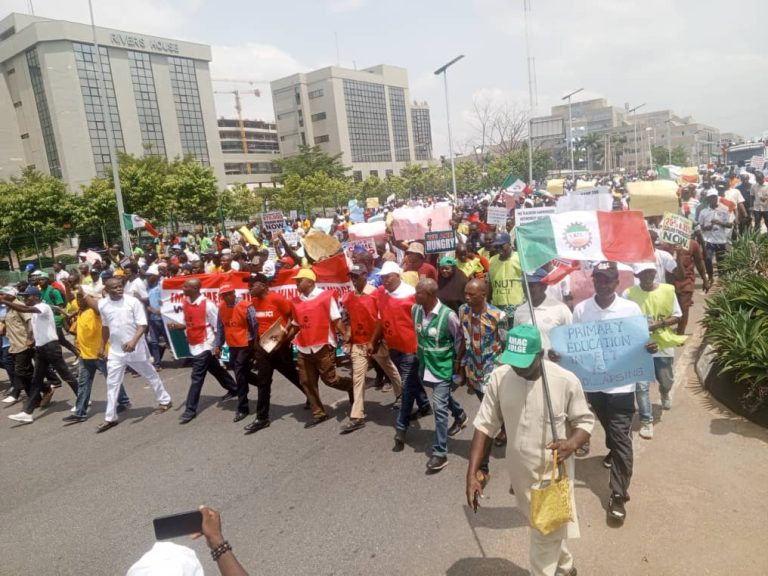
Primary school teachers and local government staff from the six Area Councils in the Federal Capital Territory (FCT) took to the streets of Abuja on Thursday in a peaceful protest, voicing their frustration over the prolonged delay in payment of their entitlements and the recently approved new minimum wage.
Under the banners of the Nigeria Union of Teachers (NUT) and the Nigeria Union of Local Government Employees (NULGE), the protesters marched in unity, condemning the refusal of the Area Council Chairmen to implement the ₦70,000 minimum wage and associated benefits.
Originally scheduled for Wednesday, the protest drew strong participation from workers across all six Area Councils, highlighting widespread discontent among education and council staff.
The unions decried the disparity between their treatment and that of their colleagues working directly under the FCT Administration, who are already receiving the upgraded wage structure.
Speaking to journalists in Gwagwalada, NULGE’s FCT Secretary, Comrade Sa’ad Abdulmumin, said the protest was a strategic move to draw national attention to their ongoing marginalization.
He emphasized that although the FCT Minister, Nyesom Wike, had approved and released ₦4.1 billion to support the new wage policy, the Area Council Chairmen have failed to act.
Abdulmumin further noted that in addition to ignoring the ₦70,000 minimum wage, the council authorities have also refused to implement the ₦30,000 wage award, salary adjustments ranging from 25% to 35%, a 40% peculiar allowance, and a 35% increase under the CONHESS/CONMESS salary structures.
Moreover, pension contributions have not been remitted to the employees’ Pension Fund Administrators (PFAs), adding to their growing list of grievances.
Despite multiple rounds of industrial action, Abdulmumin lamented the unyielding stance of the council leadership, describing them as “adamant, unmoved, and insensitive” to the plight of their workers and teachers.



Comments
0 comments