
Relief For Motorists As Dangote Cuts Petrol Price To ₦1,210 Per Litre
 Follow us on Google News
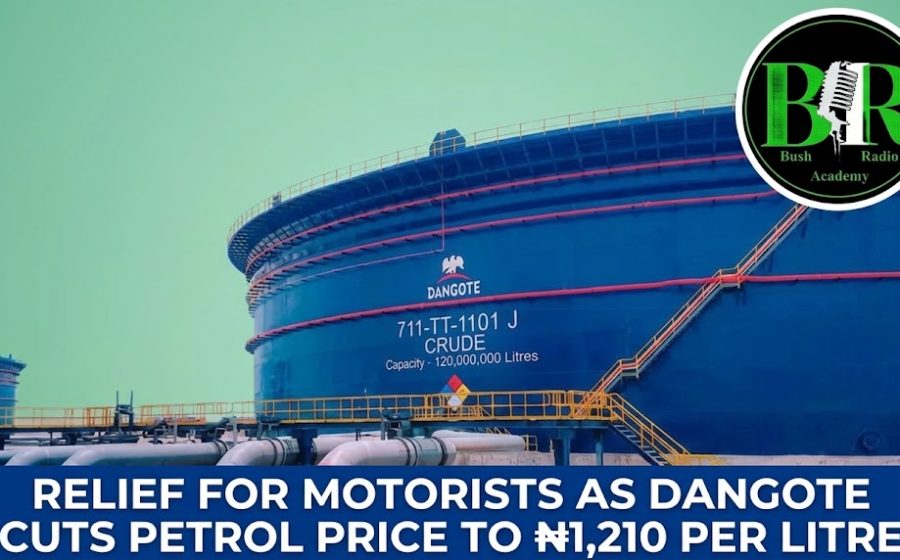
Motorists in Nigeria may soon enjoy some relief as the Dangote Petroleum Refinery has reduced its petrol gantry price by ₦55, bringing the cost down from ₦1,265 to ₦1,210 per litre.
The reduction represents a 4.35 per cent adjustment and has already prompted some petroleum depot operators to lower their prices in response to the refinery’s latest pricing decision.
The development was announced by consortium marketers linked to the refinery, with the price adjustment reportedly following a decline in the European gasoline benchmark, known as EBOB, which serves as one of the refinery’s pricing references.
Data from Petroleumprice.ng indicated that depots in Lagos closed trading on Thursday at an average price of approximately ₦1,300 per litre.
However, by Friday, October 30, several depot owners had begun adjusting their prices downward, with some reportedly reducing their rates by as much as ₦40 per litre following Dangote Refinery’s announcement.
The price reduction has also raised expectations of lower petrol prices at filling stations across the country.
Managers of outlets operated by MRS and the Nigerian National Petroleum Company Limited (NNPCL) indicated that pump prices could be adjusted in the coming days as the impact of the refinery’s new rate spreads through the supply chain.
An NNPCL station manager in Abuja, who spoke anonymously, said the outlet expected to reduce its petrol price following the latest development.
Similarly, a manager at an MRS filling station confirmed that customers could begin to see lower prices in the coming days.
The President of the Independent Petroleum Marketers Association of Nigeria (IPMAN), Abubakar Maigandi, also confirmed that members of the association were prepared to review their pump prices once they received petrol supplies from the Dangote Refinery.
According to Maigandi, independent marketers would begin reducing their selling prices as soon as the new supplies became available to them.
The latest development is expected to influence competition among fuel retailers, although the actual prices motorists pay will depend on supply costs, transportation expenses and individual marketers’ pricing decisions.







Comments
0 comments