
Reps Move Against Dollar Pricing, Demand End To Foreign Currency Charges On Local Petroleum Products
 Follow us on Google News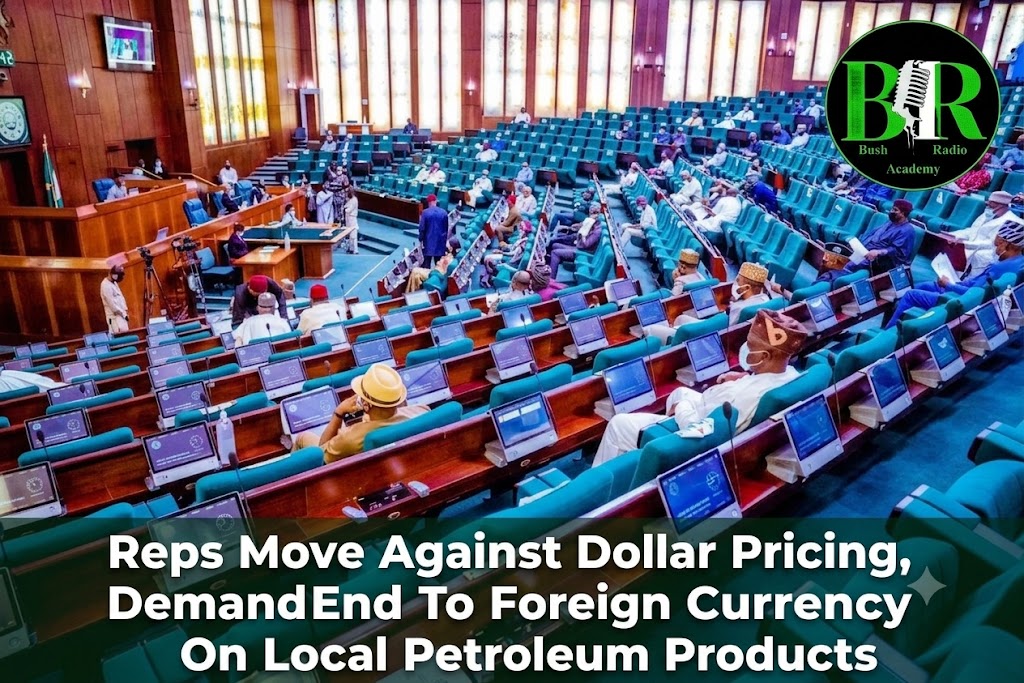
The House of Representatives has launched fresh efforts to address persistent challenges in Nigeria’s downstream petroleum industry, opposing the continued use of U.S. dollar-denominated charges on petroleum products refined locally and announcing plans to probe the allocation of fuel import licences.
The House Committee on Petroleum Resources (Downstream) disclosed this on Tuesday during a stakeholders’ engagement with key industry players, including the Independent Petroleum Marketers Association of Nigeria (IPMAN), the Depot and Petroleum Products Marketers Association of Nigeria (DAPPMAN), and the Major Energies Marketers Association of Nigeria (MEMAN).
The meeting is part of the National Assembly’s ongoing review of the Petroleum Industry Act (PIA), aimed at boosting domestic refining, strengthening energy security and promoting a more competitive downstream petroleum market.
Chairman of the committee, Ikenga Ugochinyere, said the lawmakers would summon the Nigerian Midstream and Downstream Petroleum Regulatory Authority (NMDPRA), the Nigerian Upstream Petroleum Regulatory Commission (NUPRC), the Nigerian Ports Authority (NPA), the Central Bank of Nigeria (CBN), refinery operators and other relevant agencies to respond to concerns raised by stakeholders.
According to him, the consultations will shape proposed amendments to the Petroleum Industry Act and other legislative measures designed to address identified gaps in the downstream sector.
Ugochinyere also criticised the continued collection of port charges in foreign currency for petroleum products refined and transported within Nigeria, describing the practice as detrimental to the economy.
He argued that charging operators in dollars for purely domestic transactions ultimately increases the retail cost of Premium Motor Spirit (PMS), placing an additional burden on consumers.
Probe Planned Into Fuel Import Licence Allocation
The committee also announced plans to investigate allegations that import licences for the first three quarters of 2026 were repeatedly allocated to the same group of marketers.
Ugochinyere said the NMDPRA would be required to explain the criteria used in issuing the licences, stressing that lawmakers would ensure fairness and transparency in the allocation process.
He added that the committee was working to strike a balance between encouraging investment in domestic refineries and protecting the investments made by petroleum marketers.
According to him, while Nigeria must reduce dependence on imported fuel as local refining capacity expands, the country also needs contingency plans to guarantee energy security whenever domestic refineries experience operational disruptions.
DAPPMAN Warns of Growing Market Imbalance
Presenting DAPPMAN’s position, the association’s Executive Secretary, Olufemi Adewole, warned that structural challenges within the downstream sector were threatening the survival of marketers and depot operators.
He disclosed that 72 of Nigeria’s 154 licensed petroleum depots recorded little or no commercial activity over the past year, attributing the situation to an uneven competitive environment, persistent trading losses and limited access to alternative fuel supplies.
Adewole acknowledged the impact of the Dangote Petroleum Refinery but cautioned that marketers were becoming increasingly dependent on a single supplier of petrol.
While noting that the Petroleum Industry Act envisages a fully deregulated market, he argued that operators were yet to experience genuine competition.
DAPPMAN also accused the NMDPRA of repeatedly issuing import permits to the same marketers throughout the first three quarters of 2026, calling for a more transparent and equitable allocation process.
The association maintained that retaining fuel importation as a contingency mechanism remains necessary to prevent supply shortages whenever local refineries undergo maintenance or experience production setbacks.
It further criticised what it described as multiple port charges and the continued billing of domestic petroleum transactions in U.S. dollars despite an existing presidential directive against the practice.
DAPPMAN urged the Federal Government to fast-track the dredging of inland waterways, rehabilitate pipelines and storage depots, improve rail infrastructure for petroleum transportation and implement a comprehensive downstream logistics master plan.
IPMAN Calls for Petroleum Bank
The National President of IPMAN, Abubakar Shettima, welcomed the Federal Government’s efforts to encourage private investment in refining but lamented the high cost of doing business in the sector.
He said marketers continue to grapple with expensive bank loans, multiple taxation, exchange rate volatility and limited access to locally refined petroleum products.
To address the financing challenge, Shettima proposed the establishment of a specialised Petroleum Bank that would provide operators with single-digit interest loans, arguing that current commercial lending rates of up to 32 per cent ultimately increase fuel prices for consumers.
He also urged multinational oil companies still engaged in fuel importation to invest in domestic refining capacity instead of relying primarily on imports.
On the future of Nigeria’s state-owned refineries, Shettima recommended allowing independent marketers to participate in their management, saying such collaboration could accelerate the rehabilitation and efficient operation of the facilities.



Comments
0 comments