


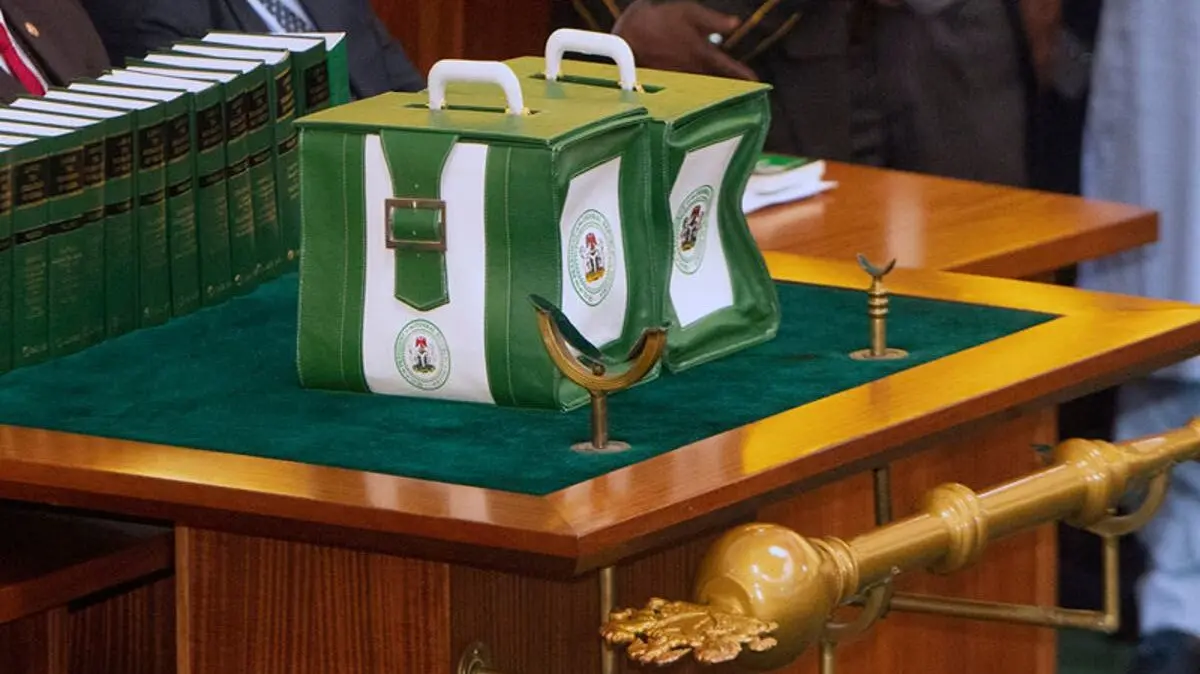
The implementation of the 2023 budget, valued at N21.8 trillion, faces a critical threat due to a significant decline in crude oil production, amounting to 470,000 barrels per day (bpd) in August 2023.....KINDLY READ THE FULL STORY HERE▶
At the current global market price of $92 per barrel, this 470,000 bpd deficit translates to a daily loss of $43.2 million or N32 billion, calculated based on the Central Bank of Nigeria’s exchange rate of N742.10/$.
The budget was originally based on projections of 1.69 million bpd, priced at $75 per barrel, with an exchange rate of N437.57/$, aiming to generate N2.29 trillion from the oil sector in 2023….CONTINUE READING
However, in its September Monthly Oil Market Report (MOMR), the Organization of Petroleum Exporting Countries (OPEC) revealed that Nigeria’s crude oil production, excluding condensate, only reached 1.2 million bpd, with an output of 233,531 bpd, falling short of the production quota of 1.8 million bpd set by OPEC during the same period.
Crude oil theft is cited as the primary reason for Nigeria’s failure to meet both its budget benchmark and OPEC production quota.
Furthermore, the Nigerian Upstream Petroleum Regulatory Commission (NUPRC) reported that the nation’s condensate output also fell short at 233,531 bpd (Blended and Unblended), indicating a failure to meet the established target.
In response to this situation, Mazi Colman Obasi, the National President of the Oil and Gas Service Providers Association of Nigeria, pointed out that the high crude oil prices at $92 per barrel could have mitigated the negative impact of the low output.
However, he noted that Nigeria is currently subsidizing fuel imports due to significantly increased prices of refined petroleum products in the global market.
Osagie Osunbor, the Country Chair of Shell Companies in Nigeria, confirmed the severity of oil theft and its impact. He mentioned operational challenges faced by the company, including the declaration of force majeure in March 2022, and highlighted the ongoing challenges of sabotage and crude oil theft in Nigeria.
These issues not only result in the loss of tax revenue but also endanger lives and pose serious environmental risks. Collaboration with the Nigerian government and stakeholders is ongoing to combat crude oil theft effectively.


