
Latest
Tension Escalates As Abdulsalami Cautions Trump Over Anti-Nigeria Comments

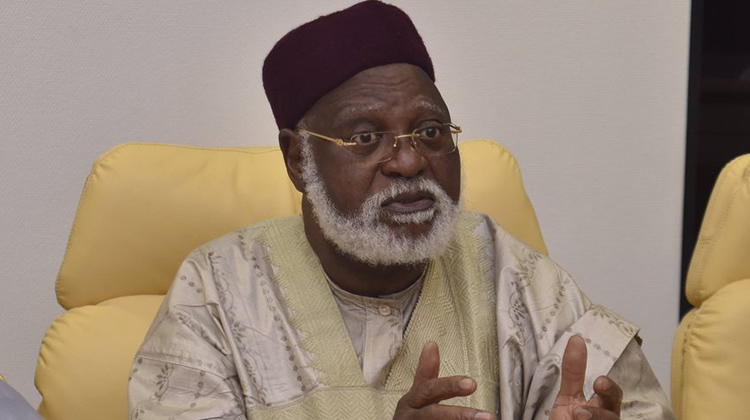
Former Head of State, General Abdulsalami Abubakar (retd.), has cautioned U.S. President Donald Trump against making inflammatory statements that could destabilise Nigeria, urging Washington instead to support the nation’s efforts to tackle insecurity.....KINDLY READ THE FULL STORY HERE▶
Speaking in a telephone interview from London, Abdulsalami told the News Agency of Nigeria (NAN) that Trump’s recent classification of Nigeria as a Country of Particular Concern (CPC) over alleged “Christian genocide” was a dangerous oversimplification that could undermine national unity.
On October 31, 2025, Trump announced Nigeria’s redesignation as a CPC, warning that unless the Tinubu administration acted swiftly, the United States might suspend aid and even “unleash the Department of War” to stop attacks on Christians.
The comments provoked outrage across Nigeria, with politicians, religious leaders, and civic groups condemning Trump’s remarks as “provocative and reckless.” The Presidency has since confirmed that a meeting between President Bola Tinubu and Trump is being arranged to defuse tensions.
In his reaction, Abdulsalami described Trump’s statement as “a grave threat to Nigeria’s hard-earned unity,” calling on citizens to remain calm and resist divisive rhetoric.
“At this critical time, unity, wisdom, and diplomacy must take precedence over division and pride,” he said.
He urged Nigerians to set aside ethnic and religious differences, stressing that the country’s sovereignty must be defended through peace, dialogue, and mutual respect.
The former military ruler also appealed to the United States to adopt a more constructive partnership with Nigeria, especially in addressing insecurity, poverty, and terrorism.
“What Nigeria needs now is cooperation and strategic dialogue, not threats or labels,” Abdulsalami said.
“The U.S. should work with us to strengthen peace and stability.”
He added that the international community should support developing nations through intelligence sharing, training, and diplomatic engagement rather than punitive sanctions.
Abdulsalami, who oversaw Nigeria’s return to democracy in 1999, emphasized the importance of quiet diplomacy in managing foreign relations and protecting national interests.
“Nigeria must continue to engage diplomatically to address misunderstandings and safeguard its sovereignty,” he concluded.


People Mistook His Creativity For Madness’ — Hanks Anuku’s Manager Reacts To Viral Video

Miracle Claim: Adeboye Says God Revealed Dramatic Release Of Kidnapped Oyo Pupils

I Wanted To Be A Catholic Priest’ — Chief Priest Reveals Sh*cking Childhood Dream

Fresh Political Buzz: First Lady Tinubu Claps Back At Critics, Says ‘It’s Not Only Akara

NDC Legal Battle: Kwankwaso Reveals Next Step, Calls For Unity Among Obidients And Kwankwasiyya

History in Edo: Okpebholo Nominates Enugu-born Martin Oli as Commissioner

Momoh Receives National Youth Group, Reaffirms Commitment to Youth Empowerment and Regional Development

Sh*cking Police Shake-Up As Oyigbo DPO Is Removed Over ₦500,000 Bribery Allegation

Dollar To Naira Sh*ck: Fresh Exchange Rate Revealed For June 21, 2026
