
Latest
Al-Minuki Revealed: Key Details About the ISIS Commander Killed In Airstrike

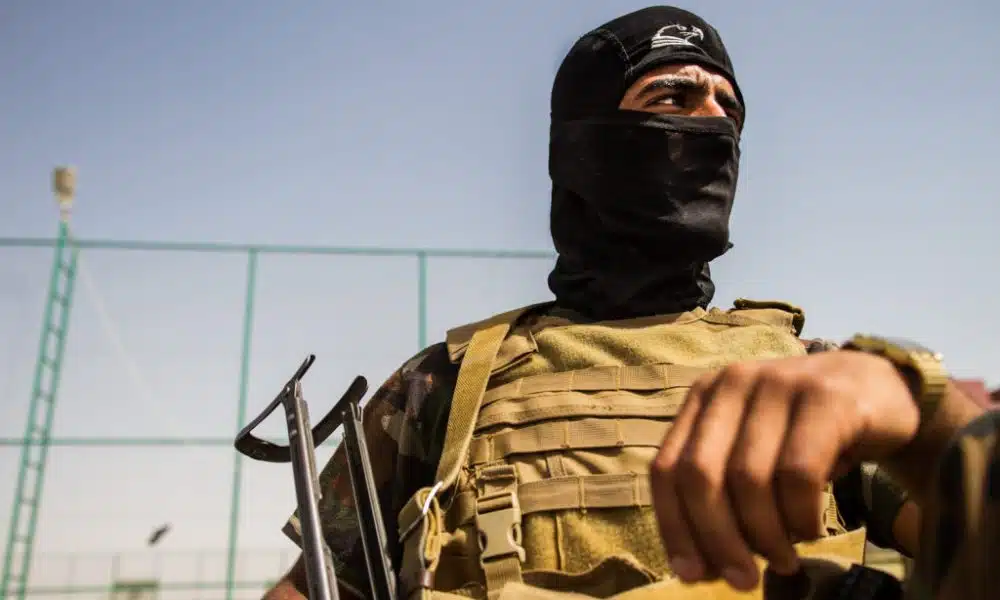
Abu-Bilal al-Minuki, a Nigeria-born ISIS commander described by U.S. President Donald Trump as “the most active terrorist in the world,” has attracted global attention following reports of his death in a joint counterterrorism operation involving American and Nigerian forces.....KINDLY READ THE FULL STORY HERE▶
Trump announced on Friday that al-Minuki was eliminated during a coordinated mission carried out by U.S. forces alongside the Armed Forces of Nigeria.
Below are key details about the militant figure:
U.S. sanctions records identified him as Abu Bakr ibn Muhammad ibn ‘Ali al-Mainuki, while “Abu Bilal al-Minuki” was listed among his known aliases.
He was reportedly born in 1982 in Mainok, near Benisheikh in Borno State, a region heavily affected by Boko Haram and ISWAP insurgency activities.
The U.S. State Department designated al-Minuki as a Specially Designated Global Terrorist in June 2023.
That designation froze any assets linked to him under U.S. jurisdiction and barred American citizens and entities from engaging in transactions with him.
According to security reports cited by Daily Trust, analysts believe al-Minuki rose to prominence within ISWAP following the death of Mamman Nur in 2018.
He was allegedly involved in ISIS financial networks, recruitment drives, and strategic operations across parts of West Africa.
Trump described him as one of the group’s most dangerous operatives, stating that his death would significantly weaken ISIS activities globally.
The U.S. president added that the operation would prevent militants from continuing attacks in Africa or plotting against American interests.
There has also been some confusion regarding the spelling of his name. While many reports refer to him as Abu-Bilal al-Minuki, U.S. sanctions documents list him as Abu Bakr ibn Muhammad ibn ‘Ali al-Mainuki, with “Abu Bilal al-Minuki” appearing as an alias.
Security experts say his elimination could disrupt ISIS financing, recruitment, and coordination networks in West Africa, though they caution that extremist groups often replace leaders quickly, meaning sustained pressure will be necessary to maintain long-term impact.


The North Has Lost Its Values’ – Ango Abdullahi Laments Region’s Decline

An Actor’s Marriage Is Not My Responsibility’ – Biodun Stephen Fires Back At Critics

ESUT Cracks Down, Suspends Lecturers Over Alleged Extortion, Misconduct

Who Will Stop Boko Haram, Bandits?’ – Gumi Questions Nigeria’s Security Strategy

[Photos] Super Falcons Touch Down In Rabat In Style As Theft Allegations Rock WAFCON

Mystery Deepens: New Details Surface In Mary Habila Death Investigation

Oshiomhole Breaks Ranks, Opposes Fasina’s Confirmation Over Sexual Harassment Allegations

The Truth Must Be Told!’ – Full Text Of Umahi’s Explosive Remarks On Mary Habila’s Controversial Death

Fresh Details Emerge On Operation That Led To PFIPC ‘Fake DG’ Adeyemi’s Arrest
