
Latest
Don’t Panic’ – Lagos Govt Issues Fresh Update As Heavy Flooding Hits Communities

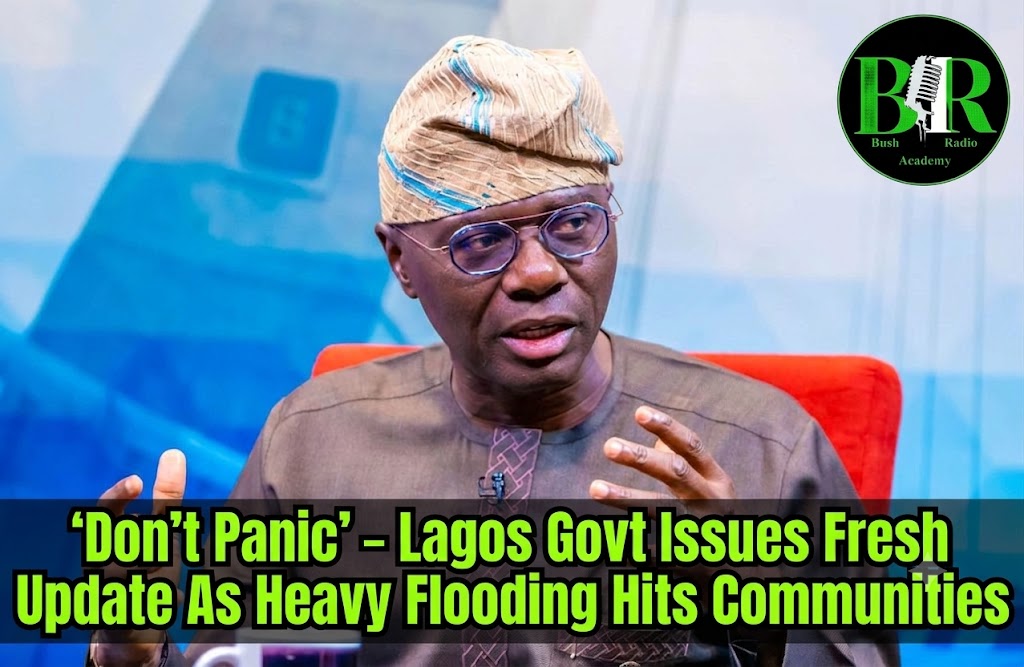
The Lagos State Government has announced immediate measures to address recent flooding across the state, with Governor Babajide Sanwo-Olu approving the dredging and maintenance of 28 additional primary drainage channels.
The development was disclosed on Tuesday by the Commissioner for the Environment and Water Resources, Tokunbo Wahab, in a statement issued through the ministry’s spokesperson, Kunle Adeshina.
According to Wahab, the decision followed the widespread flash floods recorded in several parts of Lagos after days of intense rainfall, which he described as an extreme weather event that released an unusually large volume of water within a short period.
He explained that the heavy rainfall overwhelmed drainage systems in some locations, leading to temporary flooding in areas including Victoria Island, Lekki, Ikeja, Gbagada, Mushin, Mafoluku and several other communities.
The commissioner appealed to residents to remain calm, assuring them that the state government had activated measures to mitigate the impact of the flooding.
“The Lagos State Government calls for calm and understanding from residents following the flash floods experienced across many parts of the state over the past two weeks. Governor Babajide Sanwo-Olu has approved the immediate dredging and maintenance of 28 additional primary drainage channels to improve water flow,” the statement said.
Wahab noted that the flooding was not unique to Lagos, pointing out that several African countries and parts of North America experienced similar heavy rainfall on the same day.
He explained that Lagos faces unique environmental challenges because of its coastal location and interconnected network of lagoons, rivers, creeks and tidal water bodies.
According to him, periods of high tide often reduce the speed at which stormwater is discharged into the Atlantic Ocean, making low-lying communities more susceptible to temporary flooding after exceptionally heavy rainfall.
The commissioner stressed that the government was continuously monitoring drainage infrastructure, flood-prone communities and major water channels, while emergency response agencies remained on standby to assist affected residents.
He assured Lagosians that authorities were fully managing the situation through sustained surveillance and intervention across critical locations.
Wahab also urged residents to support government efforts by refraining from dumping refuse into drainage channels and waterways, carrying out illegal land reclamation or erecting structures that obstruct natural water paths.
He warned that such activities significantly worsen flooding by preventing the free flow of stormwater during heavy rains.
The commissioner added that the increasing frequency and intensity of rainfall events were among the growing effects of climate change, particularly in coastal cities such as Lagos.
Despite these challenges, he said the state government remains committed to strengthening flood resilience through continuous investment in drainage infrastructure, strict environmental enforcement and collaboration with residents.
He further advised motorists to avoid driving through flooded roads during heavy rainfall and urged people living in flood-prone communities to comply with weather advisories and safety instructions issued by relevant authorities.
Heavy Rain Sparks Public Outcry
The government’s response follows widespread criticism from residents after persistent rainfall caused severe flooding in several parts of Lagos.
The downpour, which lasted for hours, submerged major roads, disrupted business activities, stranded commuters and flooded residential areas across the state.
Communities affected included Gbagada, Iyana Ipaja, Ikorodu Road, Ikeja, Maryland, Mushin, Ogudu, Lekki, Oshodi, Agege, Alimosho and Obalende.
Many commuters were forced to walk long distances after commercial transport operators suspended operations due to rising floodwaters, while several motorists abandoned broken-down vehicles trapped on flooded roads.
The flooding also affected major highways, including the Lagos-Ibadan Expressway, Lagos-Abeokuta Expressway, Apapa-Oshodi Expressway and Lekki-Epe Expressway, leading to gridlock and worsening traffic congestion across the state.


SALIU MUSTAPHA: YOU CAN DENY HIM A PARTY TICKET—BUT YOU CANNOT CONFISCATE THE GRASSROOTS

Transfer Boost: Kingsley Ehizibue Joins Genoa As Victor Orakpo Moves To Turkey

EPL Showdown: Arsenal, Chelsea Clash In Battle For London Supremacy

Continental Glory: Ikpeme Backs Edo Queens, Rangers, Others To Make Nigeria Proud

FIFA Orders Major Reforms As NFF Act Faces Repeal

WHY OKPEBHOLO KNOWS WHAT HE IS SAYING ABOUT TINUBU’S 2.5 MILLION VOTES

Fake Agency Scandal: ICPC Recommends Punishment for 13 Officials — See Full List

Cement Hits ₦15,000: FCCPC Demands Answers From Dangote, BUA, Other Producers

Was The Sacrifice Worth It?” – El-Rufai’s Son Reveals What Father Told Him In Detention
