
Latest
FG Pushes For Cheaper Petrol, Tells NMDPRA To Reflect Falling Crude Oil Prices

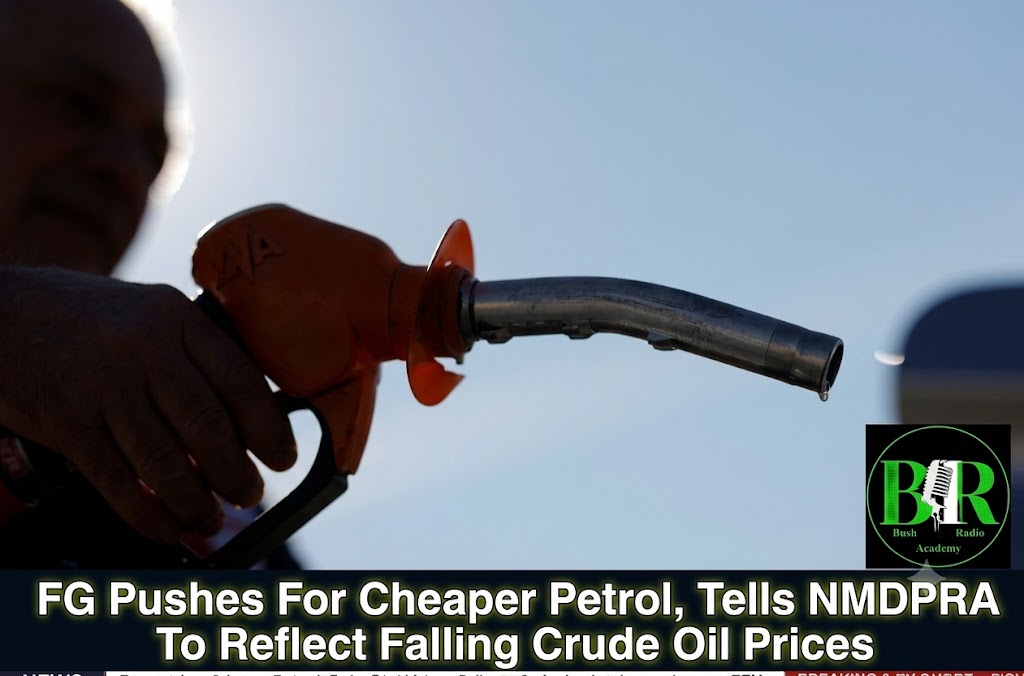
The Federal Government has instructed the Nigerian Midstream and Downstream Petroleum Regulatory Authority (NMDPRA) to ensure that petroleum marketers do not exploit Nigerians through excessive fuel pricing under the country’s deregulated downstream petroleum market.....KINDLY READ THE FULL STORY HERE▶
The directive was issued on Monday by the Minister of State for Petroleum Resources (Oil), Senator Heineken Lokpobiri, during his keynote address at the 2026 NMDPRA General Counsel and Legal Advisers Forum in Abuja.
The two-day forum is themed, “Beyond Compliance: Driving Regulatory Certainty and Investment Confidence in Nigeria’s Petroleum Sector.”
Lokpobiri acknowledged that the downstream petroleum sector is fully deregulated but stressed that deregulation should not be used as a justification for profiteering at the expense of consumers.
He noted that following the easing of geopolitical tensions in the Middle East and the resulting decline in global crude oil prices, Nigerians had expected a corresponding reduction in the pump price of Premium Motor Spirit (PMS), popularly known as petrol.
According to the minister, despite crude oil prices dropping significantly—from about $120 per barrel to approximately $72 per barrel last week—retail fuel prices have remained largely unchanged.
“With the de-escalation of tensions involving Iran and the United States, we expected a corresponding reduction in the prices of petrol and other petroleum products. That has not happened,” Lokpobiri said.
“While market forces are expected to eventually restore price equilibrium, the regulator has a statutory responsibility under the Petroleum Industry Act (PIA) to ensure that deregulation does not become an avenue for excessive profiteering.”
Calls for Stronger Consumer Protection
The minister also directed the NMDPRA to intensify surveillance of filling stations to ensure motorists receive the exact quantity of fuel they pay for.
He stressed that protecting consumers remains one of the regulator’s key responsibilities, even within a deregulated market.
“When consumers pay for 10 litres of petrol, they should receive exactly 10 litres—not less. Ensuring accuracy in fuel dispensing is just as important as allowing market forces to determine prices,” he stated.
Lokpobiri further observed that despite recent geopolitical tensions arising from the conflict between the United States and Iran, Nigeria avoided fuel shortages, attributing the stability to the deregulation of the downstream sector and the increasing operations of local refineries.
He described the Petroleum Industry Act as the legal foundation for transforming Nigeria’s oil and gas industry but maintained that attracting investment would depend on transparent, predictable and consistent regulation.
“The PIA has provided the framework. What remains is to build strong institutions, consistent regulatory practices and a culture that inspires confidence among investors considering Nigeria,” he said.
The minister also urged legal advisers and general counsels within the petroleum sector to see themselves as strategic partners in promoting investment rather than creating unnecessary regulatory obstacles.
“Our success will not be measured by the number of regulations or guidelines we produce, but by the investments we attract, the businesses we enable, the jobs we create and the value we deliver for future generations,” he added.
NMDPRA Reaffirms Commitment to Fair Regulation
Earlier, the Chief Executive of the NMDPRA, Mallam Rabiu Umar, said the industry had reached a stage where regulatory certainty, transparency and investor confidence were just as important as compliance with the law.
According to him, the focus has shifted from simply implementing the Petroleum Industry Act to ensuring that its implementation delivers the certainty and stability investors require.
“Compliance remains the foundation, but our broader objective is to build a petroleum industry anchored on certainty, predictability, transparency and investor confidence,” Umar said.
He acknowledged that implementation challenges and areas requiring clarification still exist within the regulatory framework, assuring stakeholders that the authority would continue engaging industry players to improve regulatory outcomes.
Umar pledged that under his leadership, the NMDPRA would maintain fairness, consistency and transparency while strengthening stakeholder engagement across the sector.
Also speaking at the event, the Secretary and Legal Adviser of the NMDPRA, Dr. Joseph Tolorunse, said regulatory certainty is critical to maintaining stable fiscal policies throughout the life of petroleum projects and preventing frequent policy reversals.
He added that the Petroleum Industry Act has enhanced the competitiveness of Nigeria’s oil and gas sector, noting that increased competitiveness would attract more investment, stimulate growth and strengthen the industry’s long-term sustainability.


Fans Alarmed As Viral Video Of Hanks Anuku Sparks Reactions From Segun Arinze, Jerry Amilo
FG Pushes For Cheaper Petrol, Tells NMDPRA To Reflect Falling Crude Oil Prices

Spyro Sparks Reactions With Strict Video Policy: ‘No Nakedness, No Smoking Around Me
Sanusi Tears Into National Assembly: ‘Why Were You Silent Over Illegal Borrowing For 8 Years?

Insecurity Debate: Adeboye Explains Why Tinubu Can’t Personally Fight Armed Criminals

History in Edo: Okpebholo Nominates Enugu-born Martin Oli as Commissioner

Momoh Receives National Youth Group, Reaffirms Commitment to Youth Empowerment and Regional Development

Sh*cking Police Shake-Up As Oyigbo DPO Is Removed Over ₦500,000 Bribery Allegation

Dollar To Naira Sh*ck: Fresh Exchange Rate Revealed For June 21, 2026
