
Lady Compares Life Abroad With Nigeria, Questions Poor Electricity And Education System
 Follow us on Google News
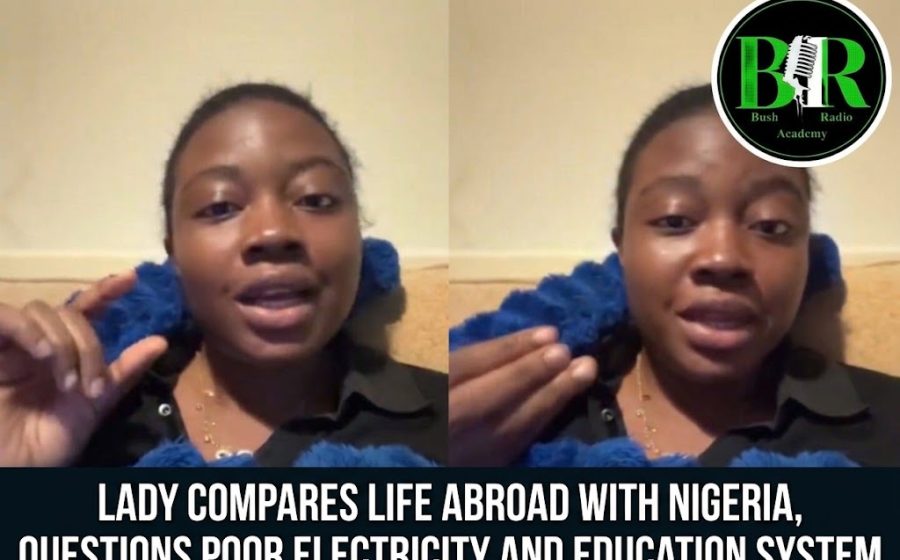
A Nigerian lady living abroad has sparked widespread reactions online after criticising Nigeria’s electricity supply, education system and economic conditions, arguing that many citizens have become accustomed to hardships that should not be accepted as normal.
In a lengthy account of her experiences, the lady compared everyday life abroad with what she encountered in Nigeria, highlighting differences in access to reliable electricity, educational facilities and the cost of basic services.
She explained that although she was already aware of the challenges facing Nigeria before relocating, living abroad had given her a clearer understanding of the extent of the country’s difficulties.
“You don’t realise how bad things are in Nigeria until you leave. Obviously, I knew we had it bad in Nigeria, but I didn’t realise how bad it was until I left,” she said.
Using electricity as an example, she explained that reliable power supply abroad allows people to charge their phones at home, in schools and other public facilities without constantly worrying about power outages.
She recalled attending a Nigerian school where students were unable to participate in practical computer lessons because there was no electricity and the available computers were not functioning.
The lady also highlighted the convenience of accessing printing services at her current school, explaining that students could print assignments using a shared printer simply by tapping their identification cards without making additional payments.
She contrasted the arrangement with her experience in Nigeria, where printing businesses often charge customers extra to cover the cost of running generators due to unreliable electricity supply.
Beyond infrastructure, she also recounted how strikes by the Academic Staff Union of Universities (ASUU) disrupted her university education, causing her to lose two academic years.
The lady subsequently questioned the public praise surrounding the student loan initiative introduced under President Bola Tinubu’s administration, arguing that the country’s economic difficulties had made it increasingly difficult for families to afford educational expenses.
She suggested that providing loans to students to pay school fees should not automatically be celebrated when many families are struggling financially and the underlying economic challenges remain unresolved.
Her remarks have generated conversations about Nigeria’s electricity crisis, educational opportunities, economic hardship and the performance of the current administration.
According to Bush Radio Academy, the lady’s account has renewed discussions about the differences in living standards between Nigeria and some foreign countries, as well as the need to address challenges affecting access to basic services and quality education.







Comments
0 comments