
Political Tempers Flare As Atiku’s Camp Reacts To Presidency’s Comments on Obi’s Defection
 Follow on Google News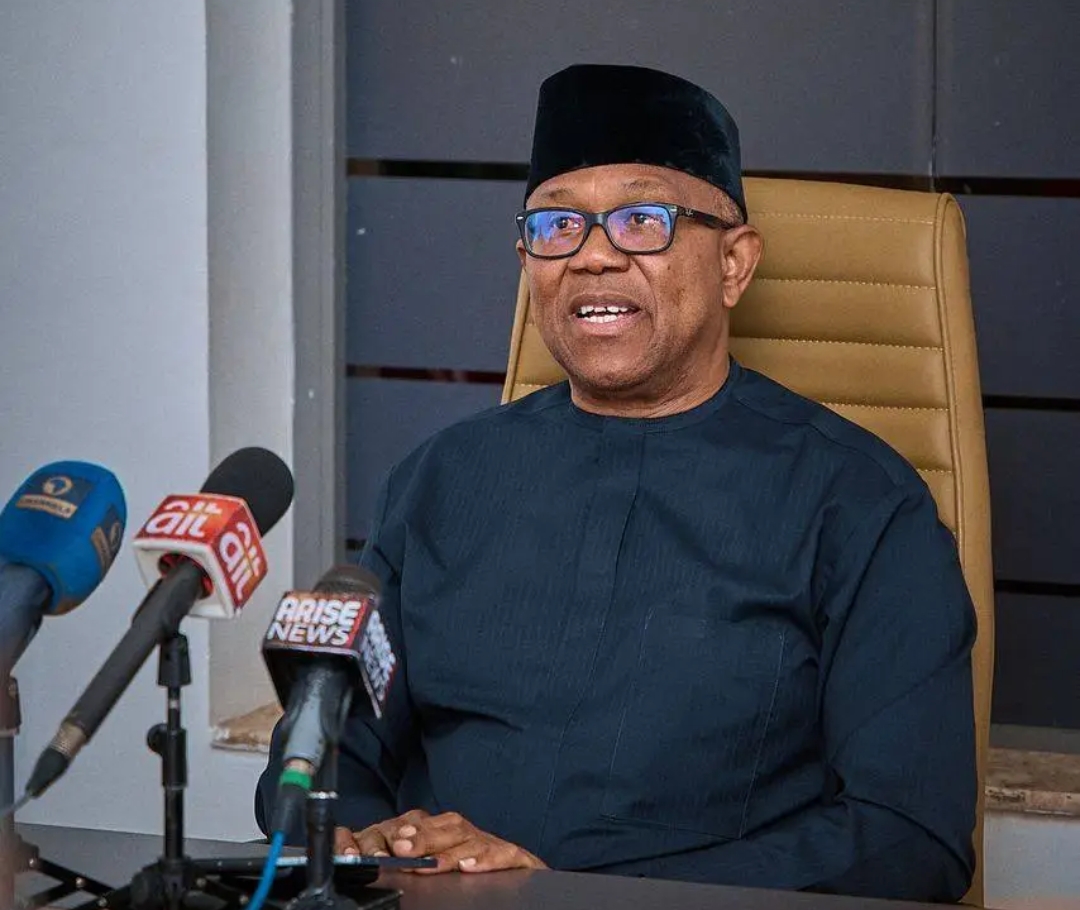
The defection of former Anambra State governor, Peter Obi, to the African Democratic Congress (ADC) has sparked a sharp exchange of words between the Presidency and the camp of former Vice President Atiku Abubakar.
Responding to comments by presidential spokesman, Bayo Onanuga, Atiku’s Special Adviser on Public Communication, Phrank Shaibu, accused the Presidency of exhibiting panic as political realignments gather momentum ahead of the 2027 general election.
Onanuga had earlier claimed that Obi appeared bitter over his third-place finish in the 2023 presidential election, arguing that data from the polls showed he stood no realistic chance of winning and was only fortunate to place third due to what he described as irregular voting patterns in the South-East.
Speaking at an event, Onanuga said Obi’s remarks reflected resentment, particularly his references to books, academics and other countries to support his claim of having learned the principles of governance and national development.
He dismissed Obi’s posture as exaggerated, describing him as a poor performer during his eight-year tenure as Anambra State governor and insisting his political credentials were overstated.
Onanuga further suggested that Obi lacked the leadership capacity required to govern Nigeria, a comment that drew sharp criticism from Atiku’s camp.
In a statement issued on Wednesday, Shaibu said Onanuga’s remarks revealed anxiety within Aso Rock rather than any weakness on Obi’s part.
“As a presidential media aide, this outburst says far more about panic in Aso Rock than it does about Peter Obi,” Shaibu said.
He criticised the tone of the presidential spokesman, describing it as defensive and unbecoming of someone in such a sensitive position.
“You did not speak as a communications professional but as someone under pressure. Pressure replaces reason with mockery and facts with insults,” he said.
Shaibu also accused Onanuga of hypocrisy, particularly for describing Obi as politically “wandering” while defending an administration formed through defections and political alliances.
He rejected attempts to trivialise concerns surrounding the 2023 elections, insisting that questions about the credibility of the process remain widespread and valid.
“Labelling legitimate electoral grievances as bitterness is not analysis; it is damage control. Millions of Nigerians raised concerns about the 2023 election, and they cannot simply be dismissed,” he said.
Shaibu further condemned what he described as the increasing use of abusive language in official government communication, arguing that such rhetoric often reflects a lack of tangible results.
“When official communication descends into name-calling, it usually means achievements are scarce and frustration is high,” he added.
Turning to economic issues, Shaibu argued that the administration’s reform claims do not align with the everyday experiences of Nigerians.
“While you speak of reforms, Nigerians are grappling with hunger, insecurity and collapsing livelihoods. No amount of propaganda can erase lived reality,” he said.
He also dismissed suggestions that Obi would assume a subordinate role in any future political alliance, insisting that no such arrangement exists.
“There is no ticket, no candidate and no imposed hierarchy. What exists is an ongoing coalition discussion, and that is what unsettles you,” Shaibu said.
He concluded by stressing that electoral outcomes ultimately rest with the Nigerian people.
“Insults do not win elections, spin does not feed citizens, and arrogance does not intimidate hungry people. Nigerians will decide in 2027,” Shaibu said.