
Power Grid Registers 3,530MW, Reflecting Sustained Electricity Challenges
 Follow us on Google News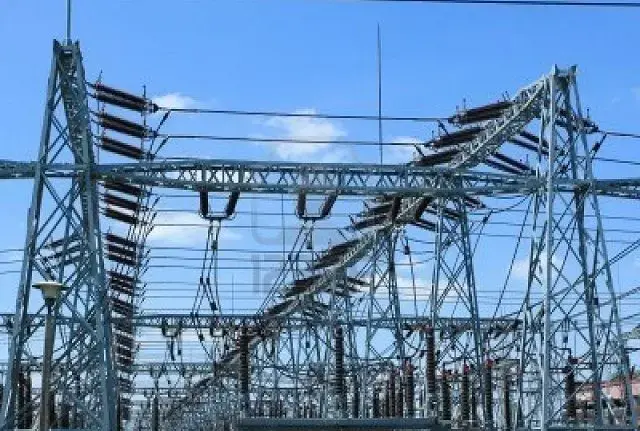
Power Grid Registers 3,530MW, Reflecting Sustained Electricity Challenges
Despite the challenges in gas supply and financial constraints, the country faced a weekend with stranded power supply as the Federal Government’s efforts to enhance the national grid proved ineffective……..CONTINUE READING
According to data from the Independent System Operator, only 16 power plants were operational at 3,530.33 Mega Watts as of 3 pm yesterday, with Nigeria’s largest power plant, Egbin Power, completely offline. The major contributors were Azura-Edo IPP (420MW), Kainji Hydro (415MW), and Shiroro Hydro (275.73MW).
Gas suppliers resisted government requests to increase supply, citing a debt exceeding $1.3 billion for previous deliveries. The government, having agreed to pay N1.6 trillion in electricity subsidies for 2024, provided only N450 billion in the budget.
Minister of Power, Chief Adebayo Adelabu, acknowledged that no payment was made for January, aggravating the liquidity crisis in the industry. He attributed the persistent liquidity issues to inappropriate tariff regimes, poor collections, and inadequate funding of subsidies.
To address these challenges, the government is exploring solutions such as settling outstanding debts to gas supply and power generation companies with cash payments and guaranteed debt instruments, totaling N1.3 trillion and $1.3 billion, respectively.
In response to the drop in power supply, electricity distribution companies assured consumers of improved services soon. They cited insufficient power allocation and gas shortages as reasons for the current electricity supply issues.
Meanwhile, the European Union pledged to invest 37 million Euros in the power sector, in addition to the 200 million Euros granted since 2008. The EU Ambassador to Nigeria, Samuela Isopi, mentioned funding for small hydro power, solar for healthcare facilities, rural electrification, and circular economy projects in the power sector.
Chief Adelabu identified liquidity issues as the main problem in the sector and expressed gratitude for the EU’s support. He emphasized the need for a cost-reflective tariff to ensure the sustainability and efficient operation of the market. The EU projects align with the Ministry’s strategy, and collaboration is promised, especially in small hydro and state electrification.
For more information join our WhatsApp group by clicking the link here: WhatsApp Group Invite
For inquiries only, contact us at omoikirodahoshiobugie@gmail.com, 08075806790 (WhatsApp only). For paid articles covering content related to shows, music promotion, asylum letters, concerts, politics, advertisement hit up the Whatsapp number 08075806790.
Source: Bushradiogist




Comments
0 comments