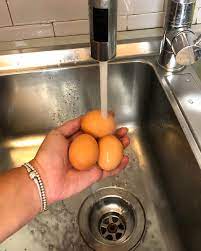
Eggs may harbor various types of bacteria, microorganisms, and other contaminants.....KINDLY READ THE FULL STORY HERE▶
For most unprocessed food items, including vegetables and fruits, it is advisable to wash them before consumption, as well as before any thermal processing. However, the approach differs with meat. Contrary to common belief, rinsing meat is not only unnecessary but should also be avoided….READ ALSOTwo Suspected Lagos Traffic Robbers Nabbed Under Beggar Guise By Police
Now, what about eggs? The question of whether eggs need to be washed is not straightforward.
Eggs have been a subject of controversy for years, with experts debating their health implications and whether their consumption should be moderated. While eggs can contain bacteria, microorganisms, and other impurities, the shell acts as an effective barrier, safeguarding the egg white and yolk. While it might seem logical to wash eggs after purchase and store them in the refrigerator, experts advise against it. Washing eggs not only removes impurities but also damages the natural coating that protects the shell. Once this coating is compromised, bacteria can more easily penetrate the egg, increasing the risk of contamination and infection. Additionally, washing eggs can shorten their shelf life.
So, what’s the best approach? It is recommended to store eggs in a separate container to prevent their shells from coming into contact with other foods or surfaces in the refrigerator. Additionally, remember to wash your hands thoroughly with warm water and soap after handling eggs.
While eggs generally do not need to be washed, exceptions apply when immediate use is intended. In such cases, it is better to avoid washing them until necessary. Alternatively, any visible dirt can be gently removed from the shell surface using a cloth or paper.
As for when to wash eggs, it is advisable to do so just before consumption. While some may assume that only the egg contents are consumed and not the shell, it’s essential to consider that bacteria or microorganisms can transfer to the egg white and yolk during handling or preparation, such as when making scrambled eggs.
If you plan to cook eggs soft or hard, washing them beforehand is unnecessary as high temperatures during cooking will neutralize any potential threats.
Consuming raw eggs carries a risk of salmonella contamination. To minimize this risk, it is recommended to scald the eggshells in boiling water before use. The Sanitary and Epidemiological Station suggests pouring boiling water over the eggshells, soaking them for two to three minutes, and then rinsing them with running water.
Furthermore, it’s crucial to emphasize the importance of washing hands before preparing meals, as research indicates that nearly 65% of consumers overlook this practice. Placing unwashed eggs near other food items or on surfaces where fruits or bread are later placed can also pose a significant risk of contamination.