
Politics
Unveiling The Controversial Commandant General Of The CPG in Zamfara: Integrity Concerns Amidst Banditry

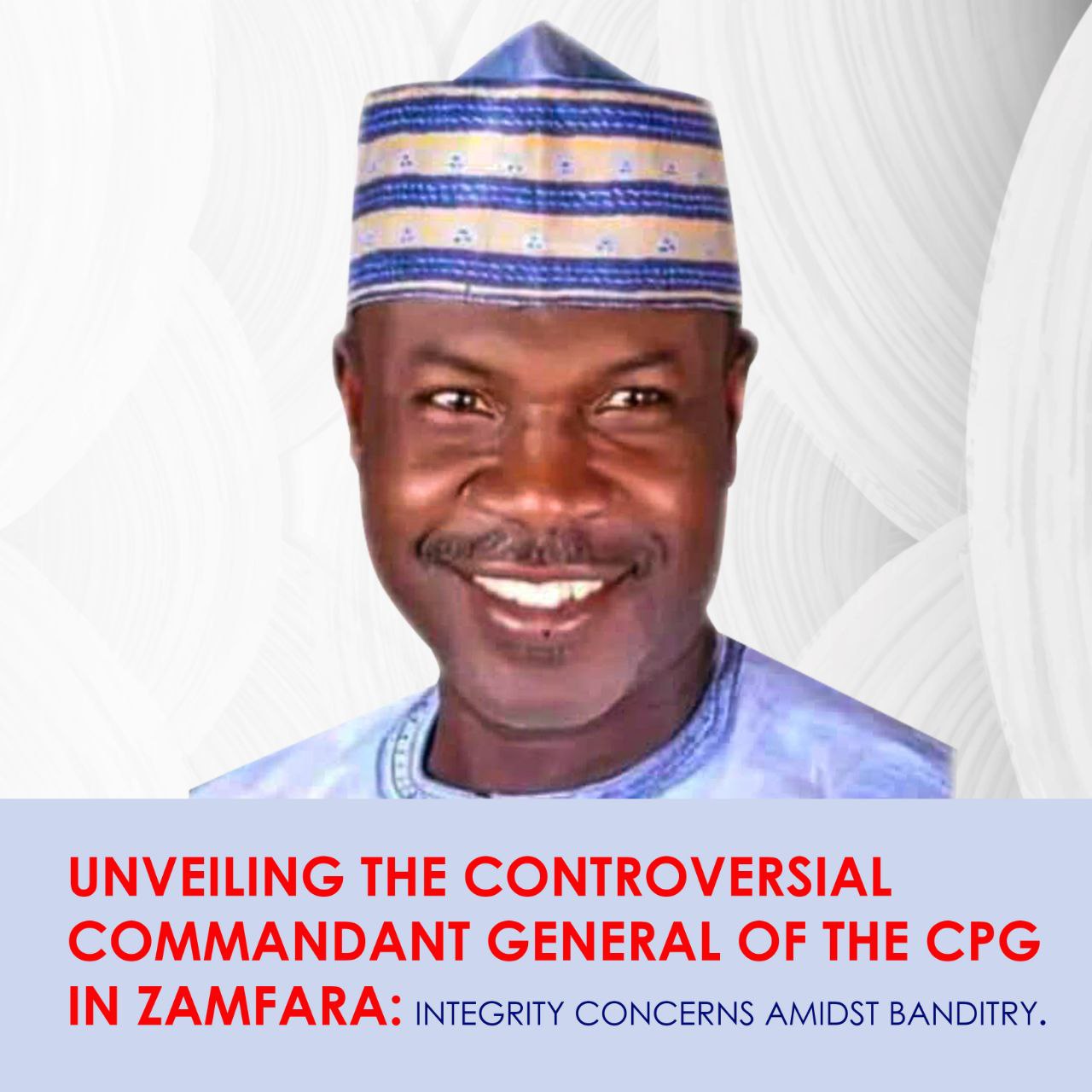
Unveiling The Controversial Commandant General Of The CPG in Zamfara: Integrity Concerns Amidst Banditry
The essence of a vigilante head in a region notorious for banditry lies in providing a localized, community-based response to security challenges. In such regions, law enforcement agencies may face limitations in resources or effectiveness, leading the Government /communities to organize their own defense mechanisms….CONTINUE READING.
In Zamfara State, the establishment of the Community Protective Guard (CPG), under the leadership of dismissed Major R G Yan Doto, was meant to herald a new era of security and stability in the region.
However, recent revelations have cast a shadow over the integrity and credibility of the CPG leadership, particularly that of its Commandant General. Disturbing reports have surfaced regarding Major Doto’s past, including allegations of academic fraud and misconduct during his military service.
Dating back to 2004, petitions were filed against R G Doto, accusing him of using forged certificates to gain admission to Ahmadu Bello University (ABU) Zaria.
The petition alleges that he gained admission to the university using a forged certificate. It claims that the higher elementary (Grade 2) teacher’s certificate he submitted, bearing the number SOS/5400, did not belong to him.
Additionally, it asserts that he did not attend Gusau Teachers College, as indicated, but instead attended the College of Arts and Rabid Studies Sokoto from 1978 to 1983, with admission number 0134 and exam center X025.
After completing his studies, he did not pass any of his courses except for General Science, where he received a grade of P7, and Teaching Practice, where he scored a C2.
The allegation suggests that the academic results he presented for admission belonged to another individual named Rabiu Garba, who attended Gusau Teachers College from 1979 to 1984.
These allegations, supported by evidence of academic discrepancies, suggest a pattern of deceit that extends into his military career.
It is now alleged that he may have entered the Nigerian Army using the same falsified credentials and eventually rose to the rank of Lieutenant Colonel. However, he was later demoted to Major and ultimately dismissed from the army.
His dismissal from the army came after he faced court-martial and was found guilty on seven out of eight counts of charges. These charges included Absence Without Leave (AWOL), which violated various laws, scandalous conduct unbecoming of an officer, fraternization, and misconduct detrimental to service discipline. Additionally, he was charged with engaging in sexual relations with a service personnel’s spouse.
Following his dismissal, he was demoted to the rank of Major before being dishonorably discharged from the army. He was also sentenced to five years in imprisonment, a sentence which he served.
The implications of Major Doto’s checkered past extend beyond mere academic dishonesty and military misconduct. Since assuming office as the Commandant General of the CPG, Major Doto is alleged to have retaliated against those who previously spoke out against him. Shockingly, individuals who filed petitions against him two decades ago have reportedly become victims of targeted violence and intimidation.
One such case involves the arrest of a petitioner by the CPG, who tragically died in custody under suspicious circumstances. The circumstances surrounding this incident raise troubling questions about the conduct of the CPG under Major Doto’s leadership and the safety of those who dare to speak out against him.
It is deeply concerning that individuals who have sought to expose Major Doto’s alleged wrongdoing have become targets of retribution and violence. The apparent pattern of victimization and brutality against dissenters underscores the urgent need for accountability and transparency within the CPG and the broader security apparatus.
In light of these developments, it is imperative that Zamfara State authorities conduct a thorough investigation into the allegations against Major Doto and the conduct of the CPG under his leadership.
The safety and well-being of Zamfara’s residents depend on the integrity and professionalism of those entrusted with their security. Any compromise in this regard risks further exacerbating the region’s security challenges and eroding public trust in the state’s security institutions.
Zamfara State must send a clear message that impunity and retaliation against whistleblowers will not be tolerated. Only through robust accountability mechanisms and a commitment to upholding the rule of law can the state effectively address the scourge of banditry and restore peace and security to its people.


Hanga Speaks On Bitter Kwankwaso Fallout, Reveals What Changed Everything

Victory For Amusan! Nigerian Hurdles Queen Wins Brescia Race Ahead Of Diamond League Showdown

Peter Obi Makes Fresh Appeal To Nigerians: ‘Pray For Us Politicians To Stop Stealing

Lagos Govt Issues Fresh Warning To Ajah-Lekki Businesses, Markets Over Waste Management

That’s Not Me!’ – Adeleke Reacts To Claims He’ll Deliver Osun For Tinubu In 2027

WHY OKPEBHOLO KNOWS WHAT HE IS SAYING ABOUT TINUBU’S 2.5 MILLION VOTES

Fake Agency Scandal: ICPC Recommends Punishment for 13 Officials — See Full List

APC Crisis? Ojudu Blasts Tinubu Campaign Council List, Raises Fresh Concerns

Was The Sacrifice Worth It?” – El-Rufai’s Son Reveals What Father Told Him In Detention
