
Latest
Why Are Nigerians Paying Double? Cement Prices Soar Despite Local Production Surplus

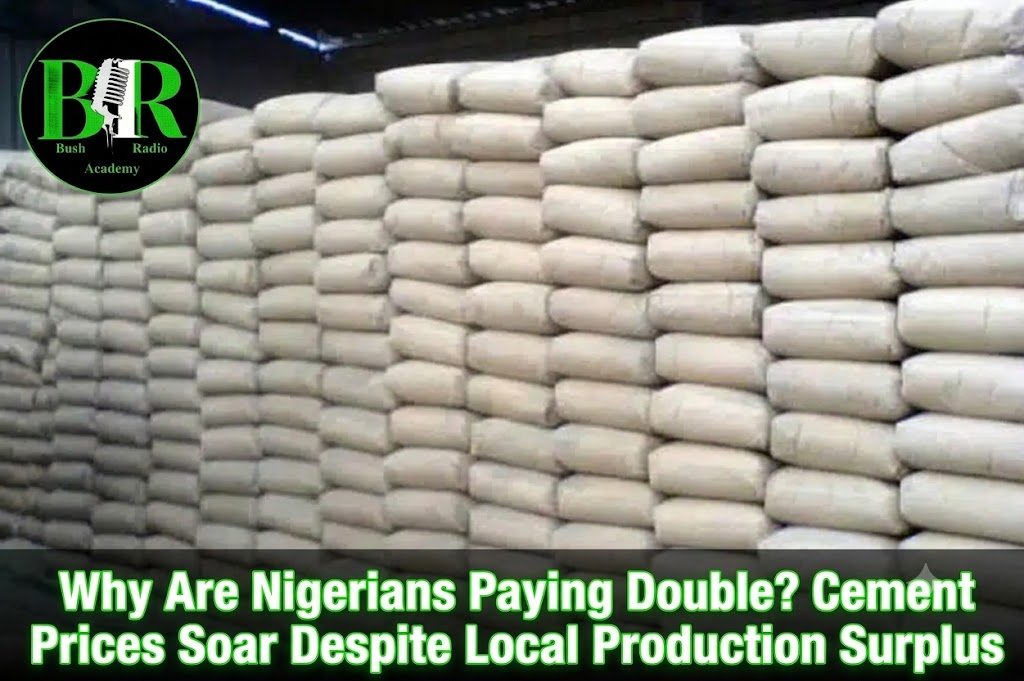
Despite producing far more cement than it consumes, Nigeria remains one of Africa’s most expensive markets for the commodity, with a 50kg bag selling for as much as ₦15,000 in some parts of the country.....KINDLY READ THE FULL STORY HERE▶
The country’s cement industry is dominated by three manufacturers—Dangote Cement, BUA Cement and Lafarge Africa, now operating as HBM Nigeria Plc—which together boast an installed production capacity of between 60 million and 65 million metric tonnes annually.
Industry expansion is expected to push national capacity to about 85 million tonnes in the coming years as new plants begin operations.
However, Nigeria’s annual cement consumption is estimated at just 25 million to 30 million tonnes, leaving the country with a significant production surplus that is partly exported to neighbouring countries.
Nigerians Pay More Than Other Africans
Market surveys conducted in Lagos, Abuja and Abia show that the retail price of a 50kg bag of cement ranges between ₦12,500 and ₦15,000, depending on location and transportation costs.
The figures are considerably higher than prices recorded in several African countries. In South Africa, a similar bag sells for the equivalent of between ₦6,000 and ₦7,000. In Egypt, one of the world’s largest cement-producing nations, prices range from about ₦4,000 to ₦5,000 per bag.
Kenyan consumers pay roughly ₦6,500 to ₦7,500, while prices in Ghana average between ₦7,000 and ₦8,000, depending on exchange rates and import costs.
The disparity has fuelled concerns among housing experts, developers and consumers, who argue that Nigerians should not be paying nearly double the continental average for a product manufactured locally in abundance.
Three Companies Control the Market
Dangote Cement remains the industry’s dominant player, accounting for more than half of Nigeria’s production capacity. The company operates major plants in Obajana, Ibese, Gboko and Okpella, with an installed capacity of about 35 million tonnes annually. Its planned Itori plant in Ogun State is expected to increase total capacity to more than 41 million tonnes.
BUA Cement ranks second with an installed capacity of between 17 million and 20 million tonnes yearly, supported by facilities in Edo and Sokoto states.
Lafarge Africa, recently rebranded as HBM Nigeria Plc, operates plants in Ogun, Gombe and Cross River states with a combined installed capacity of about 10.5 million tonnes annually.
Additional investments are also underway. MSM Cement is planning a three-million-tonne plant in Kebbi State, while Resident Cement intends to establish a 10-million-tonne facility in Bauchi State.
Record Profits Raise Questions
The country’s three leading cement manufacturers generated more than ₦6.53 trillion in combined revenue in 2025, while their after-tax profits climbed to about ₦1.65 trillion—representing a 142 per cent increase compared with 2024.
The strong financial performance has intensified public debate over cement pricing, with critics questioning whether consumers are paying more than necessary despite the industry’s massive production capacity.
Many stakeholders argue that record corporate earnings are difficult to reconcile with Nigeria’s worsening housing shortage and rising construction costs.
Manufacturers Cite Rising Production Costs
Cement producers insist that local manufacturing remains expensive, pointing to rising energy, logistics and operational costs.
According to industry players, cement production depends heavily on gas, coal, diesel and alternative fuels to power kilns and generators. They also cite the removal of fuel subsidies, higher energy prices and the depreciation of the naira as major factors driving up the cost of imported machinery, spare parts, packaging materials and production inputs.
Manufacturers further argue that poor infrastructure significantly increases transportation costs, as many cement plants are located far from key consumption centres. Industry estimates suggest logistics account for between 30 and 40 per cent of the final retail price.
Labour expenses, financing costs, inflation and equipment maintenance have also contributed to rising production costs.
Industry operators were quoted as saying that strong market demand provides little commercial incentive for manufacturers to lower prices.
Federal Government Pushes for Lower Prices
Concerned about the impact of high cement prices on public infrastructure projects, Minister of Works David Umahi has urged manufacturers to reduce their prices.
Umahi warned that expensive cement is driving up the cost of roads and other government projects, forcing repeated contract reviews.
He disclosed that the Federal Government would begin formal discussions with cement manufacturers from July 1, 2026, aimed at securing lower prices while encouraging further investment in production capacity.
According to the minister, more affordable cement would benefit both government infrastructure projects and private home builders.
Housing Deficit Worsens Pressure
Nigeria’s housing deficit is estimated at more than 16 million units, making cement one of the country’s most critical construction materials.
Experts warn that rising cement prices continue to increase the cost of building homes, schools, roads and other infrastructure, placing additional financial pressure on governments, developers and individual homeowners.
President of the Real Estate Developers Association of Nigeria, Oba Akintoye Adeoye, described cement prices as one of the biggest obstacles to affordable housing.
Similarly, Executive Director of the Housing Development Advocacy Network (HDAN), Festus Adebayo, called for targeted government policies to make cement more affordable.
He recommended concessionary energy support for manufacturers, improved gas supply, more reliable electricity, duty waivers on essential production equipment and incentives for new investors to increase competition in the industry.
According to Adebayo, reducing production costs and expanding competition could eventually translate into lower market prices.
Estate surveyor and valuer Sola Enitan argued that while Nigeria’s cement industry has achieved remarkable production success, it has failed to deliver affordable prices for consumers.
He urged the Federal Government to strengthen oversight through the Federal Competition and Consumer Protection Commission by establishing a dedicated “Cement Competition Desk” to monitor pricing practices and possible market dominance.
Enitan also proposed reforms including a “use-it-or-lose-it” policy for limestone quarry licences, mandatory publication of plant utilisation and ex-factory prices, benchmark pricing to discourage excessive retail mark-ups, improved rail connections to major cement plants, and greater participation of independent distributors to encourage competition within the supply chain.


He’ll Walk Away” — Ali Modu Sheriff Speaks On Peter Obi’s 2027 Presidential Ambition

Nigerians Got It Wrong” — Portable Defends Remi Tinubu Over Akara, Corn Advice

BREAKING: Appeal Court Set To Decide Fate Of ADC, Four Other Political Parties Today

PFIPC Scandal: Babachir Lawal Reveals Why SGF May Have Rejected Alleged Fake Agency

2027 Battle Heats Up: Obi’s Associate Dismisses Sheriff’s Prediction On Northern Support For Peter Obi

FG Names Gbajabiamila, 10 Others As Key Witnesses In Controversial Presidential Agency Case

Doctor Who Evaluated Nnamdi Kanu Reportedly Arrested, Raises Fresh Questions

If The Agency Doesn’t Exist, Why Was I Meeting Its Heads?” Adeniyi Adeyemi Challenges Presidency

Fans Alarmed As Viral Video Of Hanks Anuku Sparks Reactions From Segun Arinze, Jerry Amilo
