

 ....KINDLY READ THE FULL STORY HERE▶
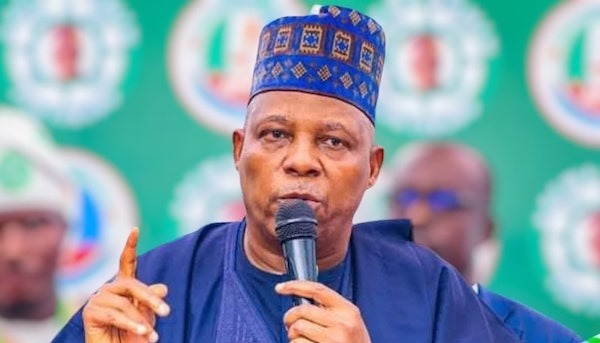
Vice President Kashim Ibrahim Shettima has highlighted the critical importance of giving precedence to local engineers in government initiatives. This assertion coincides with a plea from the Council for the Regulation of Engineering in Nigeria (COREN) to the federal government, seeking exemption from the policy of non-funding affecting professional and regulatory bodies in the country.
Shettima’s remarks were delivered at the 31st Engineering Assembly convened in Abuja, where he underscored the necessity for government bodies to inwardly focus on deploying local engineers for public projects….CONTINUE READING
Represented by Borno State’s Governor, Babagana Zulu, the Vice President stated, “A key takeaway for me is the imperative to implement a local content framework – a strategy that ensures our engineers take charge of a significant proportion, if not 90 percent, of engineering projects across Nigeria.”
“In Borno State,” he continued, “local engineers manage up to 98 percent of infrastructure undertakings. This model holds promise and warrants wider implementation.
Our National Assembly boasts numerous Senators capable of sponsoring bills, along with Governors and Deputy Governors.
Collaboratively, we can address the issue of local content. Our country possesses a wealth of talented Nigerian engineers, and while opportunities may be limited, a visit to Borno State demonstrates ongoing large-scale infrastructure projects meticulously designed and executed by our local engineers.
What’s needed is a resolute political determination to steer this critical process and foster the advancement and progress of our nation.”
Earlier in the proceedings, COREN President Prof. Sadiq Abubakar made the case that COREN, as a regulatory agency entrusted with safeguarding the public interest through the registration and licensing of engineers, consulting firms, and engineering enterprises, differs from a professional association.
Abubakar contended that the distinct role played by COREN justifies its exemption from the aforementioned funding policy, considering the indispensable services it provides to Nigerian society.


