
Politics
Central Bank Of Nigeria Criticizes JP Morgan’s Estimation Of Foreign Exchange Reserves

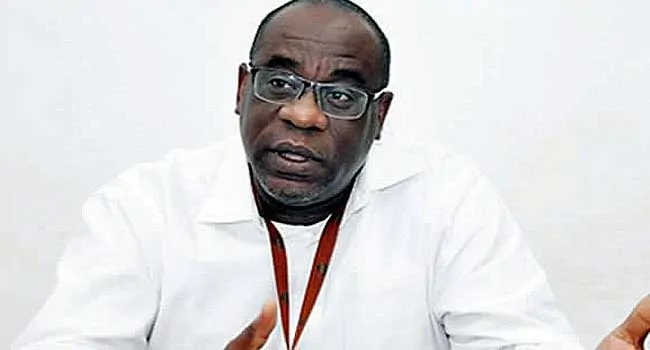
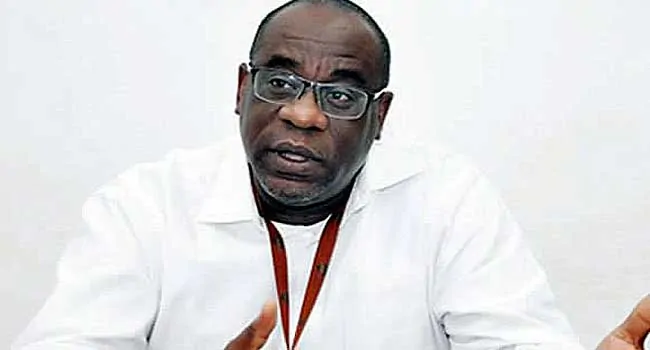
The Central Bank of Nigeria (CBN) has expressed dissatisfaction with the recent assessment of the country’s Foreign Exchange (FX) reserves conducted by American Financial Service Institution, JP Morgan.
The bank’s criticism stems from what it believes to be an inaccurate and misleading portrayal of the nation’s FX reserves.
JP Morgan had released a report earlier in the week, estimating that the CBN’s net FX reserves had significantly decreased to $3.7 billion by the end of 2022, compared to $14 billion in the previous year….CONTINUE READING
However, during an interview on Africa Independent Television (AIT) on Wednesday, Hassan Mahmud, the Director of the Monetary Policy Department at the CBN, voiced his concerns about the context in which JP Morgan presented their estimation.
He suggested that the intention behind JP Morgan’s estimation could have been to manipulate market sentiments or to misinform the public. He emphasized that fluctuations, liabilities, and encumbrances impacting the reserves were part of the natural ebb and flow of financial systems.
Mahmoud stated, “We also reviewed the JP Morgan numbers internally, and we didn’t react dramatically to them. This isn’t the first instance where we’ve seen individuals and institutions issuing figures; they may have their motives for doing so, whether to influence market sentiments or to mislead the public.”
He went on to highlight that the notion of reserves, akin to any account balance, involves dynamic changes over time. Additionally, he clarified that outstanding liabilities are not immediately reflected in the net balance of reserves on a given day.
Using an illustrative example, Mahmud explained, “If I have $20 million in my account and I owe someone $13 million, which is due in 2027, you can’t simply subtract that $13 million and conclude that my money is now $7 million.
This kind of calculation is putting it out of context. It’s important to consider the broader timeline and obligations.”
Addressing the question of whether the public should disregard JP Morgan’s estimate, Mahmud suggested, “It would not be productive for the CBN, whether through the governor or deputy governor, to engage in a public debate with JP Morgan.
We shouldn’t diminish our national reputation due to private investor opinions that may have their own motivations for providing these numbers. These figures might have been taken out of context.”
Mahmud concluded by noting that approximately 80 percent of the funds within the reserves were owned by the CBN, primarily to support the stability of the local currency during volatile periods and to instill confidence in foreign investors.


2027: APC Chairman Fires Back At Atiku Over Fuel Subsidy Promise, Asks “Who Pays?”

2027: NDC Raises Alarm, Accuses INEC Of Replacing Party Candidates With Unknown Names

Tinubu Takes South Africa Xenophobia Crisis To AU, Demands Urgent Action

Tinubu 2027: Oyo APC Moves To Reconcile Aggrieved Aspirants Ahead Of Election

Igbos Built Nollywood, Yorubas Took Over” — Francis Duru Laments

WHY OKPEBHOLO KNOWS WHAT HE IS SAYING ABOUT TINUBU’S 2.5 MILLION VOTES

Fake Agency Scandal: ICPC Recommends Punishment for 13 Officials — See Full List

APC Crisis? Ojudu Blasts Tinubu Campaign Council List, Raises Fresh Concerns

Was The Sacrifice Worth It?” – El-Rufai’s Son Reveals What Father Told Him In Detention
