
EFCC’s Vanishing Act: Why Nigerians No Longer Fear Or Feel The Anti-Graft Agency
 Follow us on Google News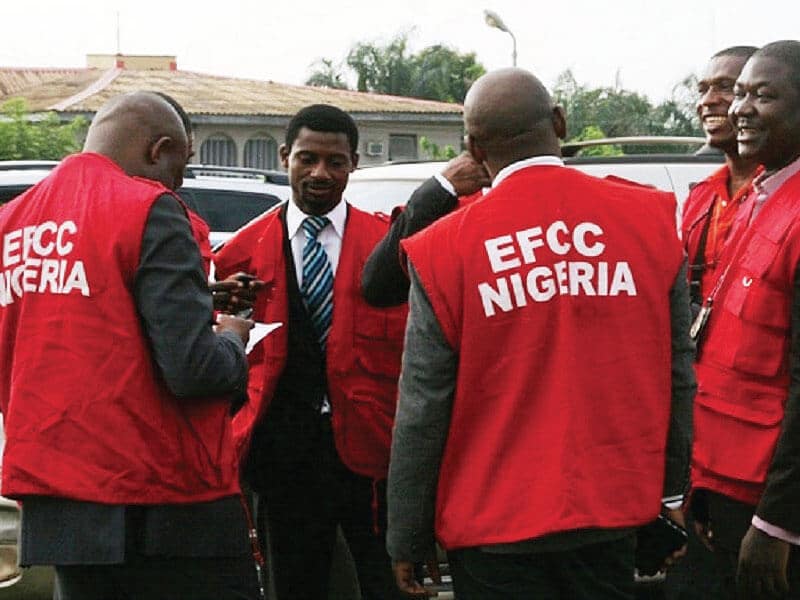
As Chairperson of the Nigeria Social Insurance Trust Fund (NSITF), Dr. Ngozi Olejeme was entrusted with a sacred duty — the welfare of the nation’s workforce.
The agency’s mandate was simple yet profound: to collect and safeguard contributions from workers and employers, ensuring compensation and support in times of workplace injury, disability, or death.
Chapter One – 2015: The Faith of Power
Every election season in Nigeria produces its own prophets of certainty.
In 2015, one of the most confident voices belonged to Dr. Ngozi Olejeme — then NSITF Chairman and Deputy Chairman of the Finance Committee for the Goodluck Jonathan Presidential Campaign Organization.
Her conviction went beyond politics; it carried the zeal of faith.
She spoke as though victory was already guaranteed.
“PDP will have a resounding victory. That is very clear,”
she told a gathering of Niger Delta youths in Asaba (ScanNews, March 2015).
Olejeme spoke passionately of job creation, youth empowerment, education, food security, and—ironically—social safety nets for the vulnerable.
Her words painted a portrait of a perfect Nigeria, rhythmic and reassuring, like a gospel refrain.
Yet behind that confidence lay the familiar paradox of Nigerian politics: those who preach safety nets are often the ones holding the scissors.
Chapter Two – 2017: The Fall and the Nation’s Numbness
Just two years later, Olejeme’s voice of faith became the face of scandal.
In December 2017, the Economic and Financial Crimes Commission (EFCC) arrested her after months in hiding.
The allegations were staggering — ₦62.3 billion reportedly siphoned from the NSITF between 2009 and 2015.
Investigators traced $48.4 million through bureau de change operators, bogus consultancy contracts, and private accounts.
Money meant to protect injured workers and sustain grieving families allegedly became political fuel for the 2015 elections.
It was the kind of scandal that should have shaken a nation’s conscience — but Nigeria’s conscience, bruised by repetition, had grown numb.
We gasped. Then we giggled.
We watched the headlines fade and carried on with our day.
This is what happens when corruption becomes routine — outrage turns to exhaustion, and shock becomes background noise.
By 2018, the story had gone cold.
Her “useful statements” to investigators vanished from the news cycle.
New scandals replaced the old. The names changed. The fatigue remained.


Comments
0 comments