
External Reserves Expected To Decline In 2024, According To CBN Projections
 Follow us on Google News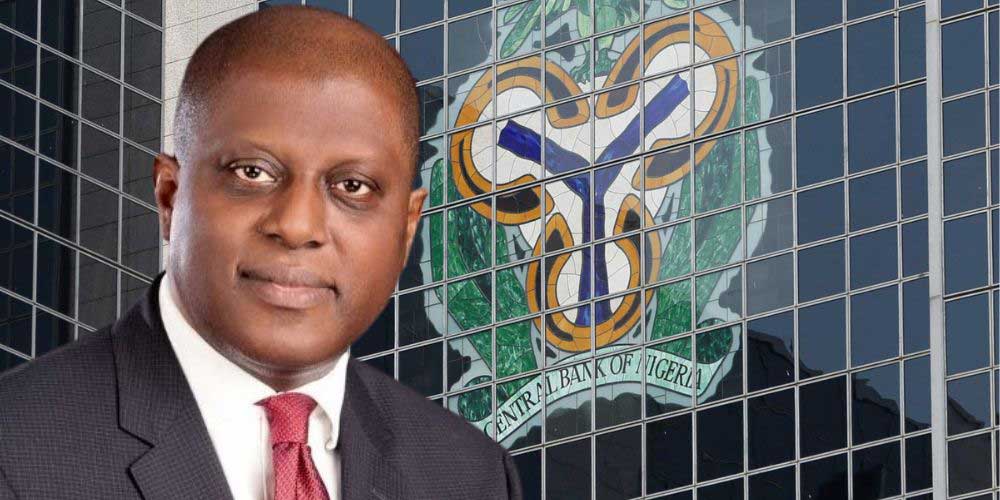
External Reserves Expected To Decline In 2024, According To CBN Projections
In its recently released inaugural edition of the Central Bank of Nigeria 2024 Macroeconomic Outlook titled “Price Discovery for Economic Stabilisation,” the CBN has projected a potential decrease in Nigeria’s external reserves throughout 2024. This forecast is primarily attributed to ongoing debt service obligations and other financial commitments…….. CONTINUE READING
As reported, the external reserves, which amounted to $33.09 billion in 2023, are expected to experience a marginal reduction. This outlook hinges on continued settlements of outstanding foreign exchange forward obligations, maturing foreign exchange swaps, and debt servicing activities. However, the anticipated boost in crude oil revenues and recent reforms in both the foreign exchange and energy sectors are anticipated to mitigate the decline in external reserves.
Recent data indicated a positive trend when Nigeria’s foreign reserves surpassed $35.05 billion on July 8, marking the first time in approximately a year, and have since remained above this benchmark, reaching $35.77 billion as of the latest update.
Furthermore, the outlook also forecasts a slight rise in diaspora remittances to $19.42 billion from $19.17 billion in 2023. This growth is expected due to improving global economic conditions and reforms facilitating market-determined exchange rates for international money transfer operators.
Regarding public debt, the report suggests a sustained upward trajectory in 2024, albeit within manageable limits. This trajectory is supported by planned investments in infrastructure, social interventions, and the securitisation of Ways and Means Advances to the Federal Government of Nigeria.
In his foreword, CBN Governor Olayemi Cardoso highlighted the continuation of a monetary policy tightening stance to combat rising inflation. He emphasized the necessity of addressing existing economic imbalances, enhancing foreign exchange market reforms, and tackling security concerns in critical sectors like agriculture and oil.
The overall economic outlook for Nigeria indicates resilience with anticipated growth, moderated inflation rates, and enhanced exchange rate stability. The projections are underpinned by improvements in domestic crude oil production and refining capacities, alongside expected increases in crude oil prices that could potentially bolster growth to 3.38% in 2024, up from 2.74% in 2023.
Governor Cardoso also noted projections for inflation to ease to 21.40%, within a range of 19.84% to 25.35%, from 28.92% recorded in December 2023. This transition is supported by the implementation of an inflation-targeting lite framework and a proactive monetary policy stance aimed at anchoring inflation expectations.
Despite these optimistic projections, the CBN Governor cautioned against several risks, including security challenges, supply-side shocks, and global economic uncertainties that could exacerbate inflationary pressures. He concluded by highlighting the potential impact of structural imbalances and external factors such as oil theft, pipeline vandalism, and fluctuations in crude oil prices on Nigeria’s fiscal stability and foreign exchange market dynamics.
Overall, while the outlook presents positive economic prospects for Nigeria, it underscores the importance of prudent fiscal management and continued reforms to sustain growth and stability amidst evolving global and domestic challenges.







Comments
0 comments