
Falae Breaks Silence: Why Nigeria’s Economy Fell Apart in 1986 — And It Wasn’t SAP
 Follow us on Google News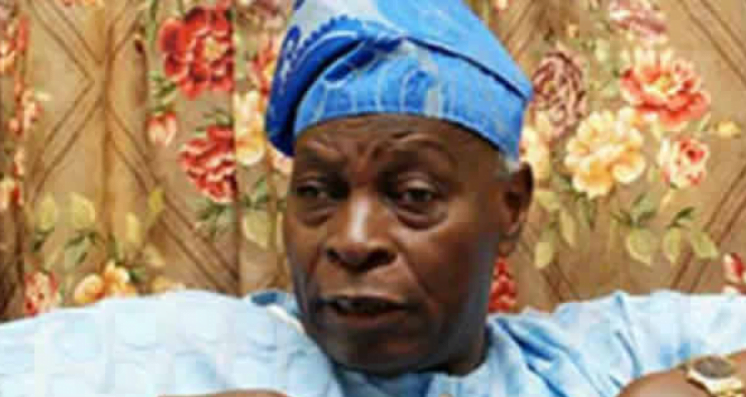
HRM Oluyemi Falae (CFR), former Secretary to the Government of the Federation and ex-Minister of Finance, has defended his involvement in Nigeria’s Structural Adjustment Programme (SAP), describing it as the least damaging solution available to rescue the country from a crushing debt burden in the mid-1980s.
Speaking in an interview with ARISE News on Thursday, Falae pushed back against claims that he authored or introduced SAP, clarifying that the policy was already adopted before he assumed office under General Ibrahim Babangida’s regime.
“I was appointed Secretary to the Federal Government on January 29, 1986. Six weeks earlier, Babangida had already announced the adoption of a domestic structural adjustment program. It was a standing government policy before I came in. I neither initiated it nor recommended it,” he said.
Falae explained that SAP was a reaction to Nigeria’s rapidly deteriorating economy, which he attributed to excessive import licensing and poor foreign exchange management during President Shehu Shagari’s tenure. According to him, the administration left behind trade arrears estimated at $30 billion.
“We were heavily indebted and couldn’t dictate terms to the international creditors. They had us by the throat. If we didn’t reach a deal, Nigeria would have been cut off from global trade,” he added. “So yes, it wasn’t ideal — but it was the least harmful of all bad choices.”
Responding to criticisms that SAP ushered in long-term hardship, Falae maintained that during his time in government, the program produced initial economic stability and reforms.
“When I left government in 1990, the naira was at ₦5.50 to the dollar — a stable rate after three years of SAP. It was only after my exit that the naira began its freefall to ₦32, ₦48, ₦100 and beyond,” he said.
He highlighted some key benefits of the SAP era, including agricultural marketing reform and the creation of domiciliary accounts, which he claimed now hold an estimated $35 billion in Nigerian banks.
“The reforms helped farmers by liberalizing marketing boards, and the domiciliary account system allowed Nigerians to keep foreign exchange legally and securely.”
Asked about how SAP compares to the current economic reforms under President Bola Tinubu, such as forex liberalization and subsidy removal, Falae stressed the importance of balanced economic management.
“Our problem has always been abuse. You can’t let blind market forces run the economy, but you also can’t shut them out completely. The wise approach is a balance between market mechanisms and government regulation.”
He concluded by noting that the SAP during his tenure was cautiously implemented, avoiding the rampant inflation and devaluation that followed in later years.
“When I was in government, we tried to strike that balance. It worked, in my opinion. But I can’t speak for what happened after I left.”



Comments
0 comments