
Lagos Government Moves To Hold National Assembly In Contempt Over Supreme Court Defiance
 Follow us on Google News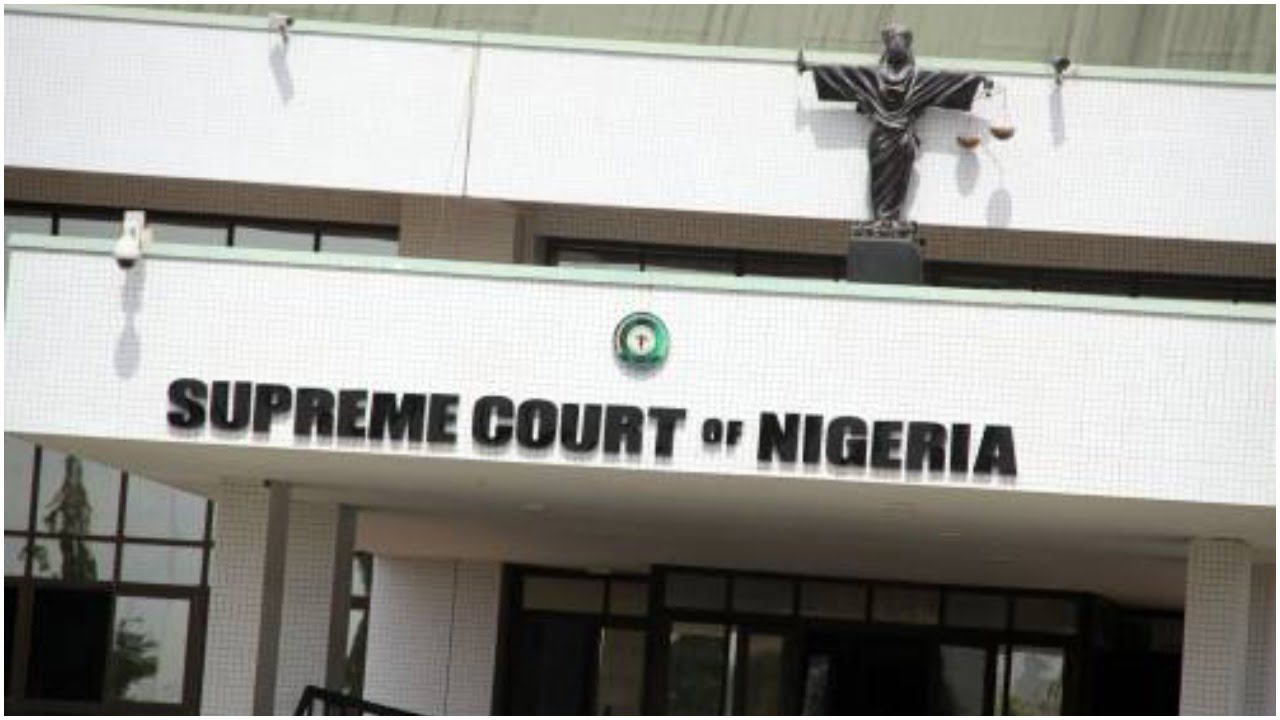
Lagos State Government has approached the Supreme Court seeking permission to initiate contempt proceedings against the National Assembly.
The state alleges that the legislature is continuing efforts to pass the Central Gaming Bill, despite an existing Supreme Court judgment declaring such legislation unconstitutional.
In a motion filed on behalf of the Attorney-General of Lagos State by Senior Advocate of Nigeria Bode Olanipekun, Lagos is requesting the court’s leave to enforce its judgment through Form 48—a formal legal procedure that precedes committal or contempt proceedings.
Under Nigerian law, Form 48 serves as an official warning to any person or body in contempt of court, and failure to comply may result in imprisonment.
According to the affidavit supporting the motion, Lagos argued that the National Assembly’s ongoing work on the Central Gaming Bill violates the Supreme Court’s November 22, 2024 ruling in SC.1/2008 – Attorney-General of Lagos State & Ors. v. Attorney-General of the Federation & Ors.
The state noted that Clauses 7 and 21–64 of the proposed Bill focus entirely on lottery and gaming, areas the Supreme Court had previously ruled fall outside the National Assembly’s legislative powers.
Lagos further argued that these provisions largely replicate the now-nullified National Lottery Act, which the Supreme Court invalidated in the same 2024 judgment. Both the defunct Act and the Central Gaming Bill define “lottery” and “online gaming” identically—as games, schemes, arrangements, or competitions based on chance, skill, or sporting outcomes requiring a licence.
The affidavit highlighted that Clause 62 of the Central Gaming Bill contains “savings provisions” aimed at retroactively validating actions under the voided law, which Lagos said constitutes a direct defiance of the Supreme Court’s authority.
The state also emphasized that the constitutional Legislative Lists under the Second Schedule to the 1999 Constitution remain unchanged, confirming that the National Assembly lacks power to legislate on lottery or gaming.
The 2024 Supreme Court ruling had clearly held that lottery and gaming cannot be regulated by any Act of the National Assembly, rejecting arguments that federal jurisdiction applied via Item 62 of the Exclusive Legislative List covering “trade and commerce” or the interstate nature of electronic gaming.



Comments
0 comments