
Oyedepo’s Son Sparks Outrage, Claims Job Suffered Because He Did Not Pay Tithes
 Follow us on Google News

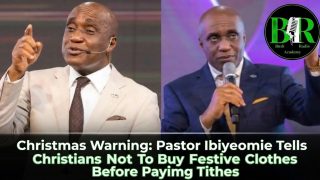
The son of Bishop David Oyedepo has sparked controversy on social media after claiming that the biblical figure Job did not pay tithes and suggesting that this was connected to the suffering he experienced.
According to Bush Radio Academy, the preacher made the remarks in a video circulating online, arguing that although Job gave to the poor, there was no indication in the biblical account that he paid tithes. He maintained that Job eventually recovered from his ordeal but said he would not want to experience similar hardships.
“Listen, you know why Job could be touched? You know Job. Job was not a tither. Check all through Job,” he said.
He further insisted that Job’s charitable acts did not amount to tithing, urging his audience to examine the biblical account for themselves.
“Job gave to the poor. He never gave tithe. Go and research because I know some people say, no, Job must have given tithe,” he added.
The preacher also claimed that Satan afflicted Job despite his generosity, saying that although the biblical figure eventually recovered, he personally would not want to go through a similar experience.
His comments have generated mixed reactions, with several social media users questioning the biblical basis for linking Job’s suffering to the payment of tithes.
One commenter identified as Ayo challenged the argument by referencing other biblical figures, including Joseph, Daniel, Paul and John, who experienced hardship or persecution without the biblical accounts explicitly stating that they paid tithes.
Another user, Tranquility, pointed to passages in the Book of Job that describe him as a blameless and upright man who feared God and turned away from evil. The commenter argued that the text does not identify failure to pay tithes as the reason for his suffering.
A further critic, Obot, similarly argued that the opening chapters of Job present a different explanation for his ordeal, highlighting the biblical account of Satan questioning Job’s faithfulness in the context of his prosperity.
Other commenters also questioned whether tithing should be presented as the central explanation for Job’s suffering, while some accused religious commentators of interpreting scripture in ways that support particular arguments about giving.
The controversy has reignited discussions about tithing, biblical interpretation and the relationship between religious giving and personal misfortune. While the preacher presented his position as an interpretation of Job’s story, the biblical account does not explicitly state that Job’s suffering resulted from a failure to pay tithes.






Comments
0 comments