Connect with us

Latest

Tension In Political Circle As Okechukwu Blasts Atiku’s Stance On Zoning

Published

on

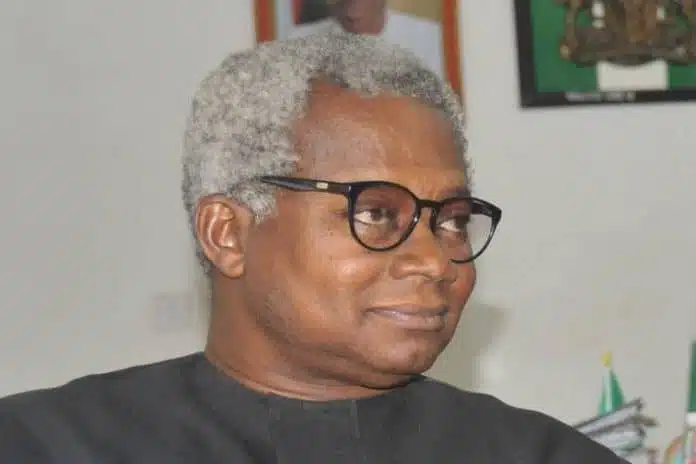
A founding member of the All Progressives Congress (APC), Osita Okechukwu, has criticised remarks attributed to former Vice President Atiku Abubakar describing zoning as “self-defeating.”....KINDLY READ THE FULL STORY HERE▶

The former Director General of the Voice of Nigeria (VON) made his position known in a statement on Tuesday, arguing that Atiku himself benefited from Nigeria’s zoning arrangement and that his current stance reflects what he described as self-contradiction.

Okechukwu maintained that Atiku would not have risen to the position of Vice President without the zoning system in place, which he said promotes national unity, inclusion, fairness, and political stability.

He questioned the consistency of Atiku’s argument, asking how a key beneficiary of zoning could now dismiss its importance in Nigeria’s political structure.

According to him, “How can one of the foremost beneficiaries of the zoning convention suddenly deny its profound significance in promoting national cohesion, inclusion, equity, peace, and justice?”

He further stated that political systems are guided by both laws and conventions, adding that Atiku’s political history reflects the impact of zoning arrangements.

Okechukwu also recalled Atiku’s past political movements, including his exit from the PDP presidential primary process in 2014 after then-President Goodluck Jonathan emerged as the party’s candidate.

Responding to Atiku’s recent comments questioning the viability of a Southern opposition candidate defeating a Southern incumbent president, Okechukwu described the position as an expression of identity politics, which he said the zoning principle was meant to reduce.

He added that such rhetoric was unbecoming of a statesman.

Okechukwu also dismissed Atiku’s argument that the South would have held the presidency for 18 years by 2027 compared to the North’s 10 years, describing it as selective interpretation of history.

He argued that equity discussions must consider Nigeria’s broader historical context, noting that the North held federal power for over four decades since independence in 1960.

According to him, fairness in national politics cannot be based on selective calculations or incomplete historical narratives.

Advertisement
Click to comment

Leave a Reply

Your email address will not be published. Required fields are marked *