


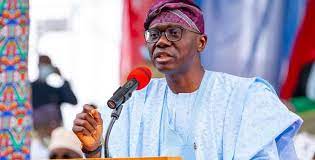
The Ports Standing Task Team (PSTT), a committee established by the Presidency to alleviate congestion on port access roads, has alleged that various entities, including the Lagos State Government, the operators of the call-up system (TTP), the Lagos State Traffic Management Agency (LASTMA), and the police, among others, are impeding its efforts to clear the gridlock from Oshodi-Mile2 inward Tin-can in Lagos….CONTINUE READING
An investigation conducted by Vanguard, corroborated by credible sources in the affected areas, has revealed the existence of no fewer than 58 extortion points, manned by multiple groups such as the police, ECOMOG, Oduduwa boys, LASTMA, maritime workers, Apapa Local Government Area officials, and area boys, among others.
According to Vanguard’s findings, along the expressway leading to Tincan, there are 25 extortion points where each truck driver is required to pay N61,000. Outward from Tincan, there are 12 extortion points with a fee of N25,000. In the Apapa corridor, there are 19 such points with a toll of N52,000.
Frequent conflicts arise between truck drivers and fee collectors, exacerbating the traffic congestion in the area.
In an exclusive interview with Vanguard, responding to accusations that the PSTT had been slow to address the issue, the PSTT National Coordinator, Mr.
Moses Fadipe, pointed out that previous attempts to clear the route were hindered by the mentioned agencies. These agencies claimed they had established their own task force to manage the situation.
Fadipe emphasized that the PSTT possesses the capability to clear the port access road, similar to what they have achieved on the Apapa access road, which is now passable and free from gridlock.
He mentioned that the PSTT not only cleared the Apapa access route but has also been maintaining it.
Fadipe stated that if the Presidency were to issue an order today for the PSTT to clear the route, they could promptly accomplish the task.
He explained that the main issue arose when the PSTT sought to address inbound traffic (trucks heading to the ports).
The Lagos State Government, TTP, LASTMA, and the police claimed authority over the call-up corridor, insisting that the PSTT had no role to play there.
Despite efforts to persuade them otherwise, these entities refused to cooperate, leading to confrontations between government agencies.
Fadipe concluded by highlighting that the PSTT was willing to maintain the progress it had made, but unions continued to approach them with concerns.


