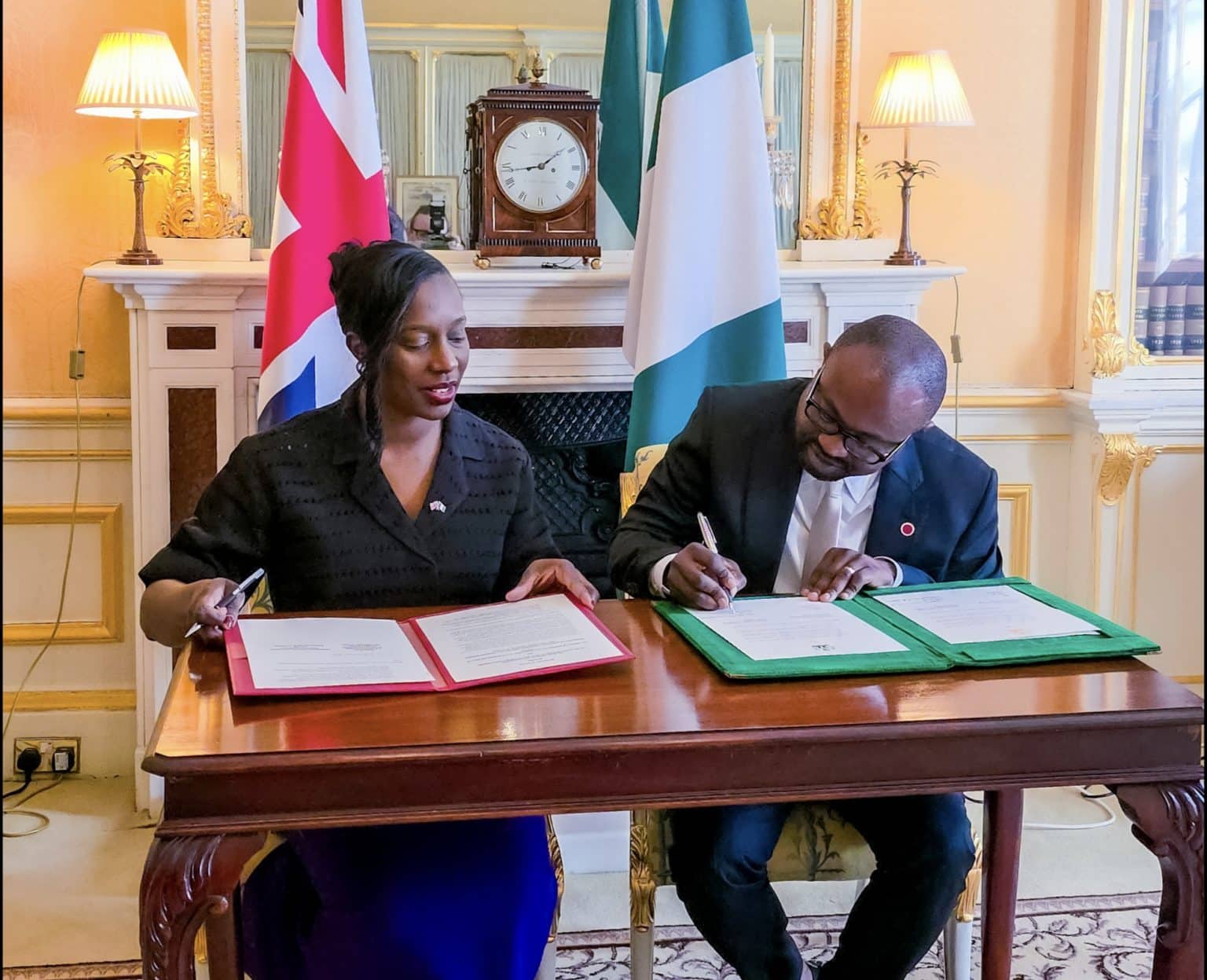
The deal was signed during President Bola Tinubu’s state visit to the UK by Nigeria’s Minister of Interior, Olubunmi Tunji-Ojo and UK Home Secretary Shabana Mahmood, according to a statement from the UK Home Office on Thursday.
The agreement is designed to strengthen migration control and enhance cooperation between both countries.
Under the arrangement, the UK will be able to return thousands of individuals who have no legal right to remain, including failed asylum seekers and foreign nationals who have committed crimes. It also covers visa overstayers and introduces new administrative procedures to speed up deportations.
A major feature of the deal is that Nigeria will, for the first time, accept “UK letters”—alternative identification documents issued to individuals without valid passports—in place of traditional travel documents. The UK Home Office said this change removes a key bureaucratic barrier that previously delayed deportations.
Although the implementation date, duration, and financial details were not disclosed, there are still questions about whether the agreement applies exclusively to Nigerian nationals or other groups as well.
UK data shows that around 961 Nigerians have exhausted their right to appeal asylum decisions, while about 1,110 Nigerian nationals are currently awaiting deportation. Officials say the agreement could therefore speed up removals significantly.
Speaking on the development, Olubunmi Tunji-Ojo said Nigeria remains committed to fulfilling its international obligations and managing migration responsibly.
He stated: “We are totally committed to being a responsible country in fulfilling our core obligations. To sustain that relationship, we must be as open and as fair as possible.”
UK Minister for Border Security and Asylum, Alex Norris, described Nigeria as an important partner in tackling irregular migration, noting its significance as the UK’s largest visa market in Africa.
He added that fairness must be maintained across the immigration system, stressing that anyone who violates immigration rules or abuses the system will be removed.
The agreement also provides for joint operations and intelligence sharing between both countries to combat organised immigration crime. This includes efforts to dismantle networks involved in visa fraud, fake job offers, sham marriages, and forged financial documents.
Nigeria is also expected to review and strengthen its legal framework to impose stricter penalties for immigration-related offences.